A Note from Ian & Emily
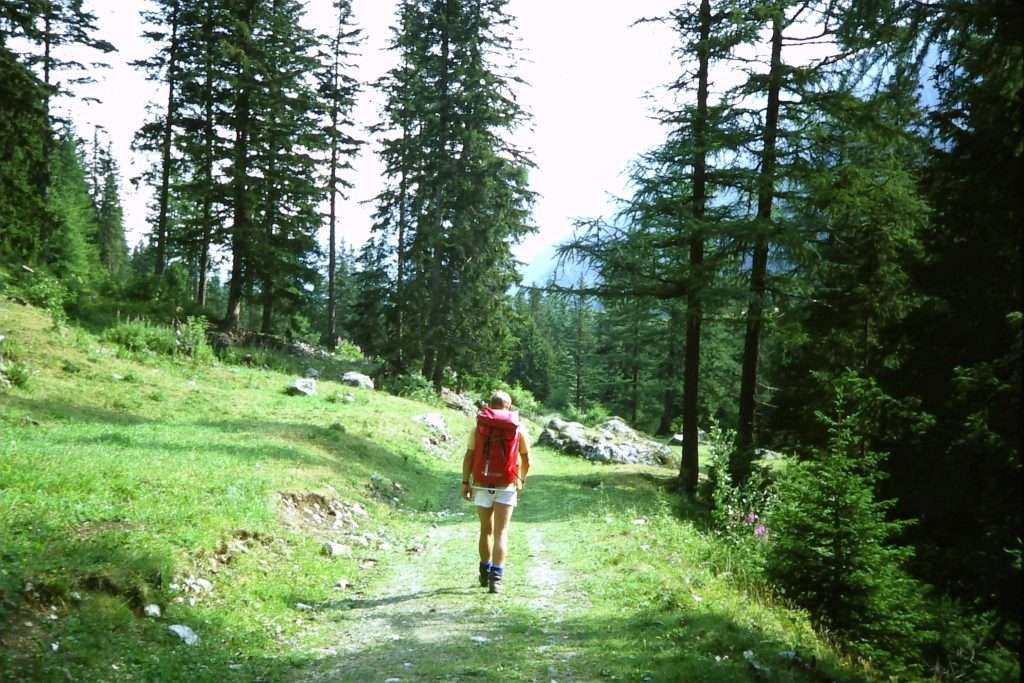
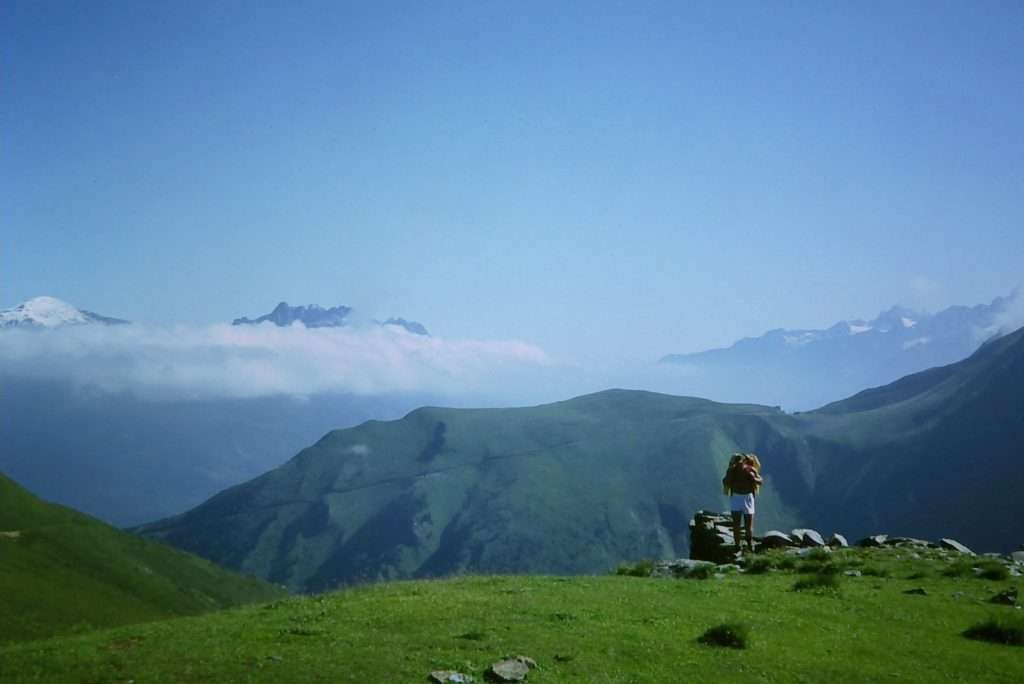
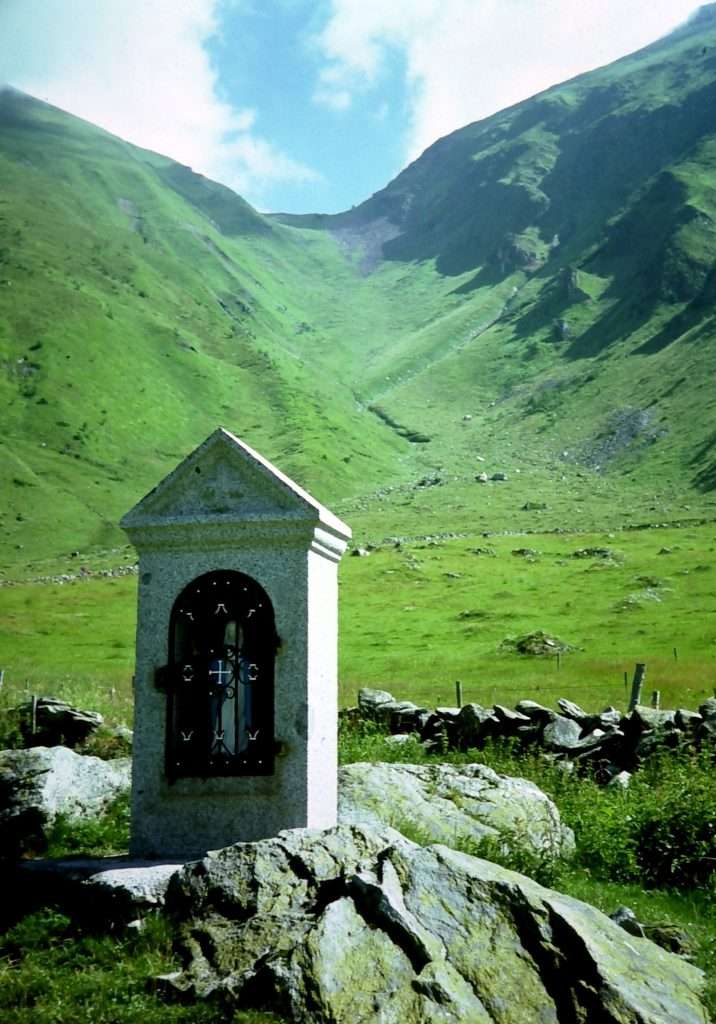
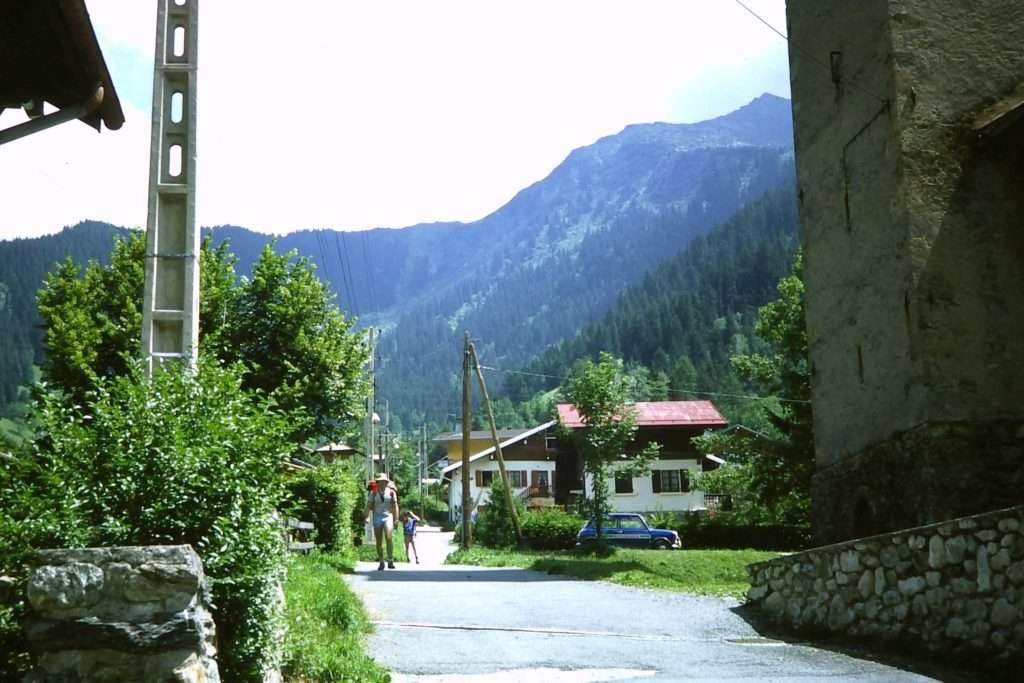
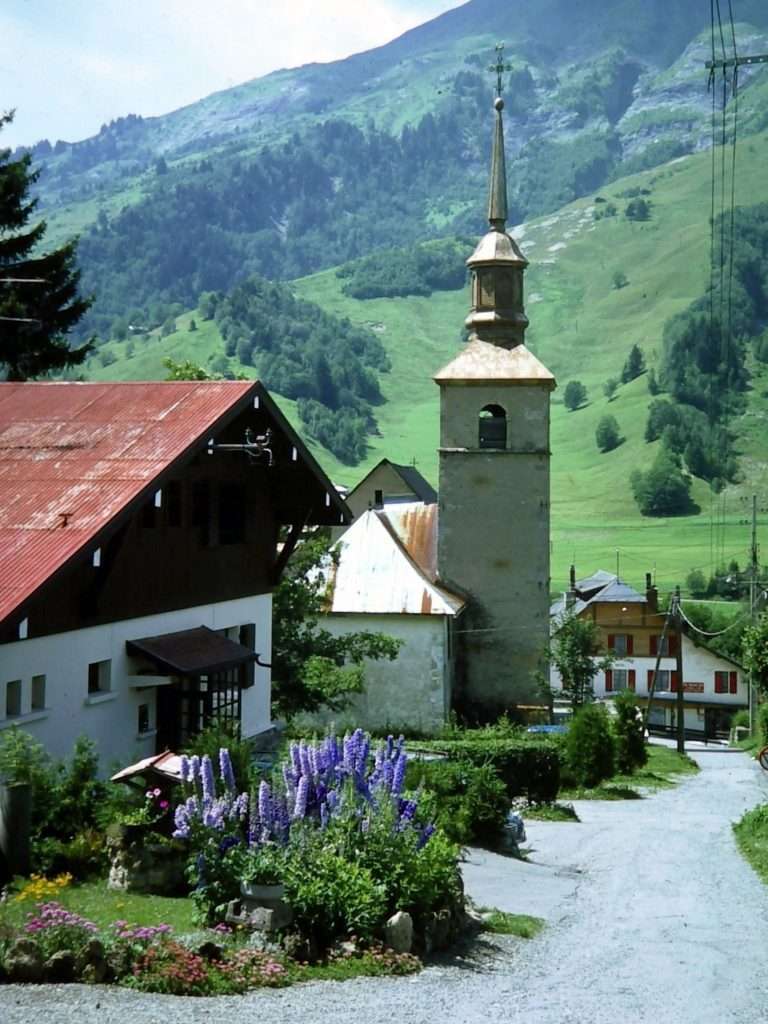
When Jean shared her account of walking the Tour du Mont Blanc in the summer of 1976, we were immediately inspired by both her writing and her photographs. Her story offers a firsthand look at what the trail was like fifty years ago, long before online bookings, detailed guidebooks, or digital navigation tools.
We wanted to create a place to share Jean’s memories alongside her wonderful photographs and to give readers a chance to reflect on how the TMB — and the experience of walking it — has evolved over time.
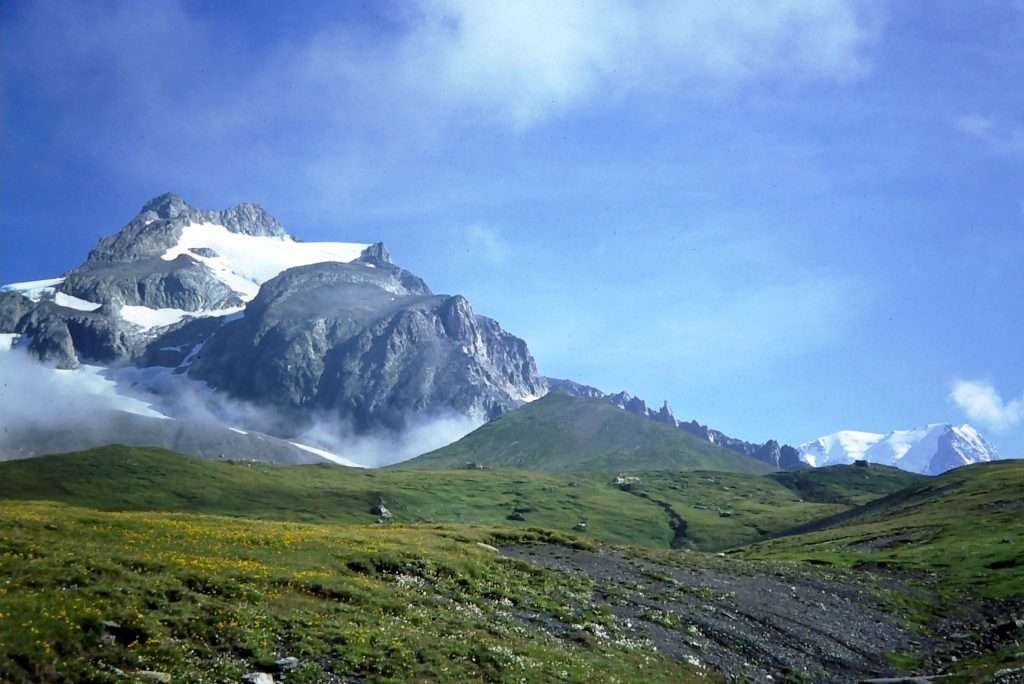
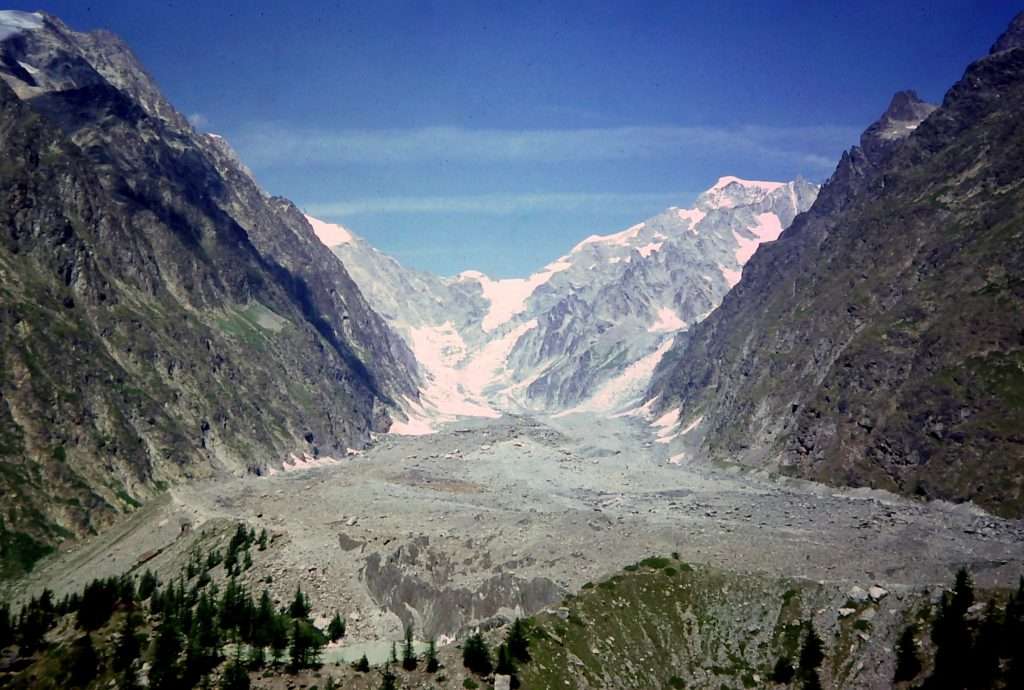
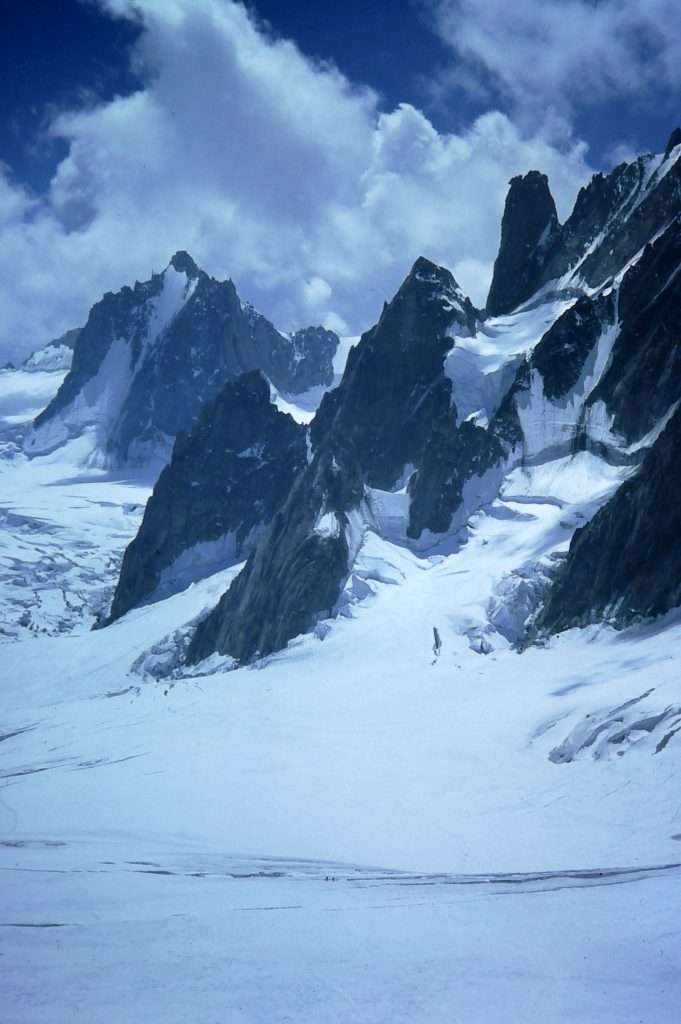
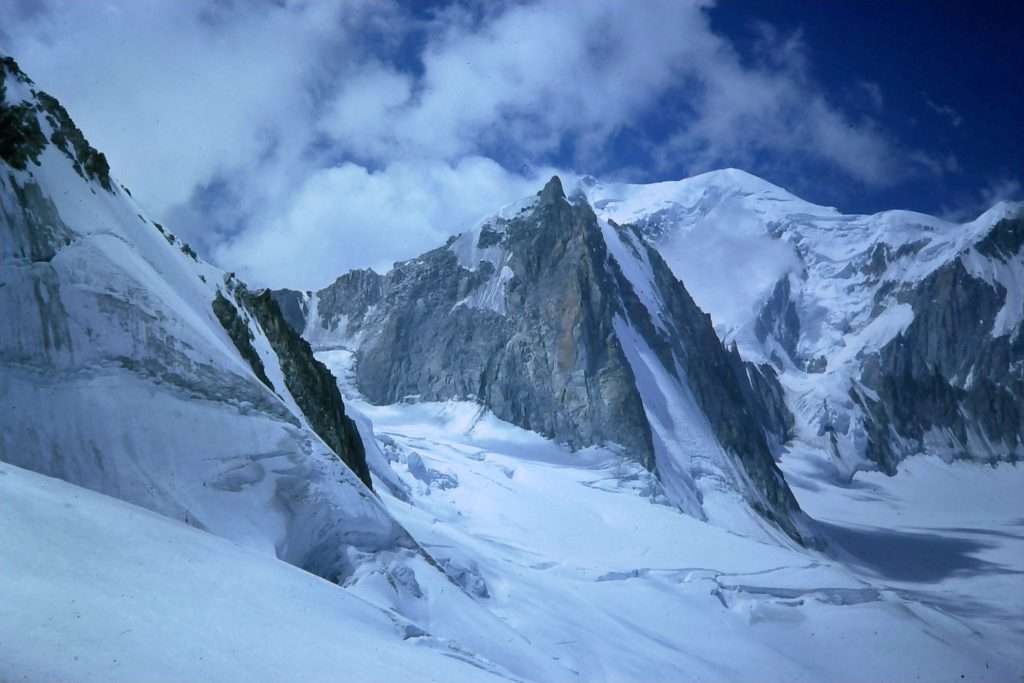
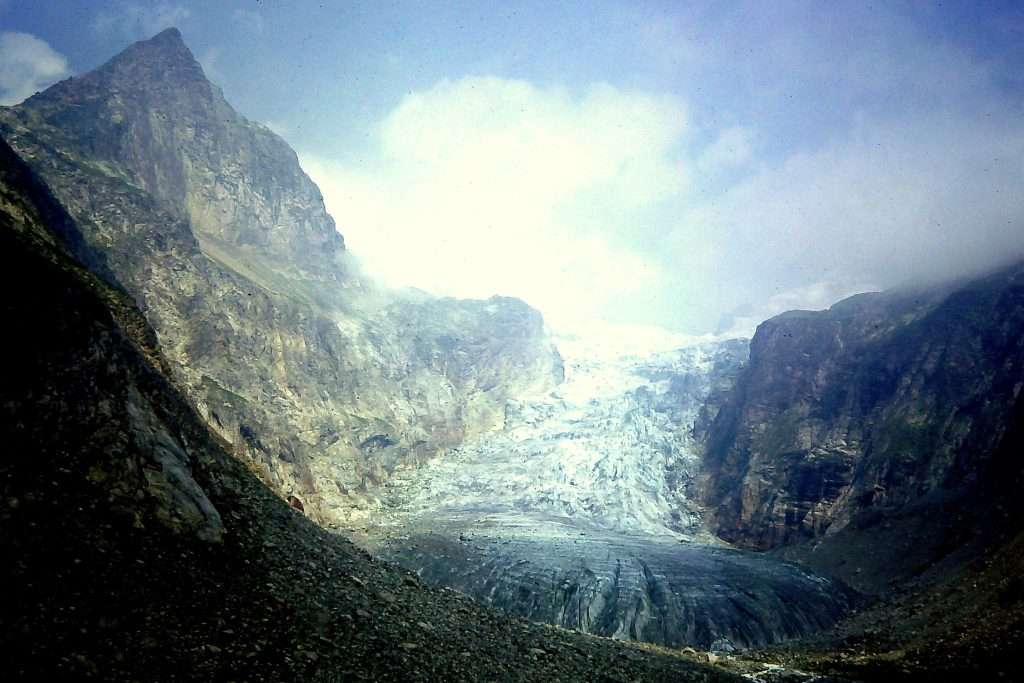
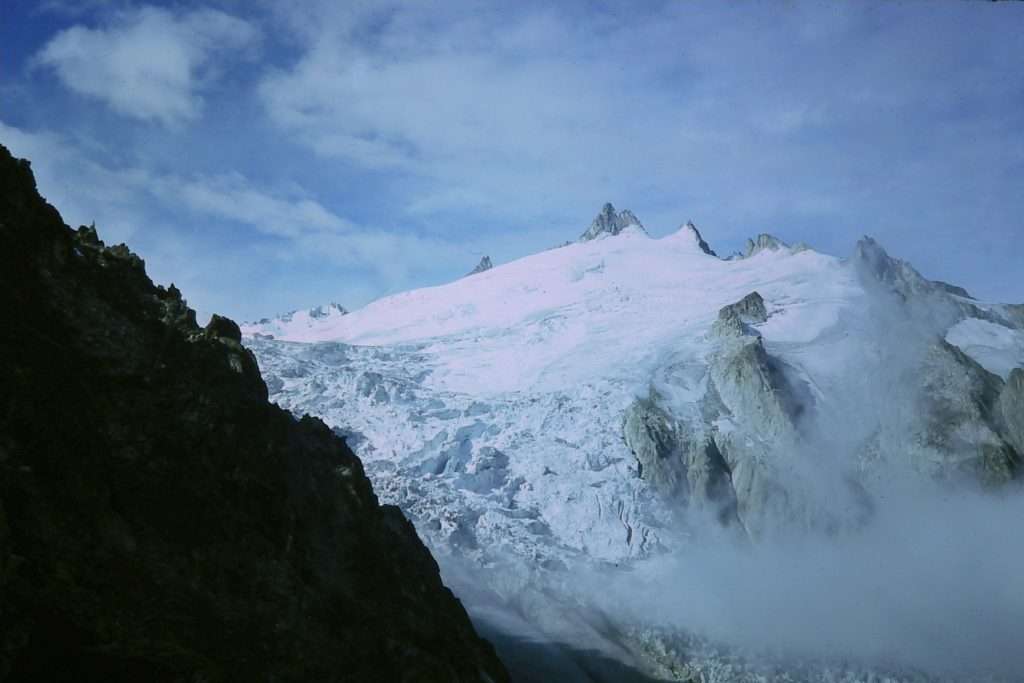
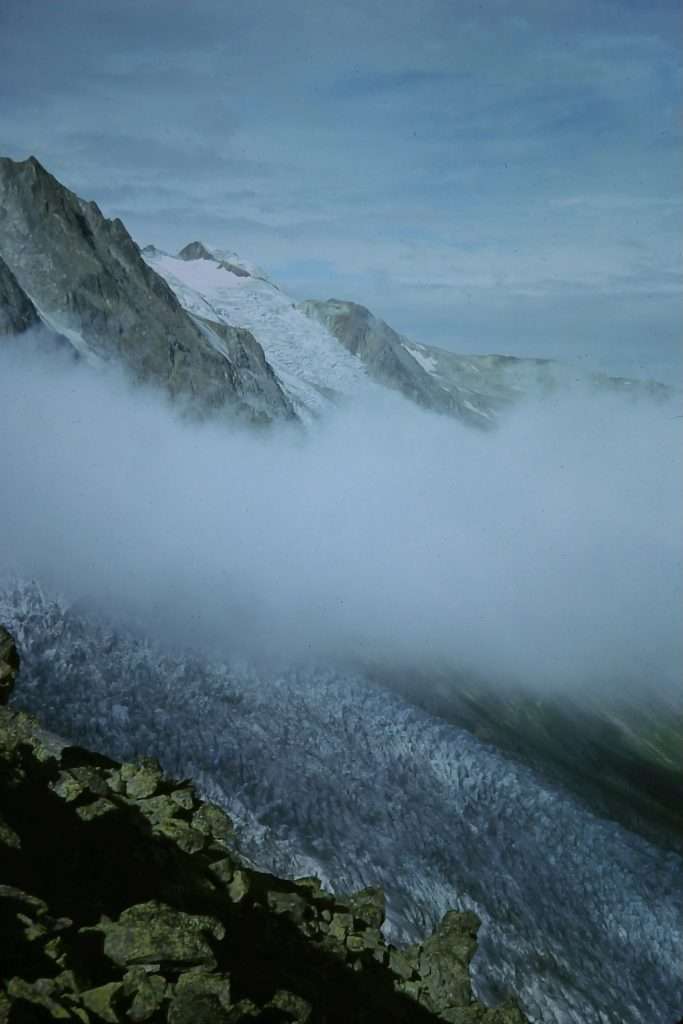
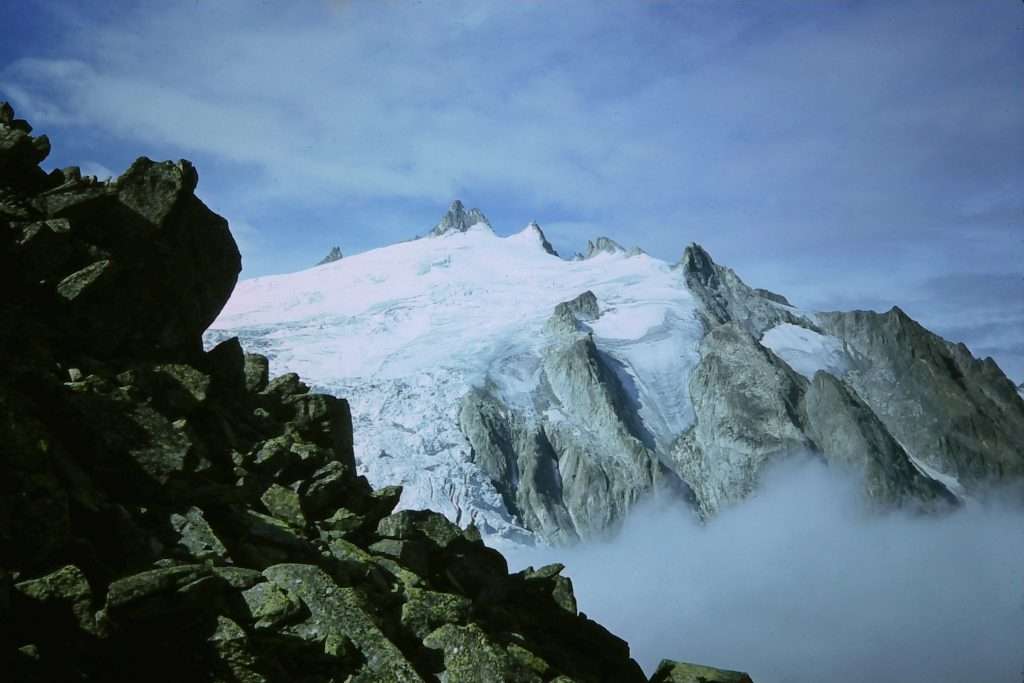
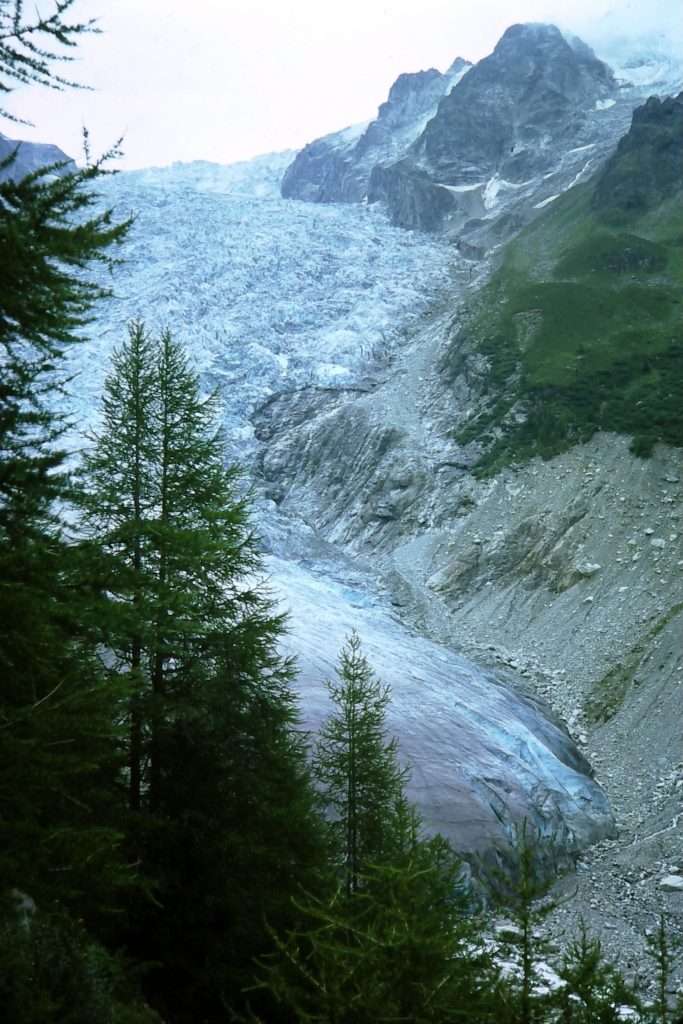
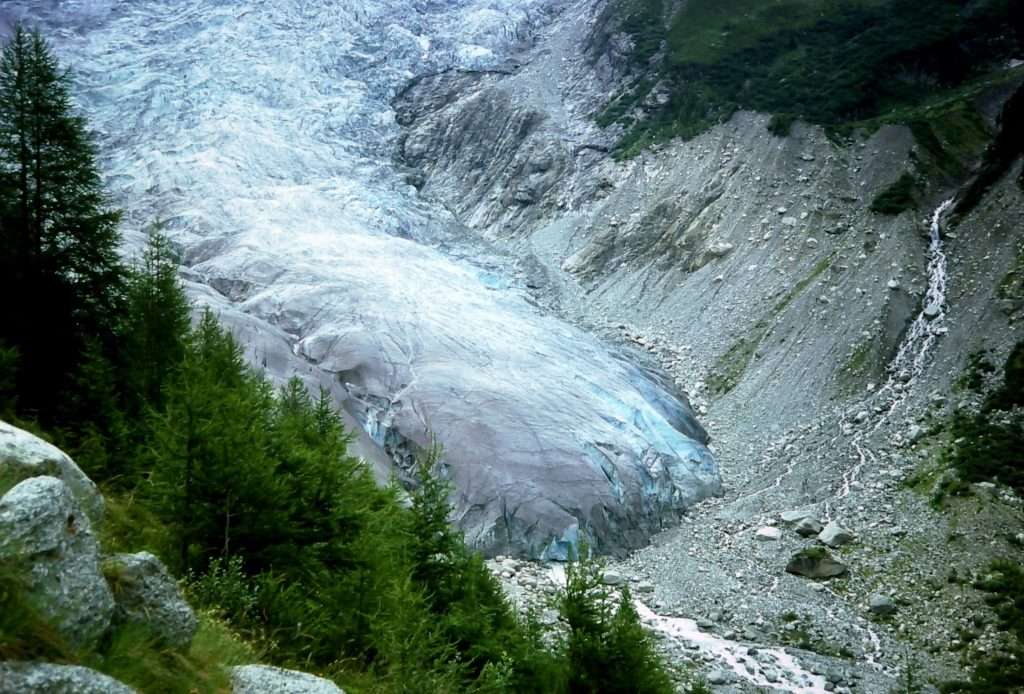
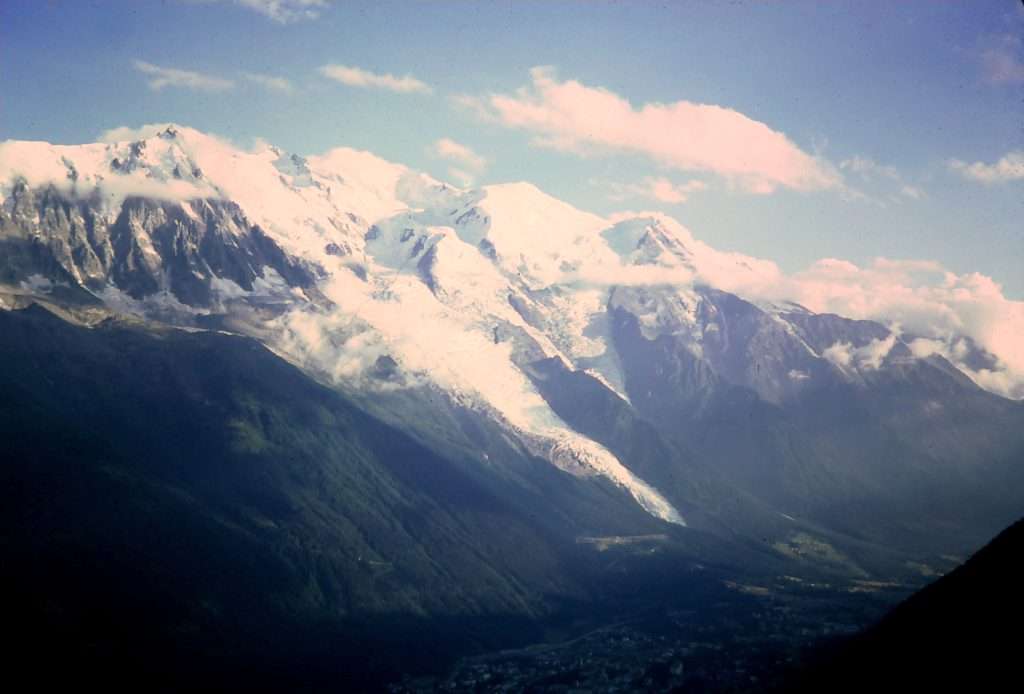
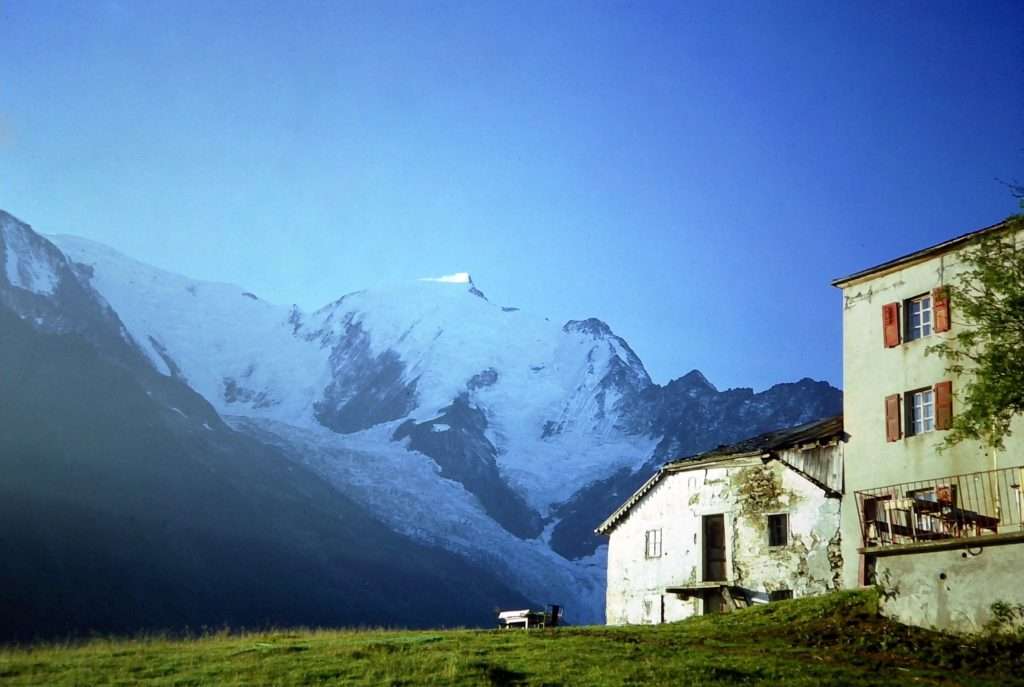
While much of the trail remains familiar, some changes are impossible to miss. Many of the glaciers visible in Jean’s photos have since shrunk dramatically due to climate change, a powerful reminder of how quickly alpine landscapes are changing.
At the same time, her story highlights what hasn’t changed: the beauty of the mountains, the challenge and reward of long days on foot, and the sense of connection that draws people to the Tour du Mont Blanc generation after generation.
We’re very grateful to Jean for sharing her memories with us, and we hope her story adds context, perspective, and inspiration to your own experience of the trail.
Ian & Emily, TMB Trail Guide
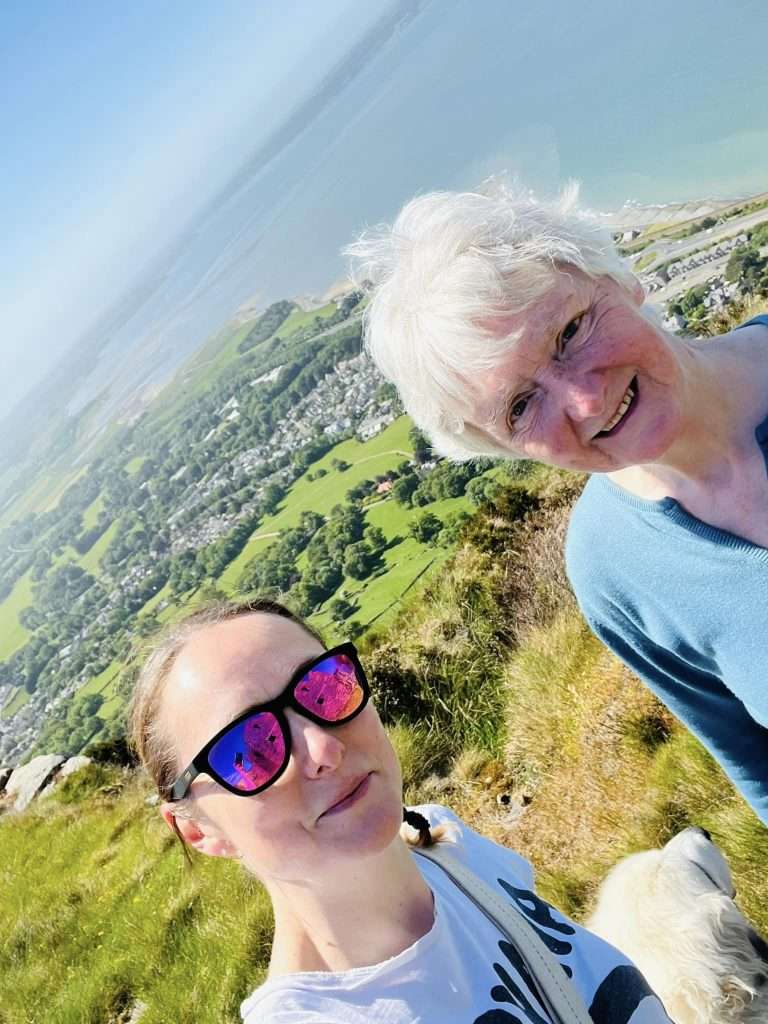
Hi – I’m Jean and I would like to share with you my memories of walking the TMB in July 1976.
A Lifetime of Walking, Before the Alps
I was born and have always lived in North Wales and for nearly sixty years have had both sea and mountains within walking distance of home, so I have walked the Welsh hills and coastal footpaths all my life.
In my late teens I joined a local group and started doing tougher walks, often involving some scrambling, in the Eryri National Park, but walking in the Alps had not crossed my mind until, in the autumn of 1967, I happened to pick up a brochure in a local climbing equipment shop for R.A.S Holidays (later re-named Ramblers’ Holidays) which offered mostly centre-based walking holidays in the mountains of Europe – Alps; Pyrenees; Apennines; Tatras etc.
First Alpine Adventures
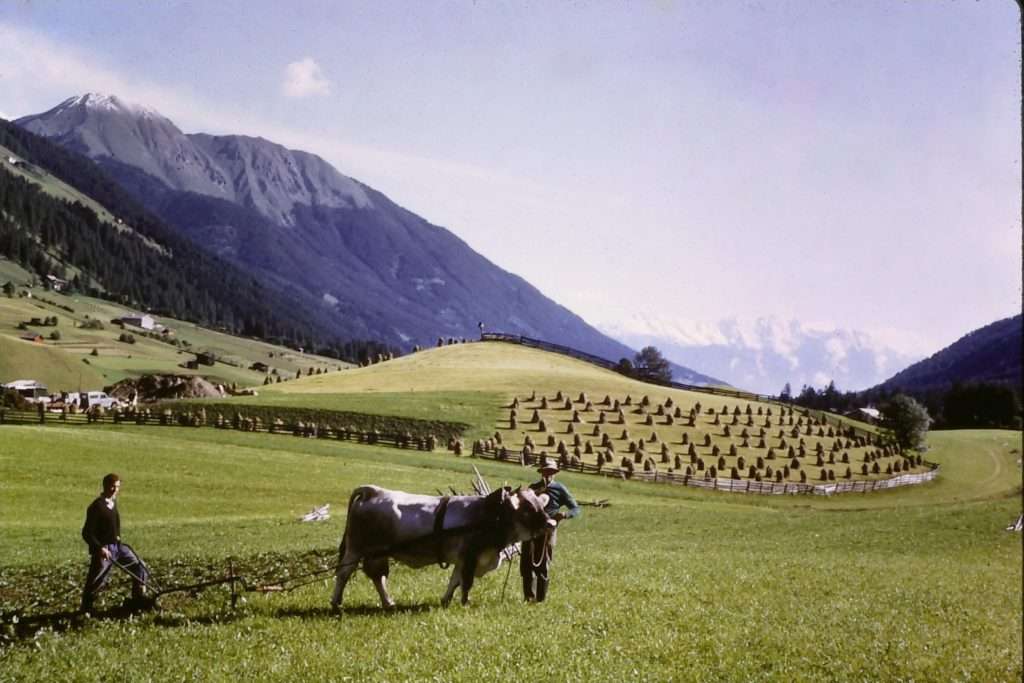
In 1968 I went on my first alpine adventure – two weeks in the Stubaital in the Austrian Tirol for the princely sum of £44 with full board, flights to Zürich and transfers included! I was very fortunate with my choice – the Stubaital is a stunningly beautiful valley with endless walking possibilities. In 1968 it was still largely undiscovered, and the farmers still ploughed with oxen.
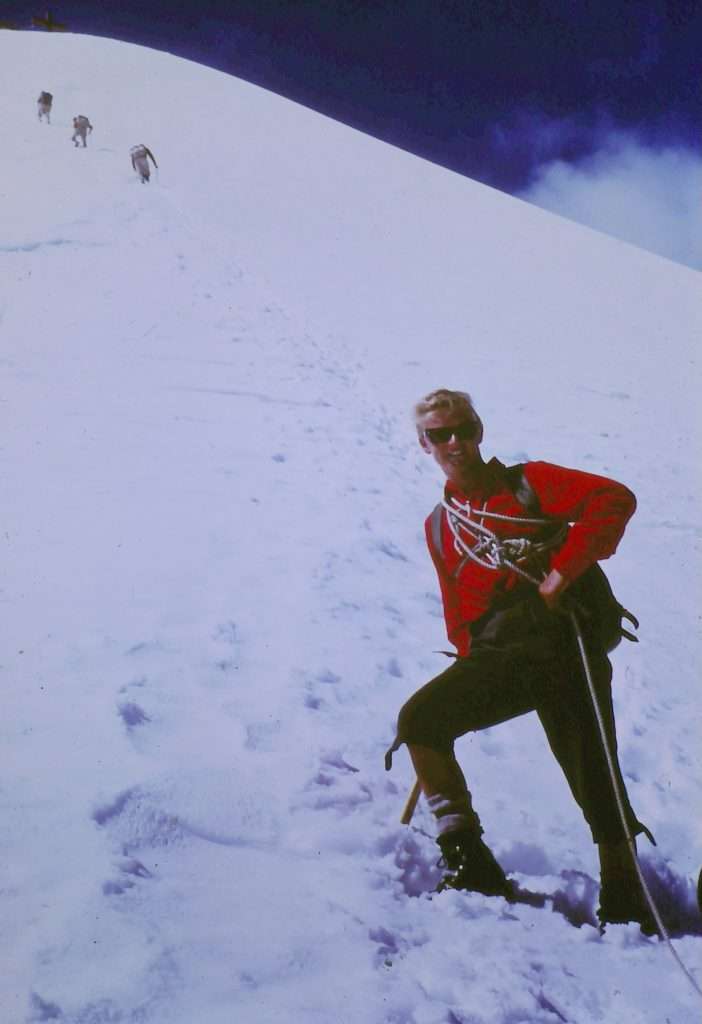
Our leader, who stayed there all summer, was Austrian and knew the area very well. The group members all got on well, which on future holidays was not always the case. Apart from day walks, we spent one night in the Dresdener Hut from where, after a pre-dawn start with two guides, the whole party climbed the Zückerhütl (3505m).
For the next seven years I went on similar holidays in the Austrian, Swiss and Italian Alps and in the Picos de Europa mountains in northern Spain, but all based at one or two centres, so no daily carrying of a heavy rucksack.
Choosing the Tour du Mont Blanc
In the autumn of 1975, when it came to booking my next holiday, I decided to try a walking tour and the TMB attracted me more than any of the others on offer, so I booked for July 1976. It cost me £140 – prices had risen over the years since my first trip!
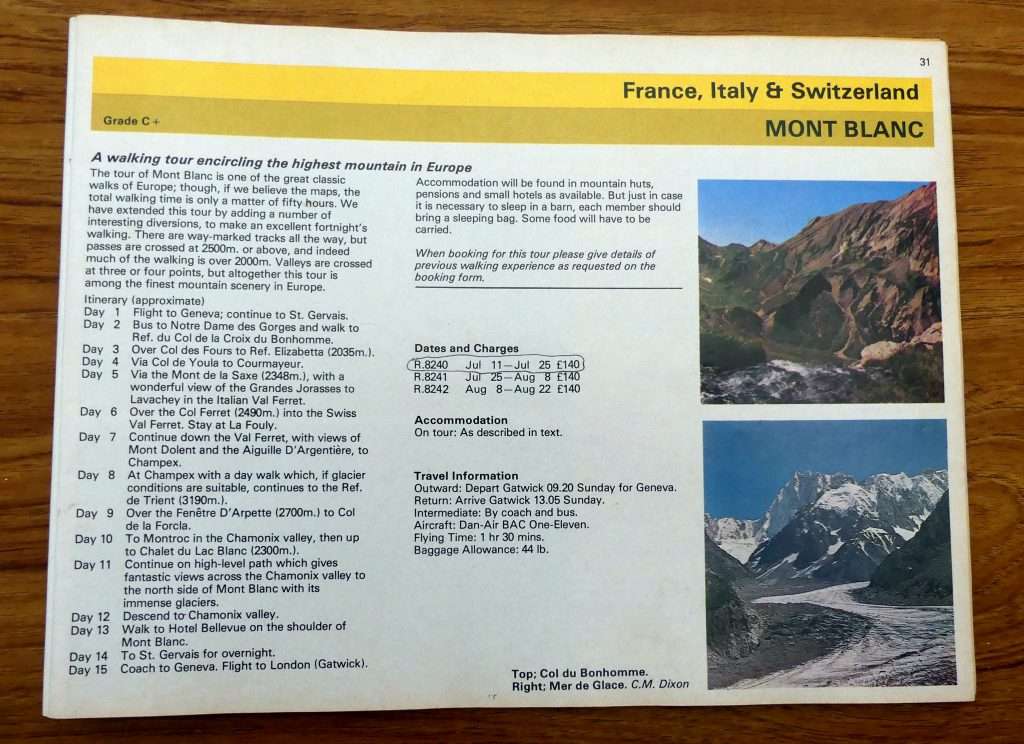
When booking a walking tour, one had to give details of previous walking experience and all who booked were advised to be walking fit and strong enough to carry a rucksack containing all their personal items and some of the group’s food supplies. I bought a new “weekend” rucksack, which I felt would be big enough if I was careful what I took, and a lightweight down sleeping bag, which in its stuff bag was about the size of a loaf of bread. I made sure that I was fit by walking up our local hills after work most days with my rucksack filled with tinned food so that I got used to the weight.
Once I got stuck in a kissing gate and for a moment or two, I panicked that I would be there all night until I put my sensible head on and realised that I could shuffle myself out of the rucksack straps to get out! The training paid off and I had no problems with weight-carrying or stamina.
Accommodation, Uncertainty, and the Spirit of the Time
Apart from the first and last nights in a hotel in le Fayet, no accommodation was booked ahead – there being no internet or mobile phones in those bygone days! The brochure warned that it might occasionally be necessary to sleep in a barn!
Journey to the Alps
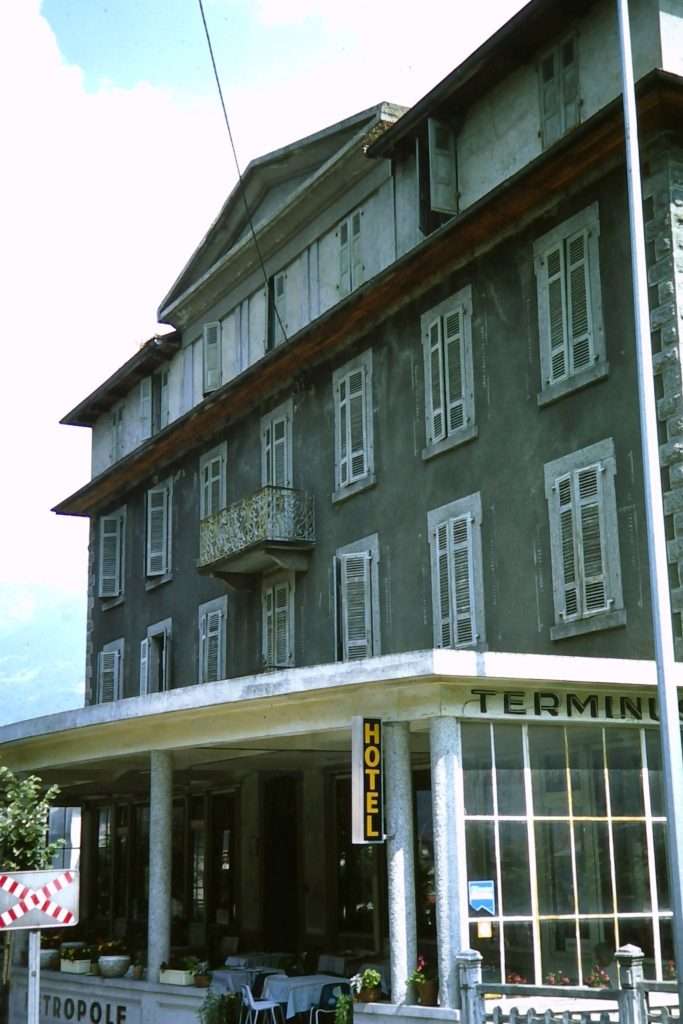
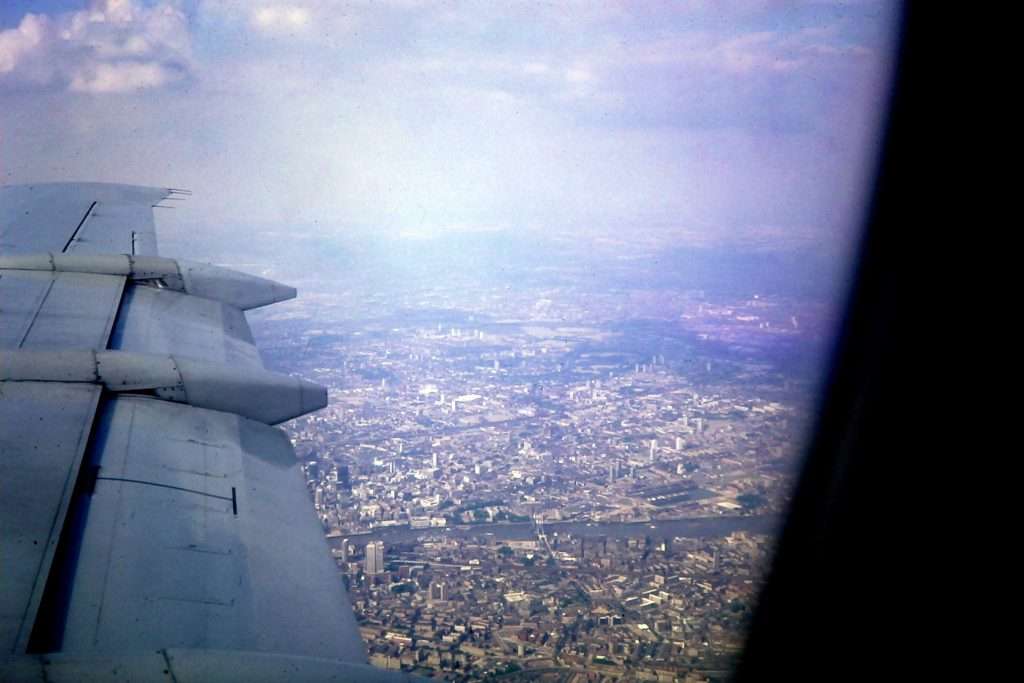
Slightly nervous, I set off on the train from North Wales to London, where I spent the night with family friends before going to London Heathrow for a morning flight to Geneva – surprisingly the flight was with Iran Air, but it was before the Iranian Revolution of 1979. Our group of ten (six men and four women) assembled in Geneva while waiting for the coach that took us from the airport to the Hotel Metropole-Terminus in le Fayet.
The Group and Our Leader
We were a varied group – Tim, the youngest, was in his early 20s, I was 27, the rest were in their 30s and 40s apart from the oldest, Margaret, a Canadian, who was in her 60s. The full group consisted of Dan (leader); Daphne; Margaret; Melise; Tim; Bob; Dave; Chris; Paul and me. By the way, the Paul on the Tour was not the Paul I married in 1978!
One of the men had bought a tubular metal framed rucksack for the holiday – they were quite popular in those days – but he hadn’t brought its frame, so he only had the thin nylon sack which had no rigidity at all, so everything was always in a heap at the bottom. Unsurprisingly, he found carrying it very laborious. Our leader, Dan, had led the TMB for Ramblers’ Holidays in previous years, so he knew the route well and was confident that most of us could do the more interesting “Variants” to the basic route.
The Trail
Day 1: Les Contamines to Refuge de la Balme
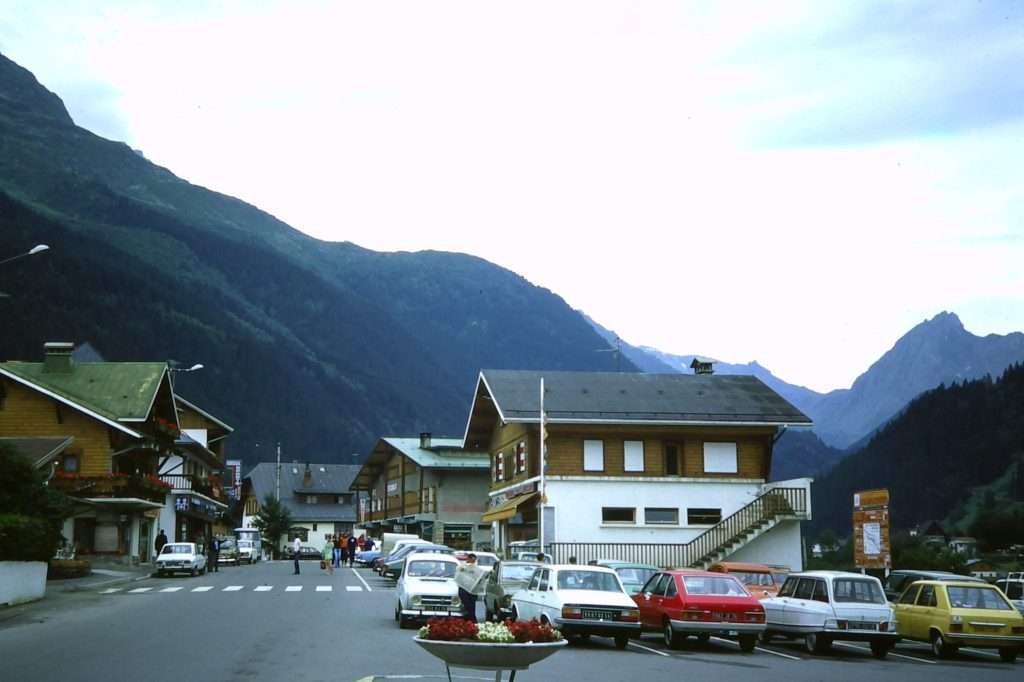
We caught a bus to Les Contamines and started our walk under cloudy skies. Six of us took the Chemin Claudius Bernard to the Tré la Tête Hut, where we had lunch before continuing to la Balme Chalet Refuge for the night. The four rather less fit members walked up the valley to la Balme.
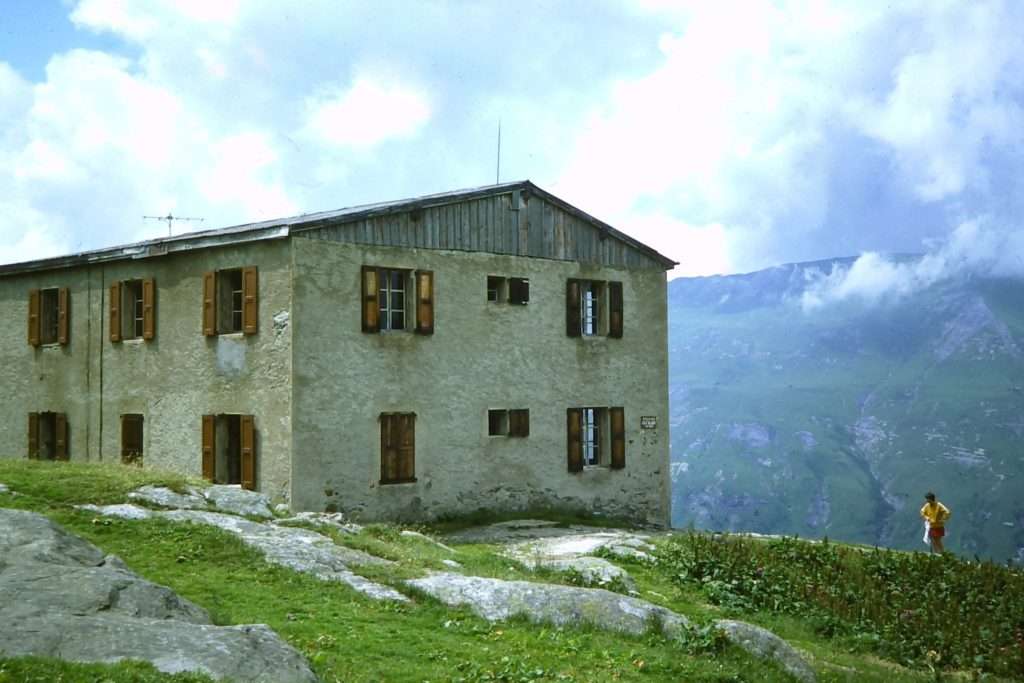
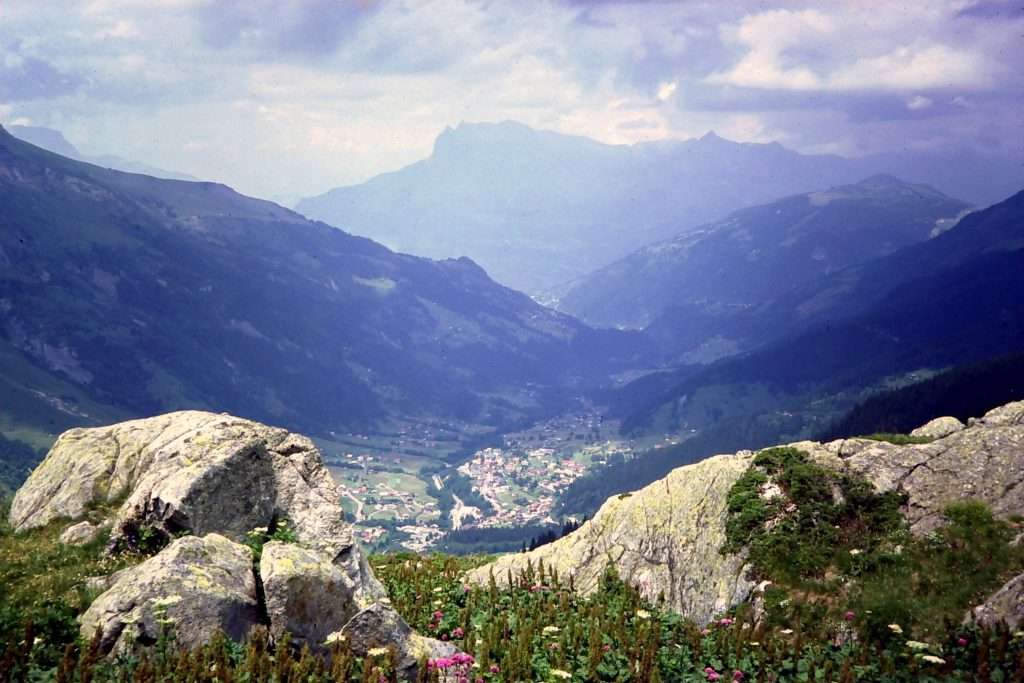
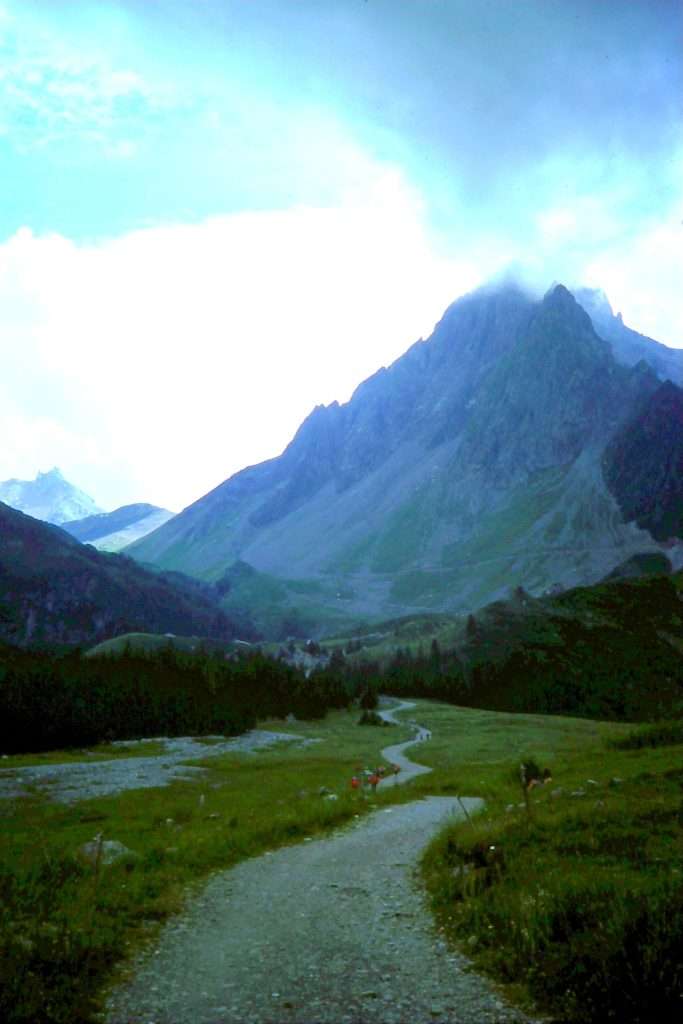
Day 2: Refuge de la Balme to Refuge des Mottets via the Col des Fours
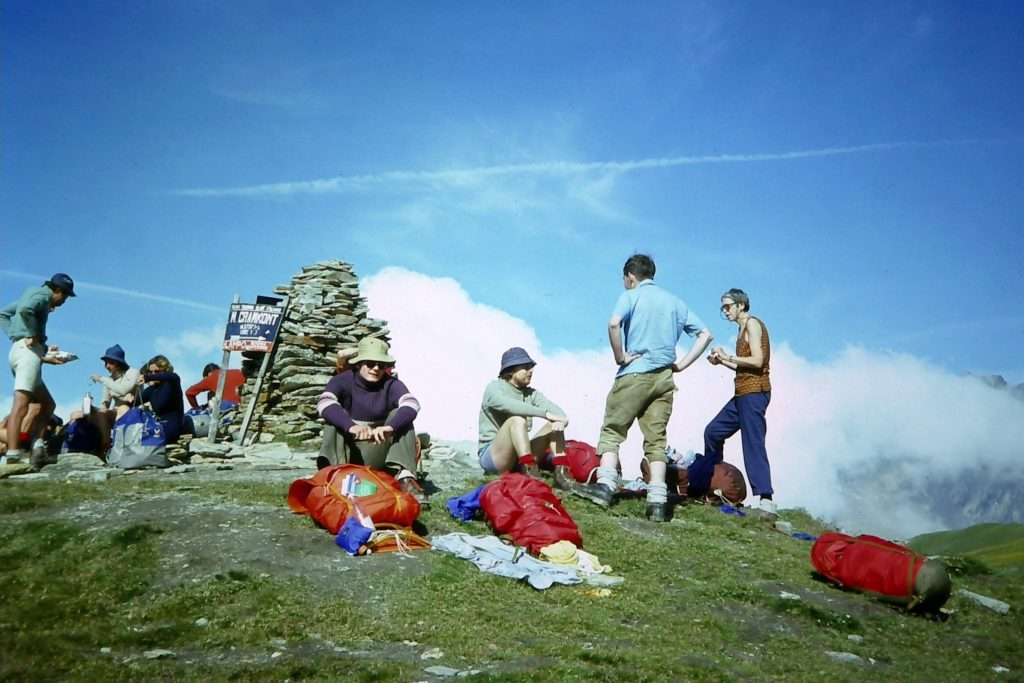
With the clouds still low we left la Balme and climbed to the Col de la Croix du Bonhomme. After a short rest and coffee – Dan carried a small Primus stove which he used for brewing hot drinks – we continued over the Col des Fours, which fortunately was just below the cloud base.
Down steeply to Ville des Glaciers and along the valley to les Mottets, where we spent the night.
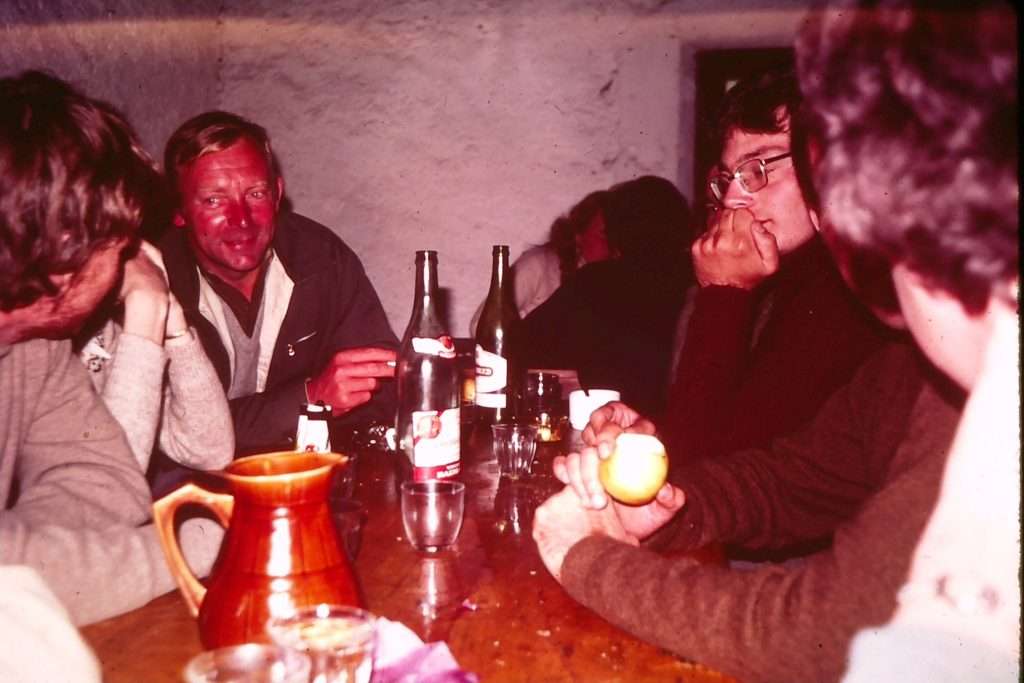
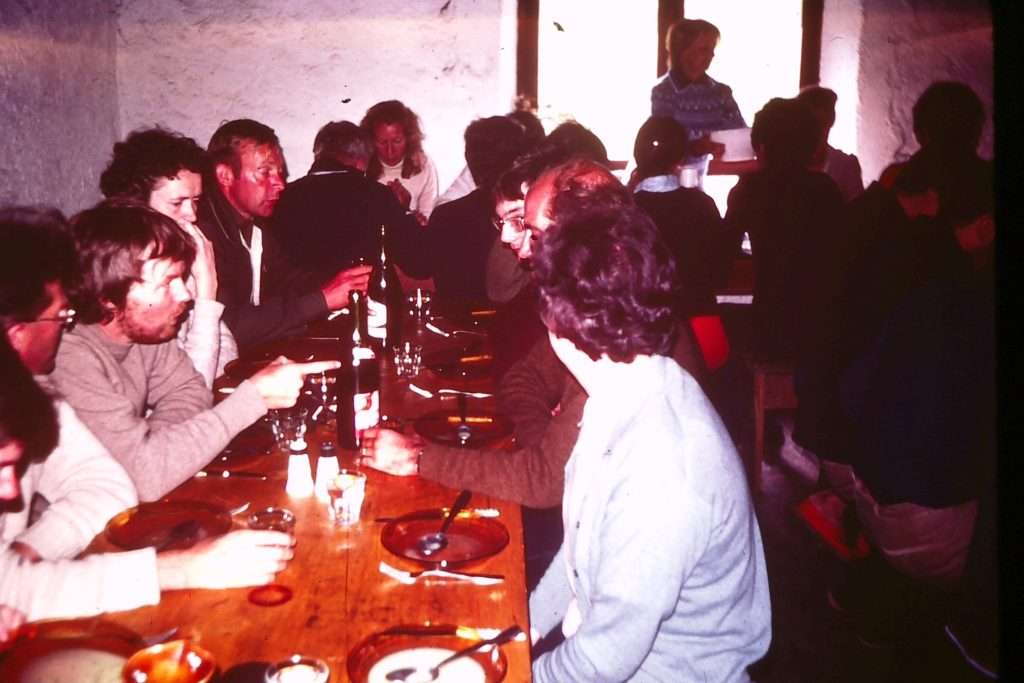
The lavatory was in a shack suspended over a stream a short walk from the refuge!
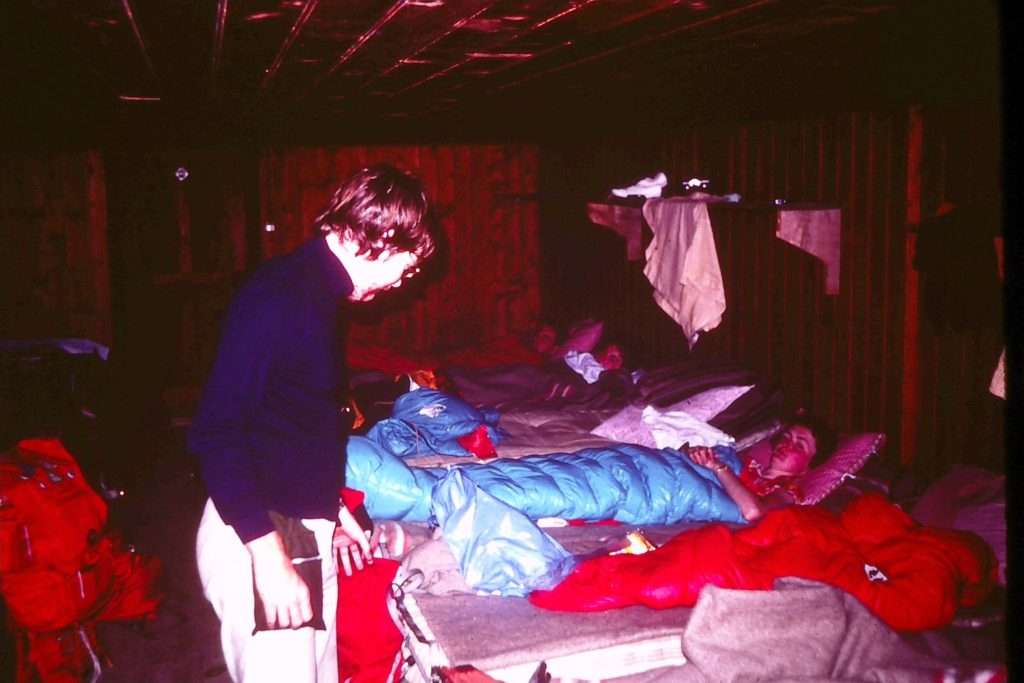
We slept in the noisy dormitory where snorers kept me awake most of the night. Before settling down for the night Margaret asked me what day of the week it was. I replied that it was Tuesday. “Oh good”, she exclaimed – “I can change my pants!”
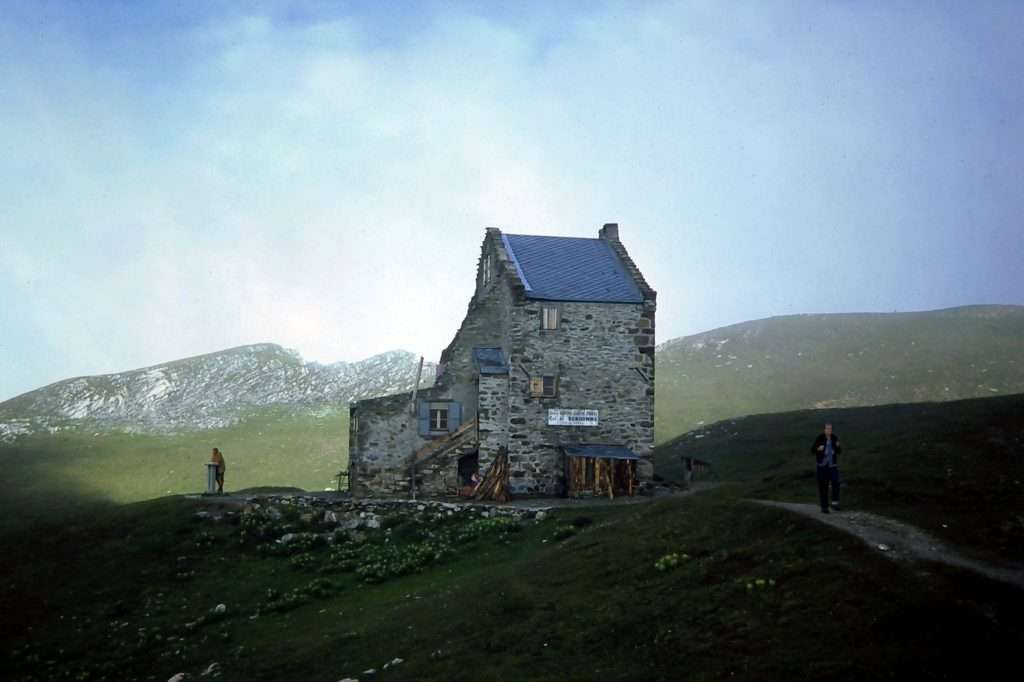
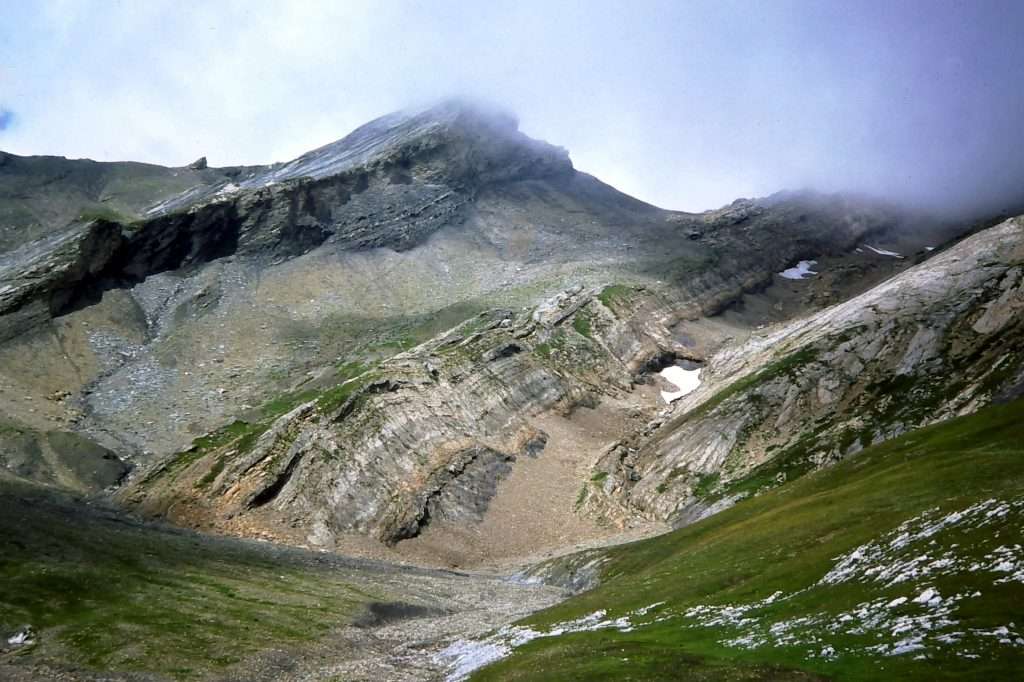
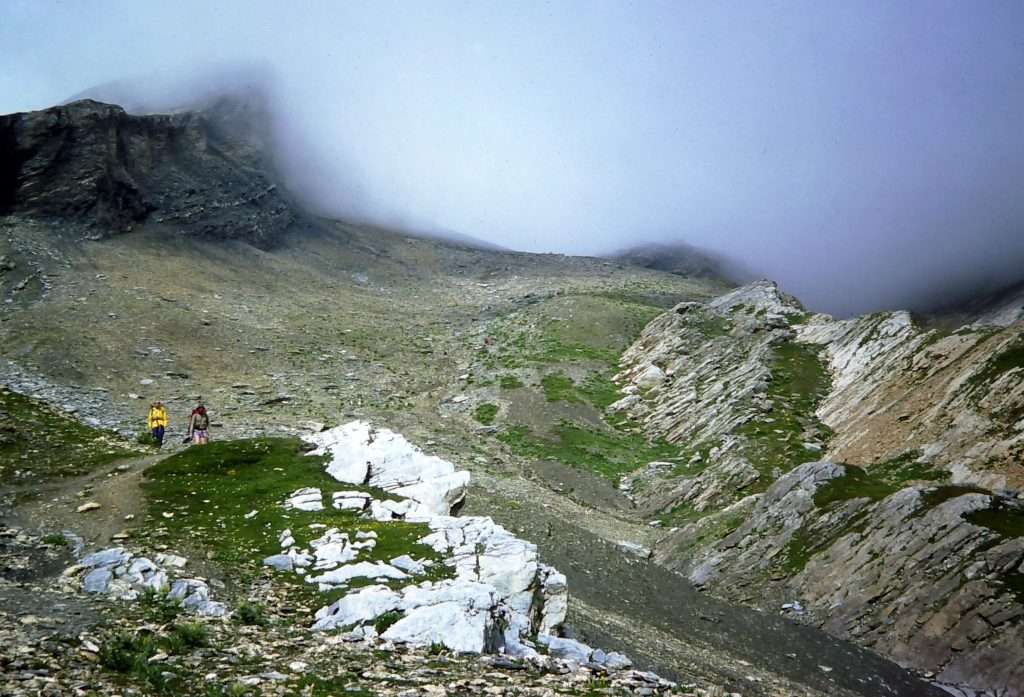
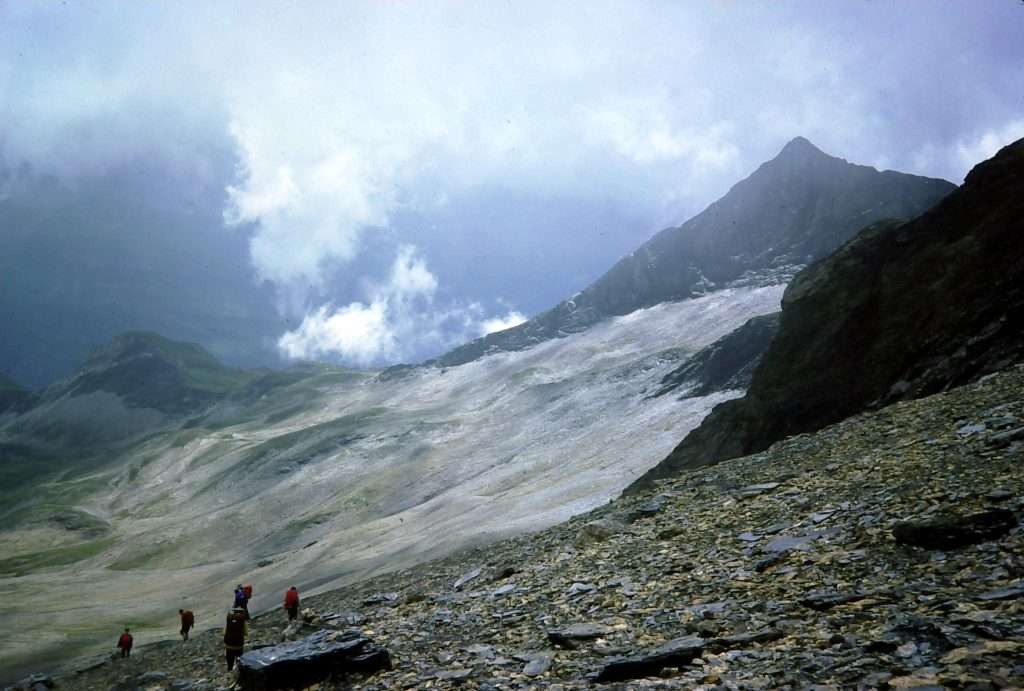
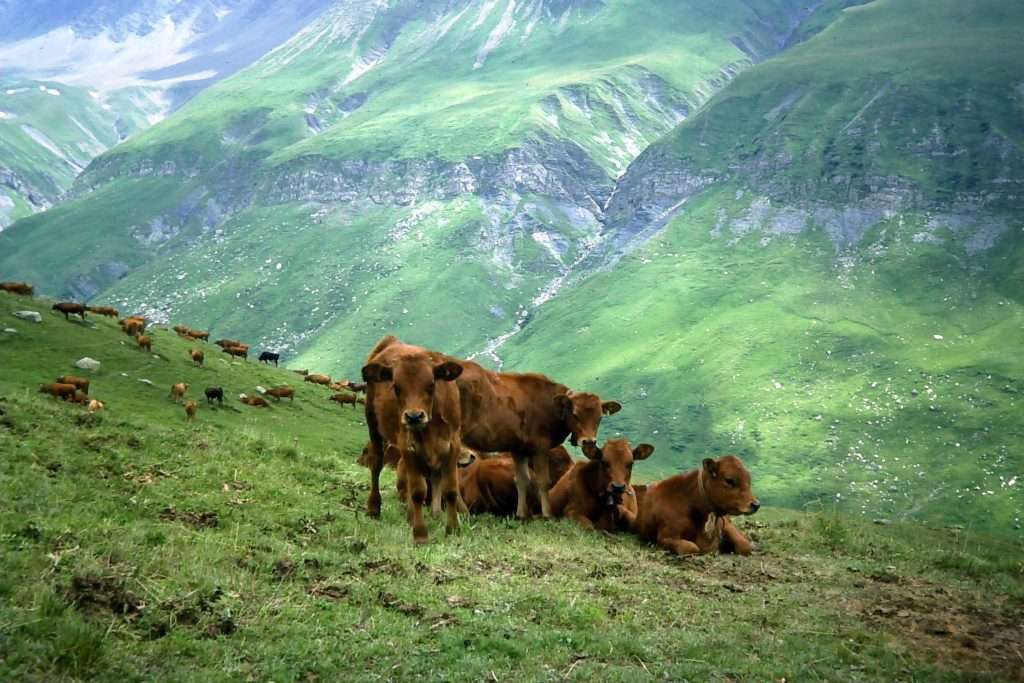
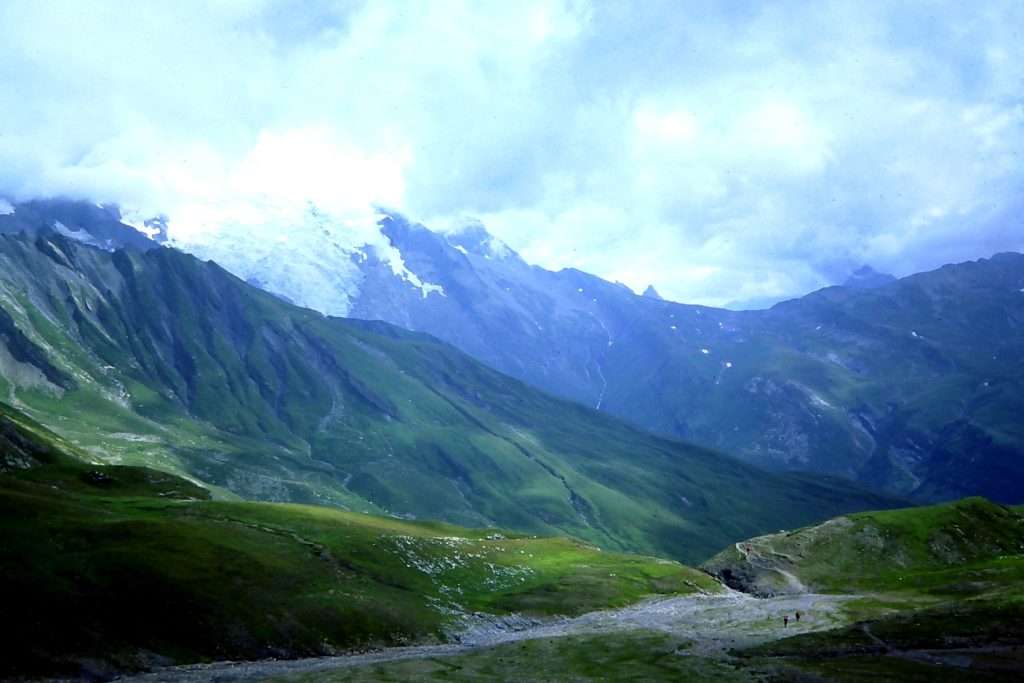
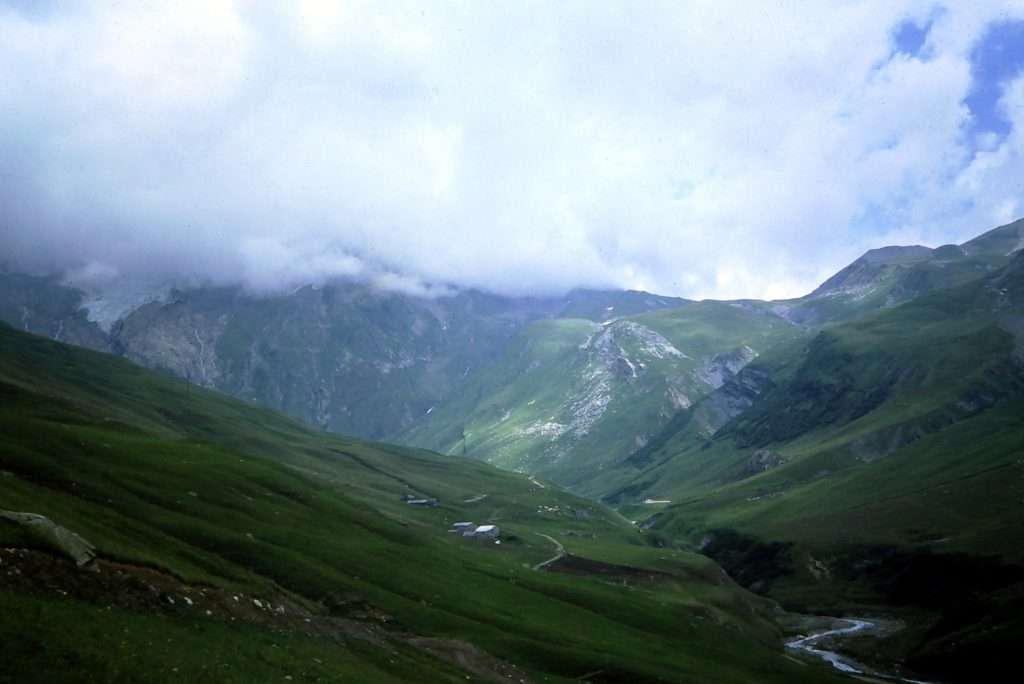
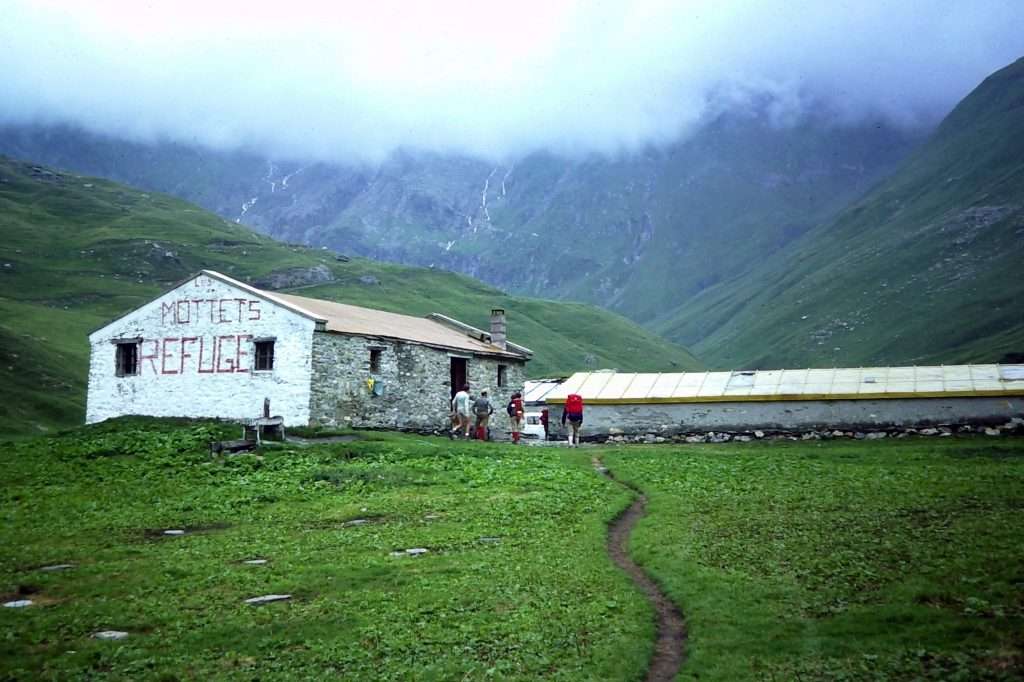
Day 3: Refuge des Mottets to Courmayeur
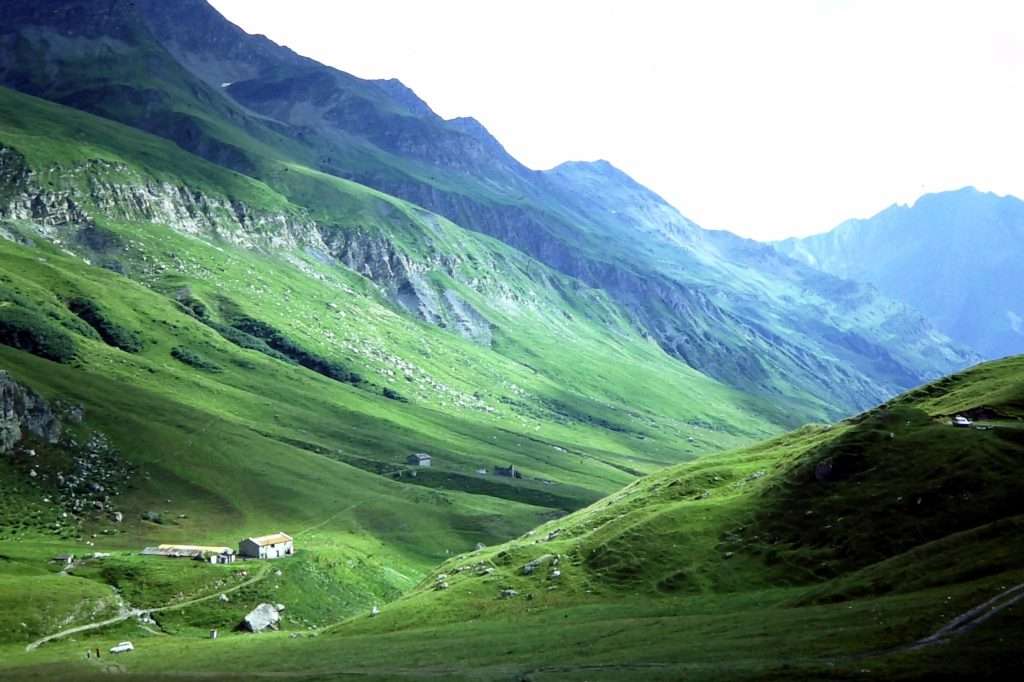
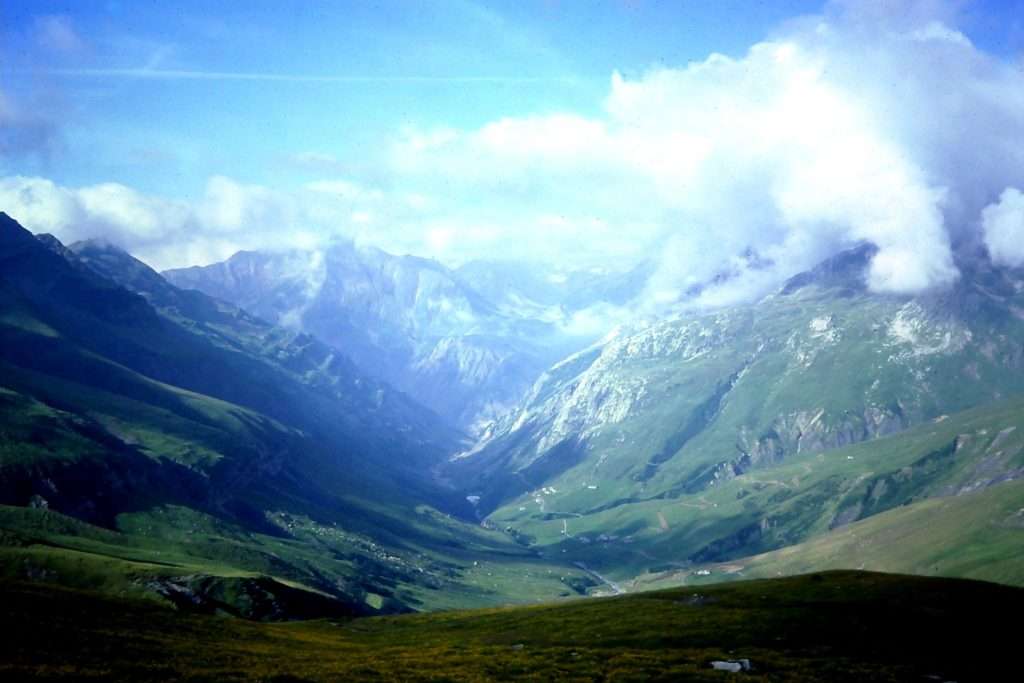
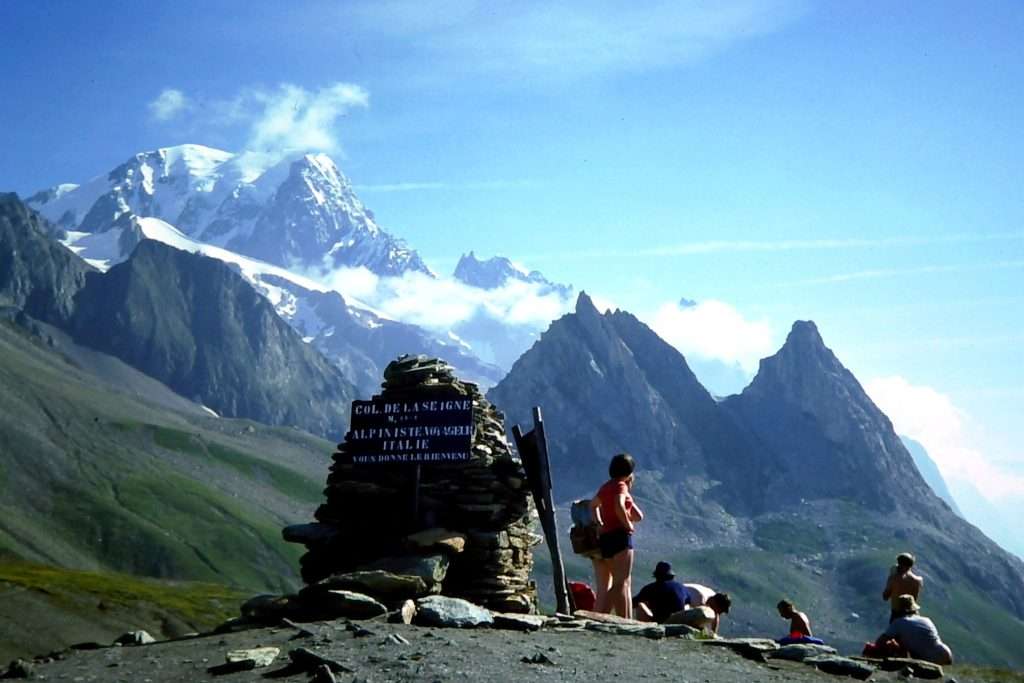
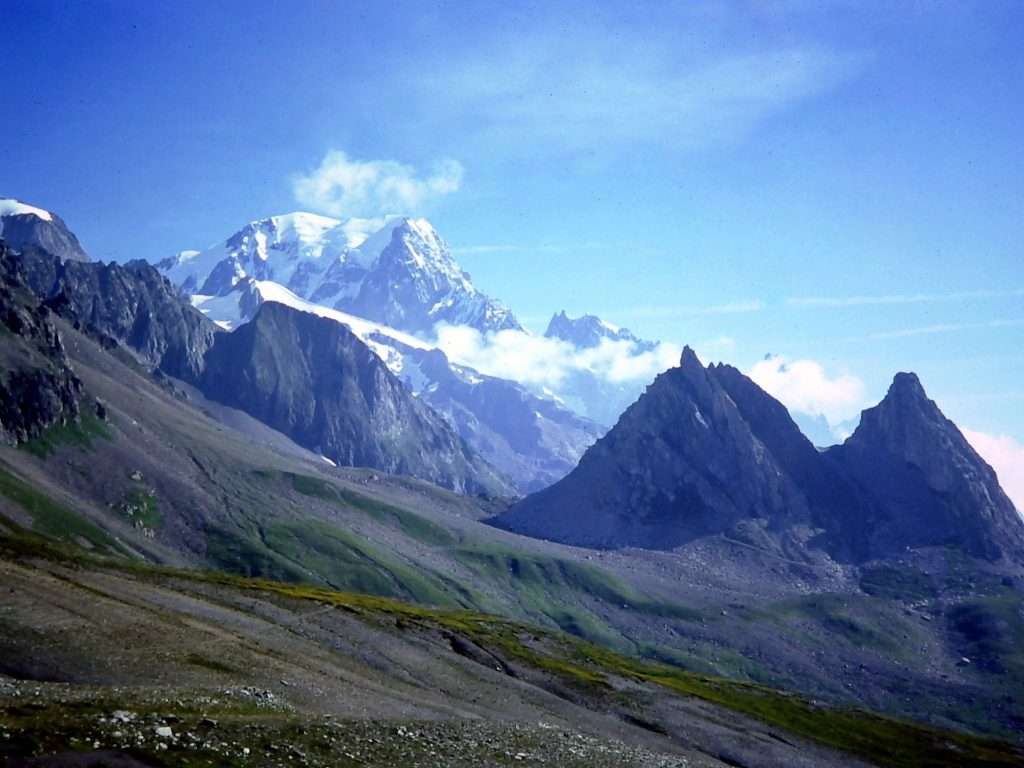
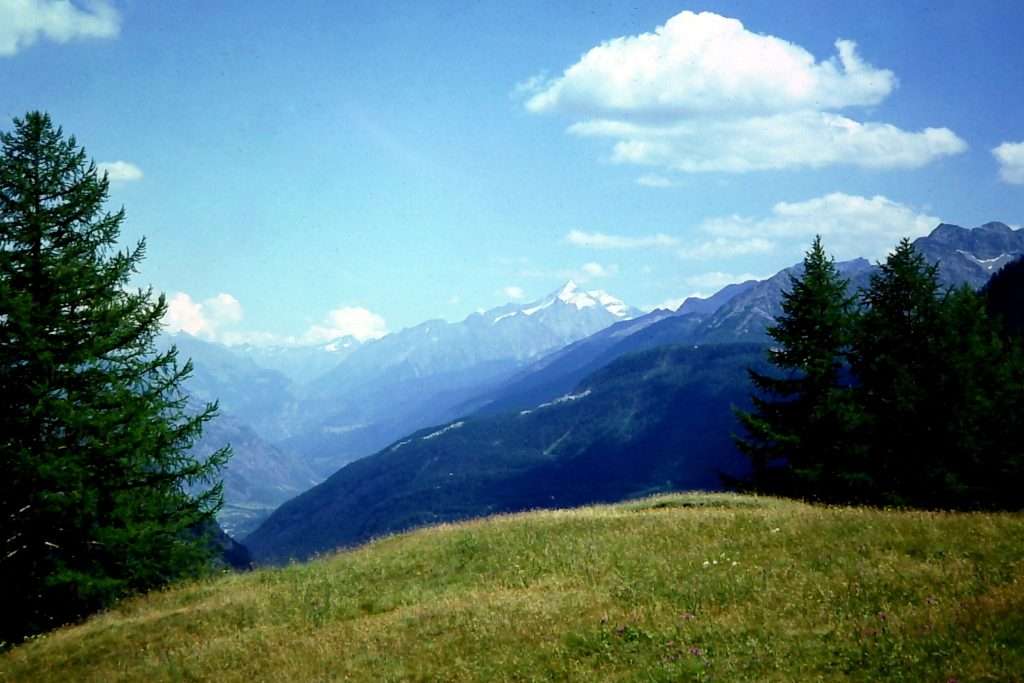
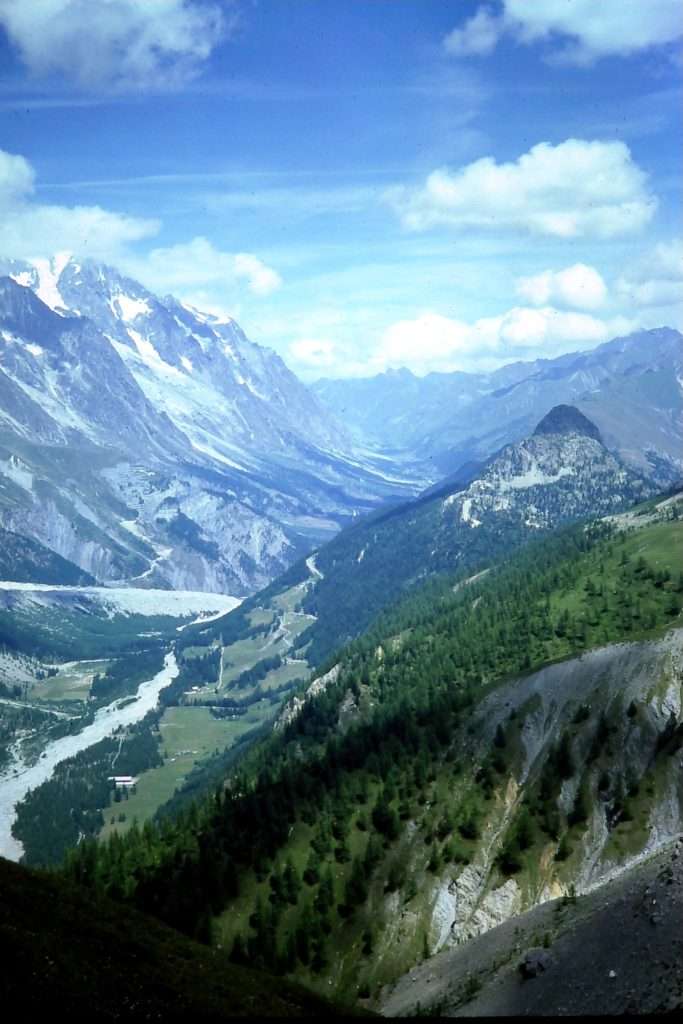
The weather improved as we climbed away from les Mottets and by the time we reached the Col de la Seigne on the Italian border it was sunny and the views were breathtaking!
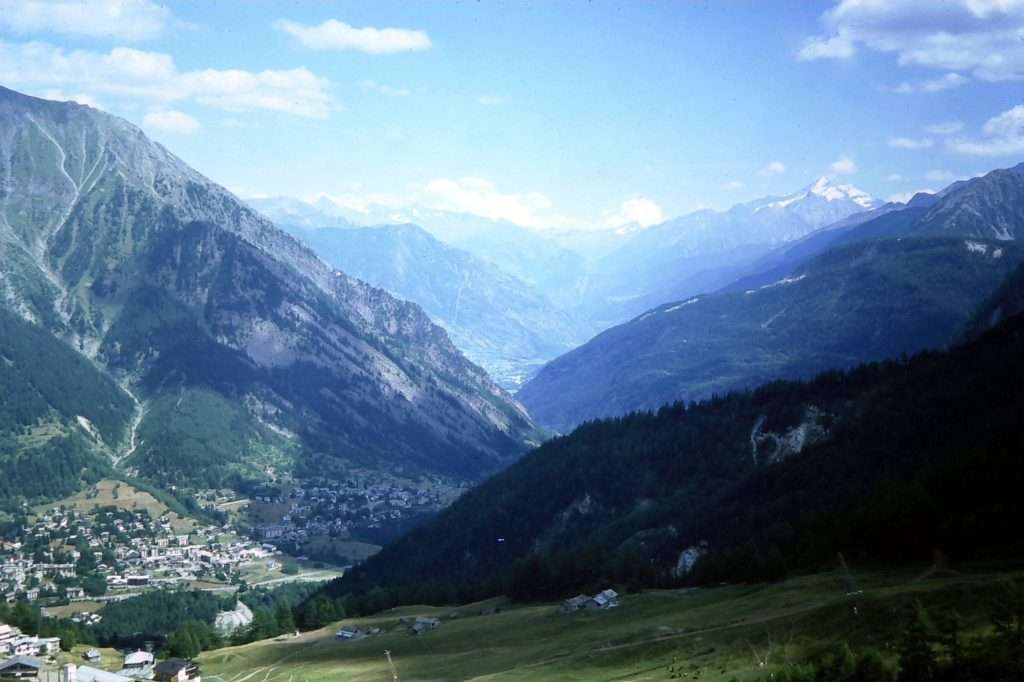
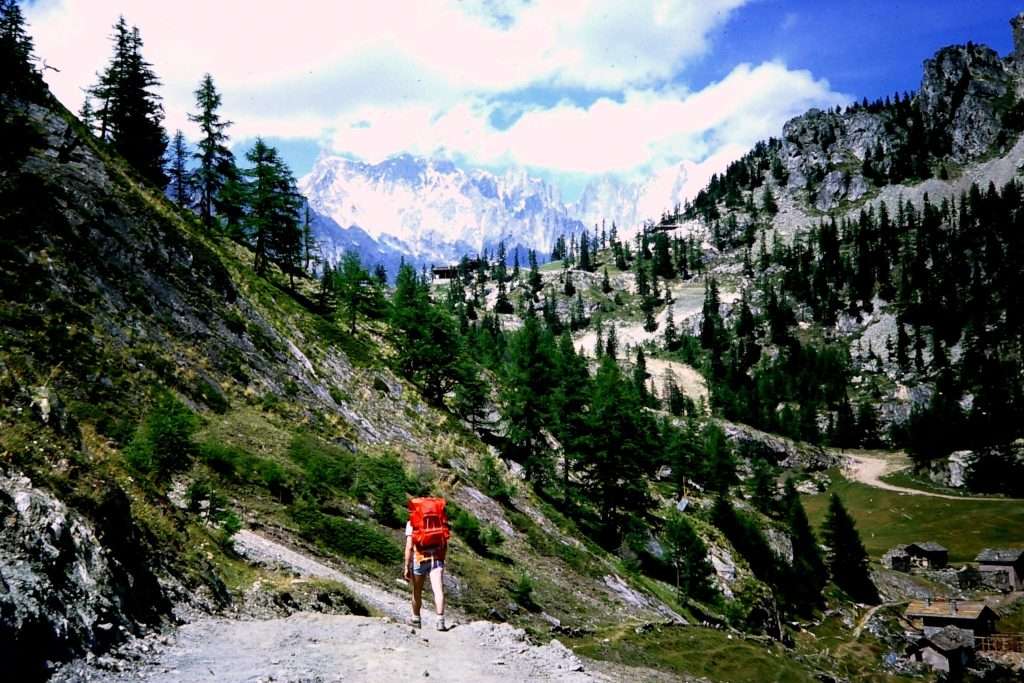
Down from the Col into Val Vény with the Aiguille Noire de Peuterey (3,773 ) piercing the sky ahead. Soon after passing the vast lateral moraine of the Glacier du Miage with its tiny moraine lake, we left the valley and climbed to Col Chécrouit with views of Courmayeur and the Italian side of the Dents du Géants and the Grandes Jorasses.
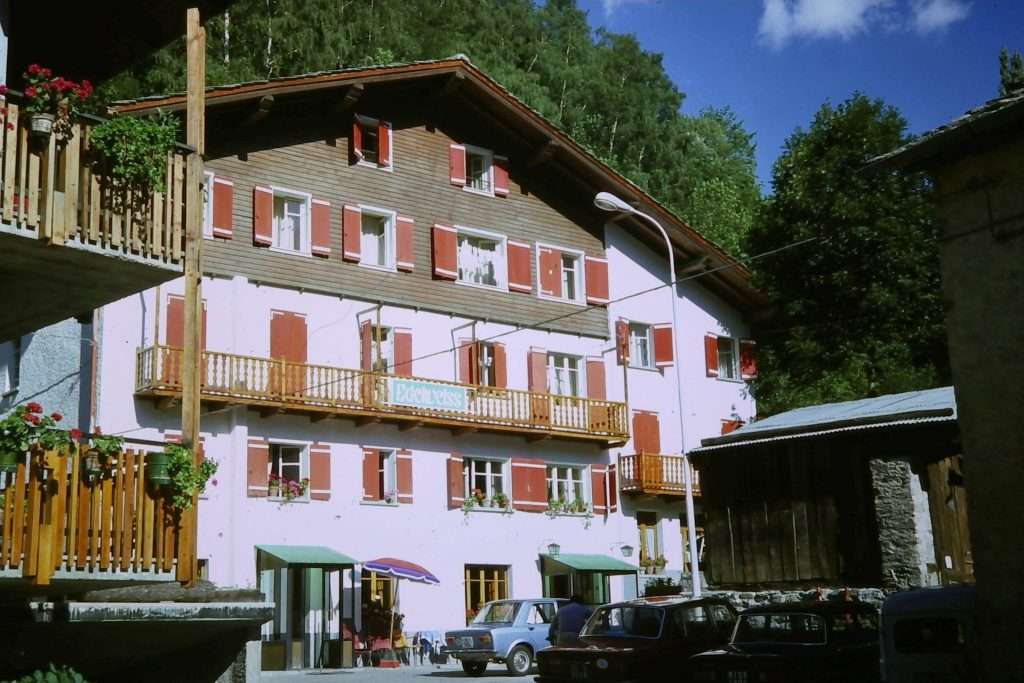
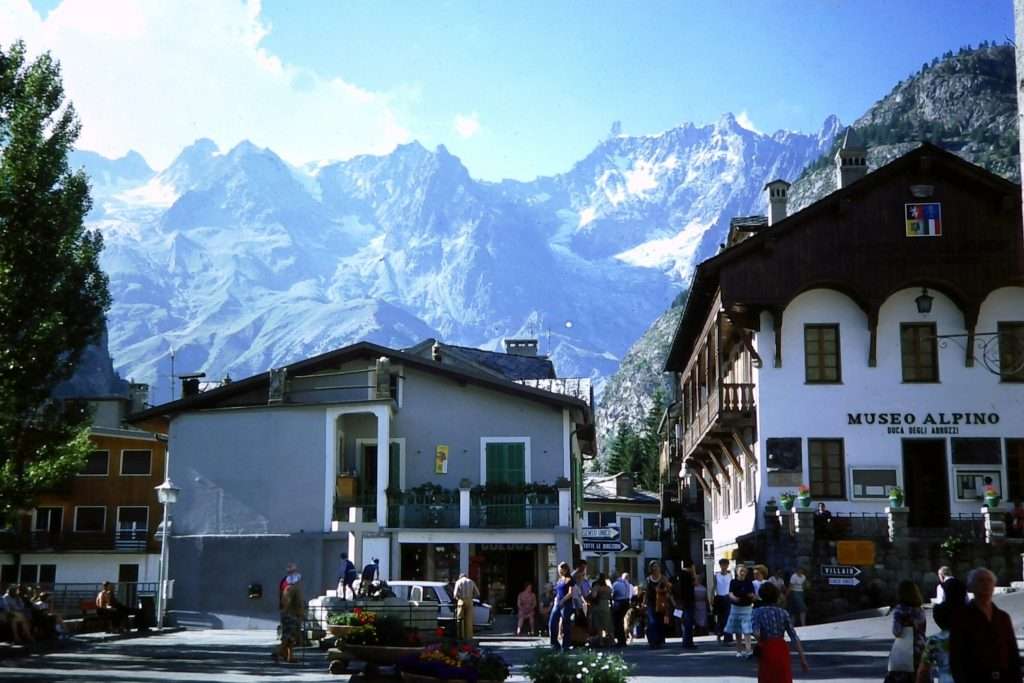
The path dropped down into the village of Dolonne, before crossing the Dora Baltea river into Courmayeur, where we were to spend three nights enjoying the luxury of proper beds at Pension Edelweiss on the eastern side of the old town. I was delighted to discover when researching for this article, that fifty years on the Pension Edelweiss is still owned by the same family and is still welcoming guests!
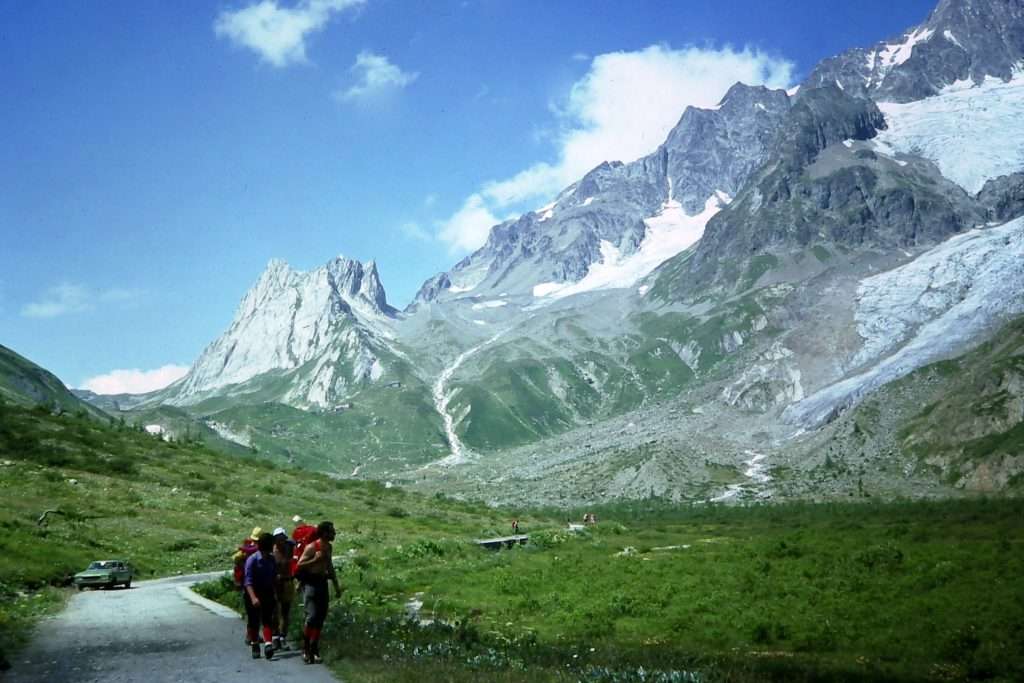
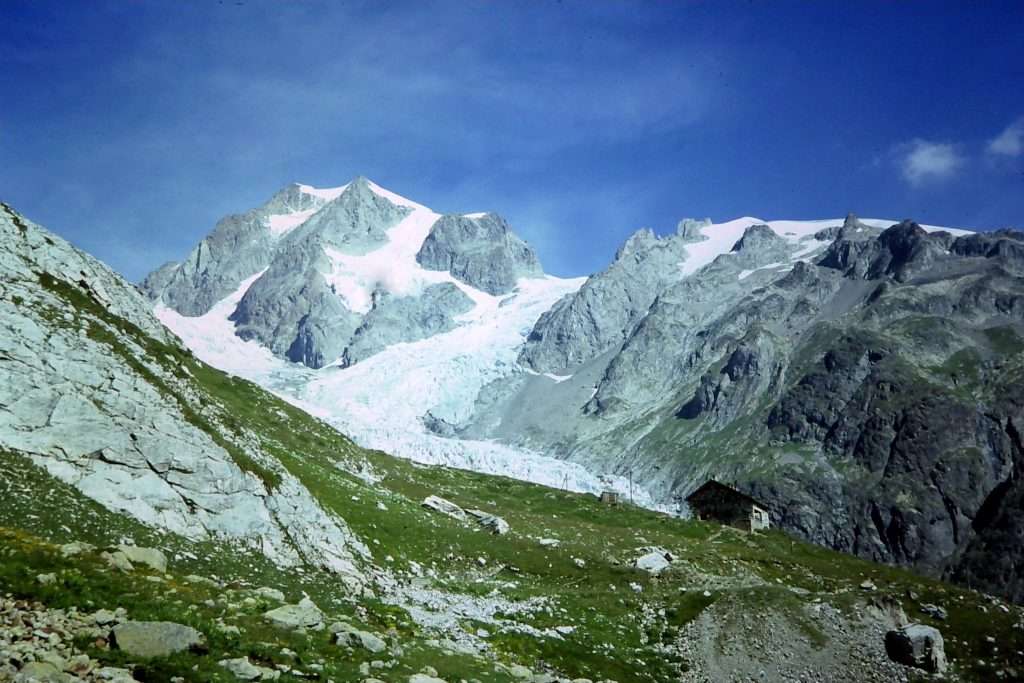
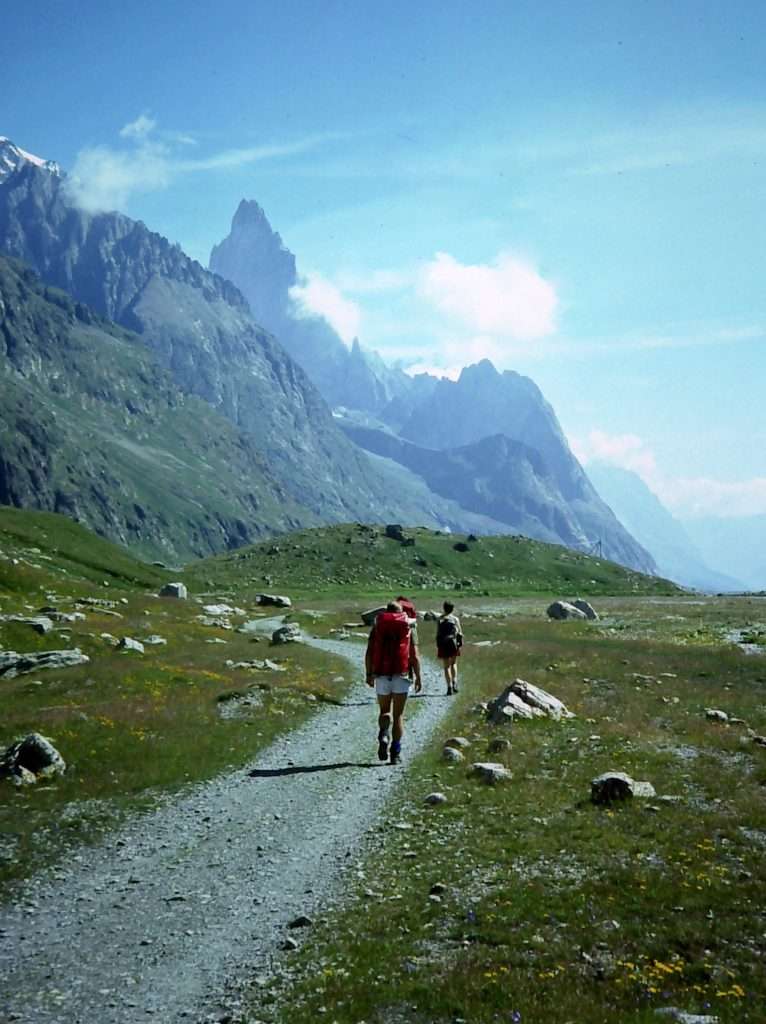
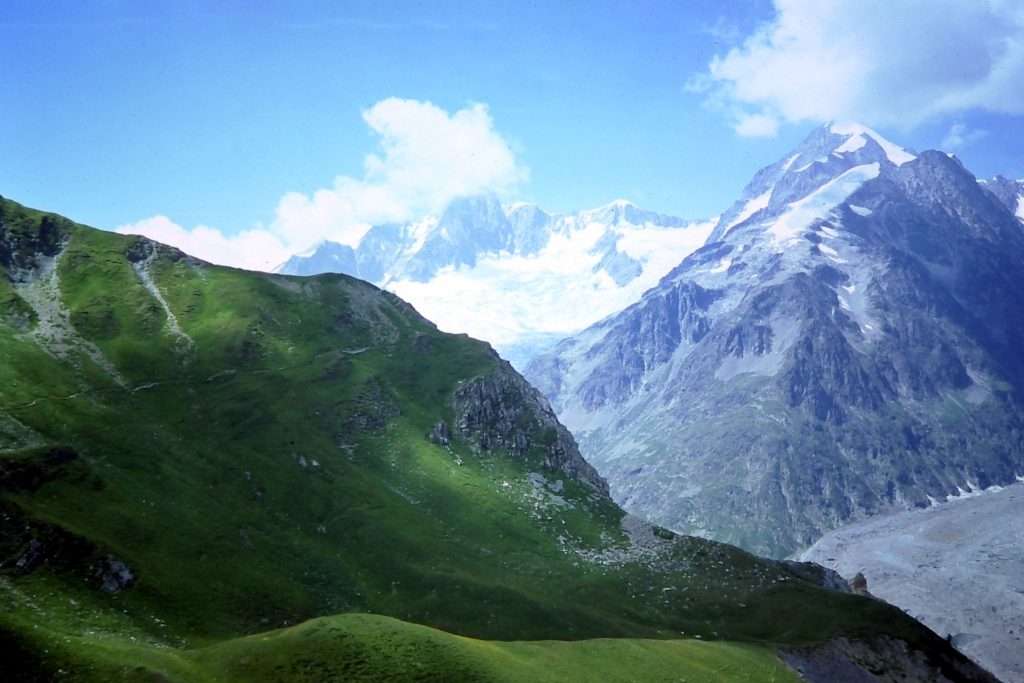
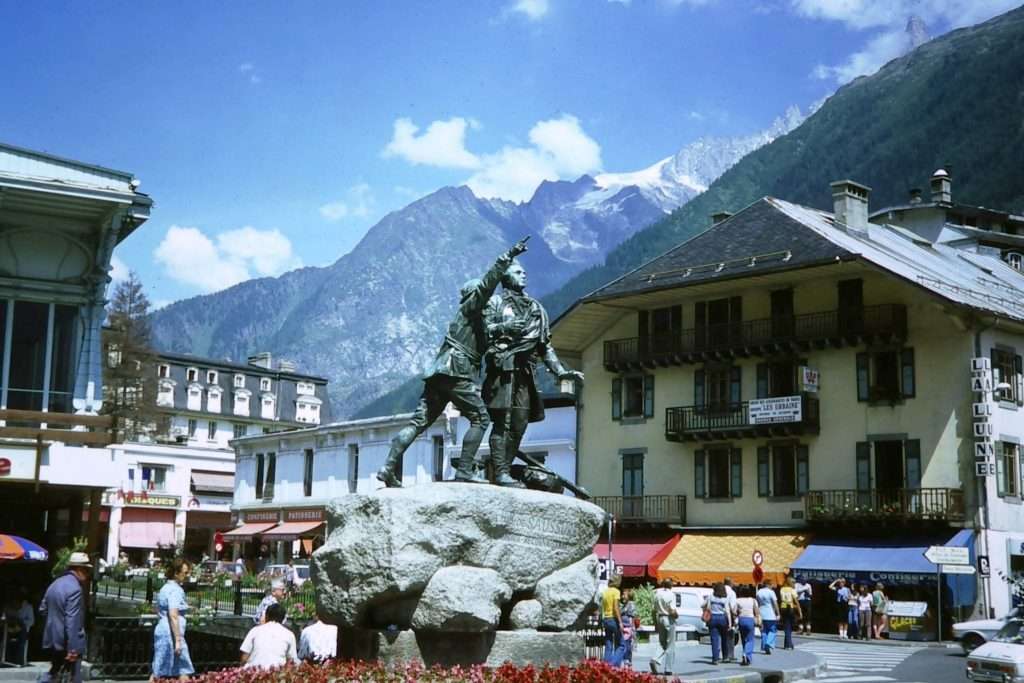
Day 4: Courmayeur & Chamonix
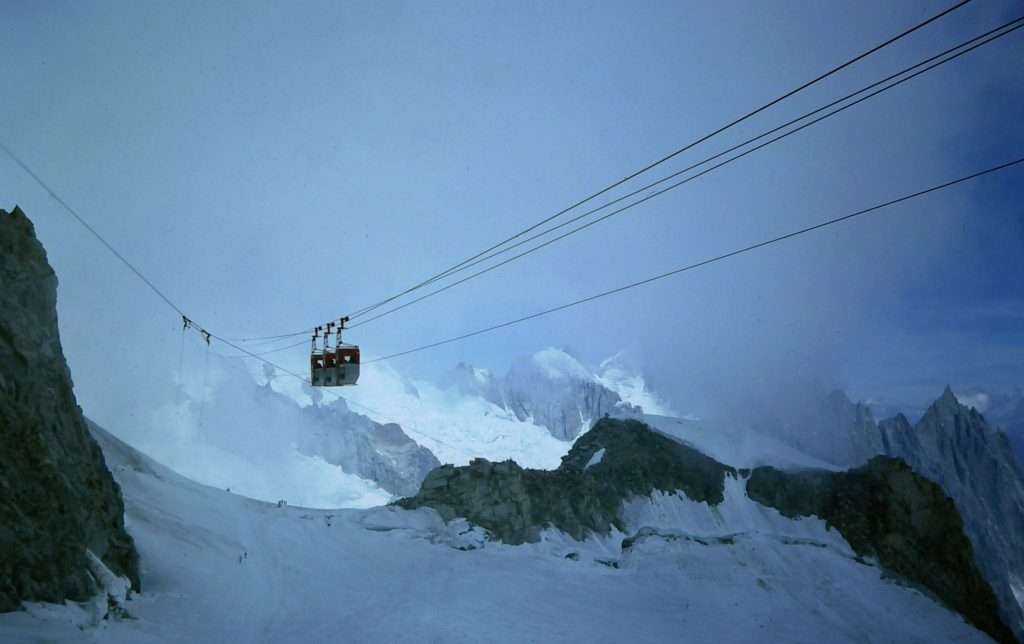
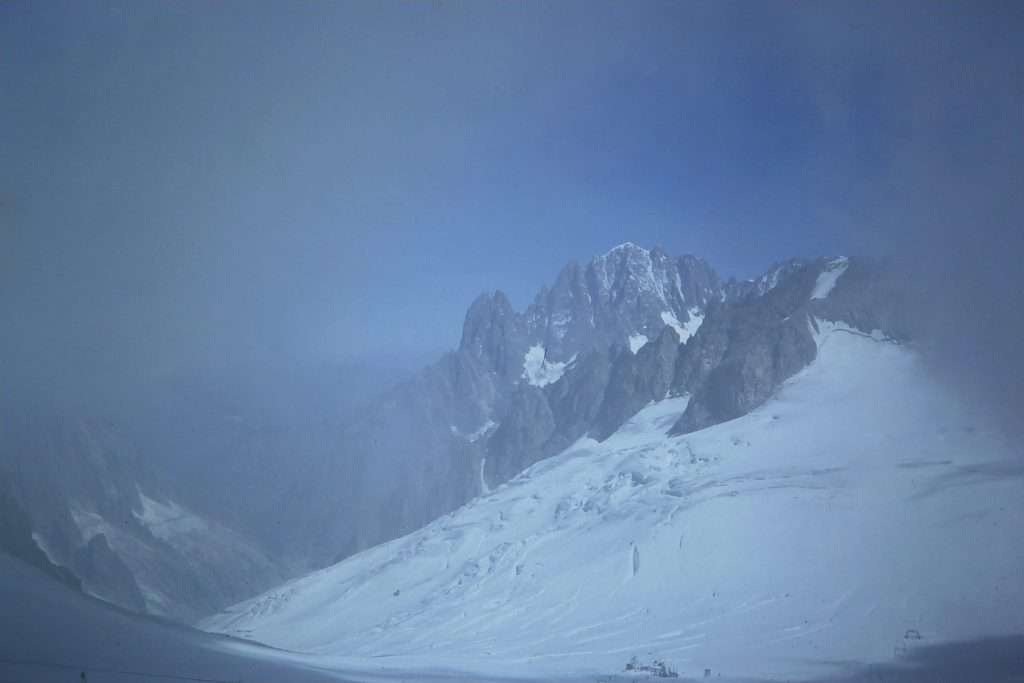
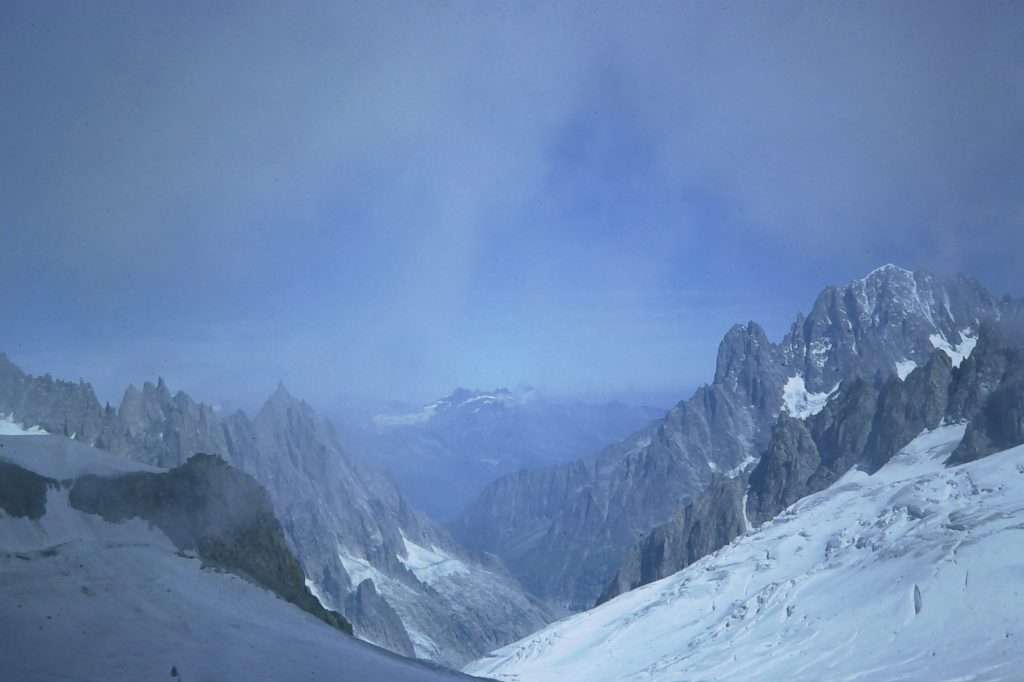
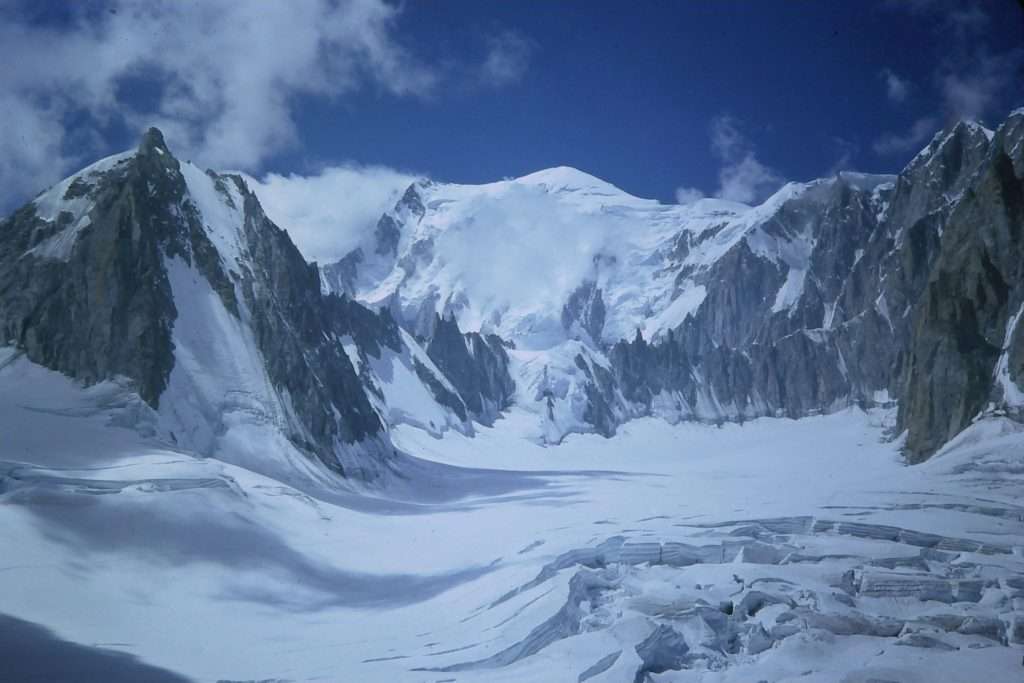
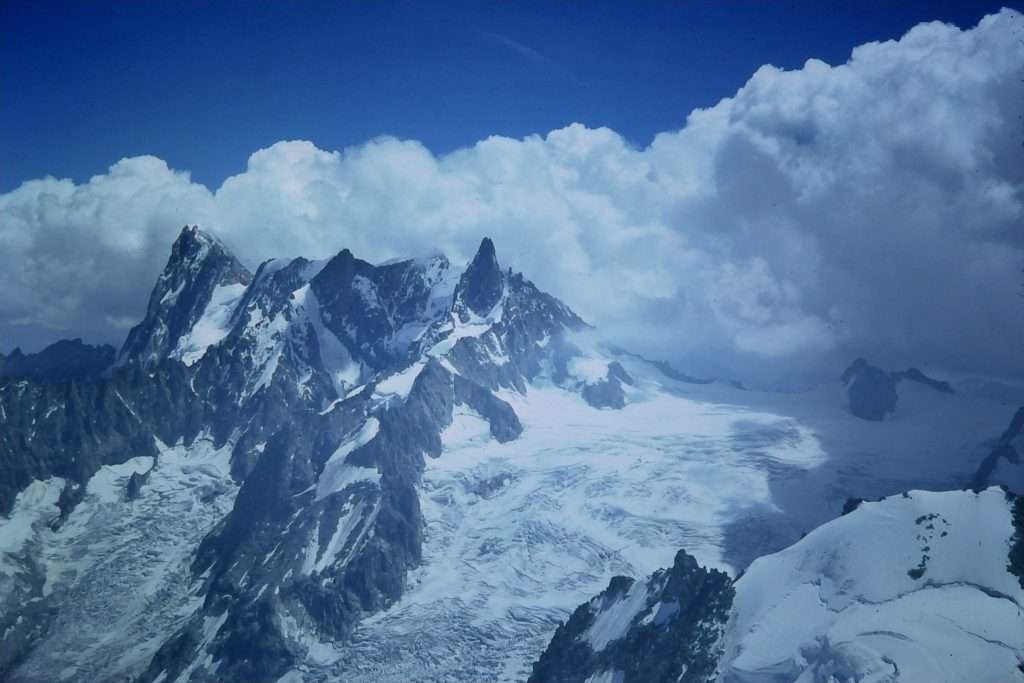
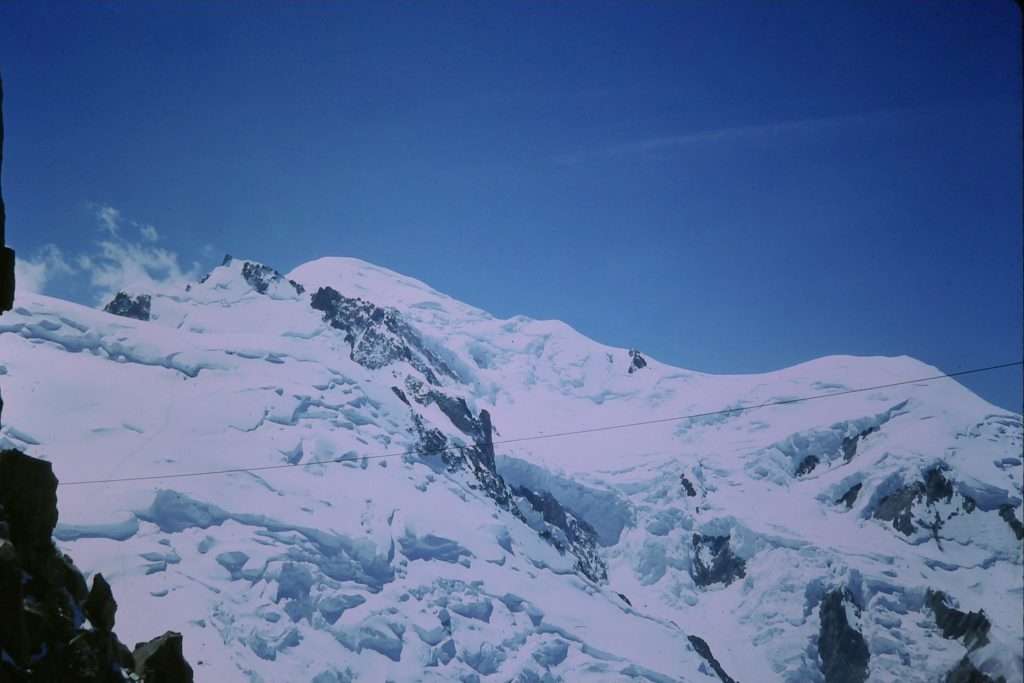
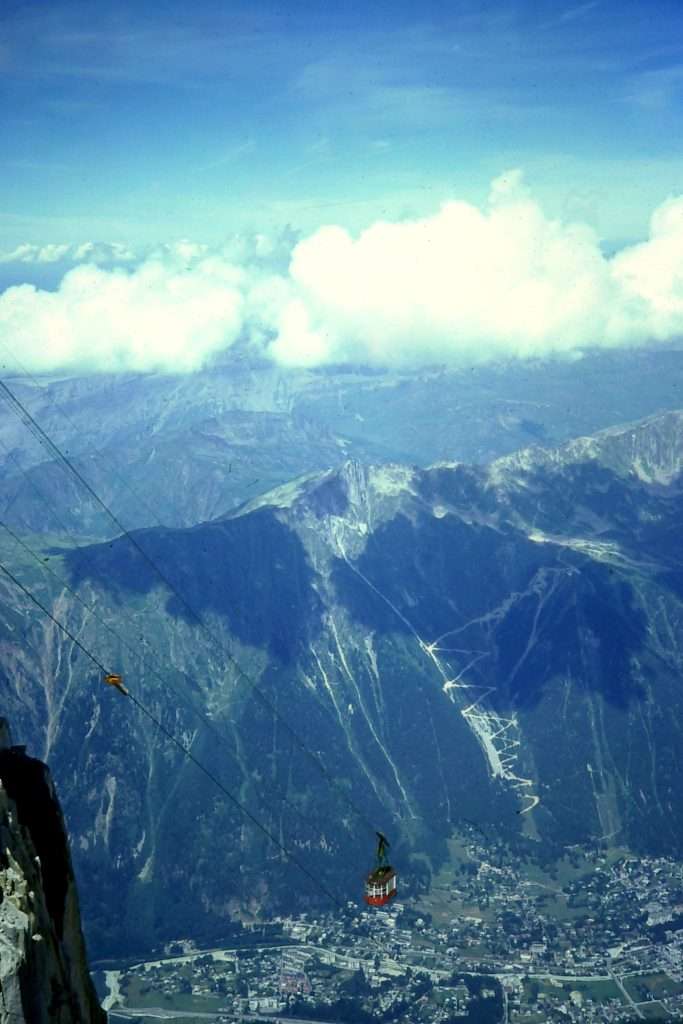
A free day! Three of us decided that we would treat ourselves to cable car and gondola rides, so we took the cable car up to Punta Helbronner. When we arrived, we were in cloud and could see nothing of the spectacular views we had hoped for, but as we waited for the triple gondolas to carry us across the Glacier du Géant and the Vallée Blanche to the Aiguille du Midi, the clouds began to lift and before long the peaks were clear.
The ride across the glaciers was an amazing experience that I will never forget. The cable car from the Aiguille du Midi took us down to Chamonix and we caught a bus through the tunnel back to Courmayeur.
Day 5: Mont de la Saxe & Col Sapin
After our second night at the Pension Edelweiss we walked up Mont de la Saxe. The weather was occasionally misty and very hot, so our leader decided that we would do this section of the route as a day walk which meant we didn’t have to carry heavy rucksacks. We crossed the Col Sapin and returned to Courmayeur for a third night.
Day 6: Courmayeur to Ferret
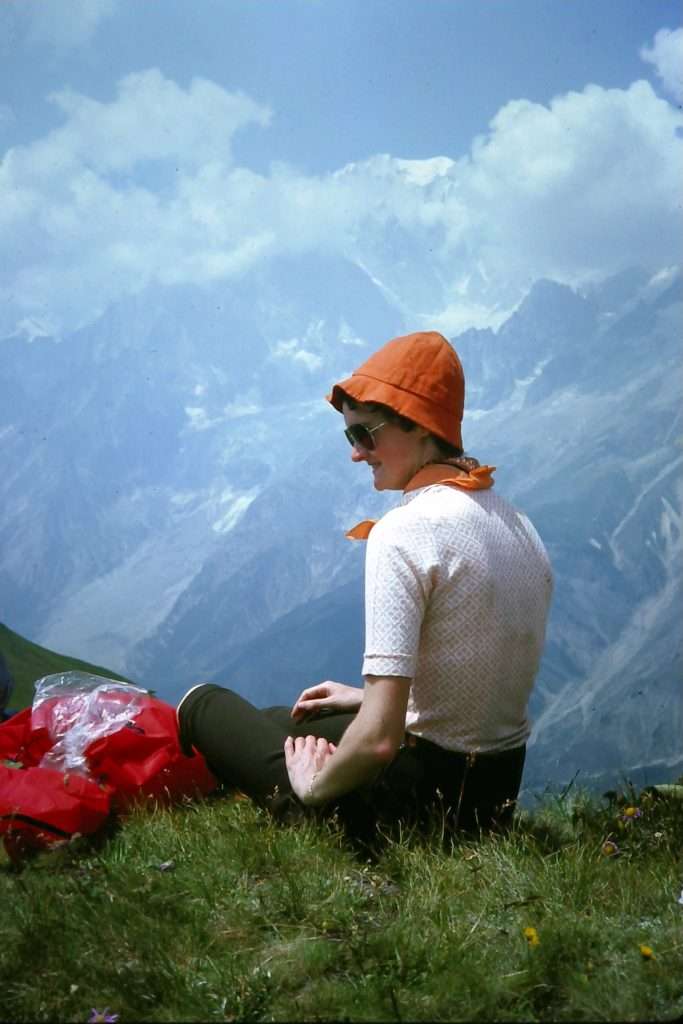
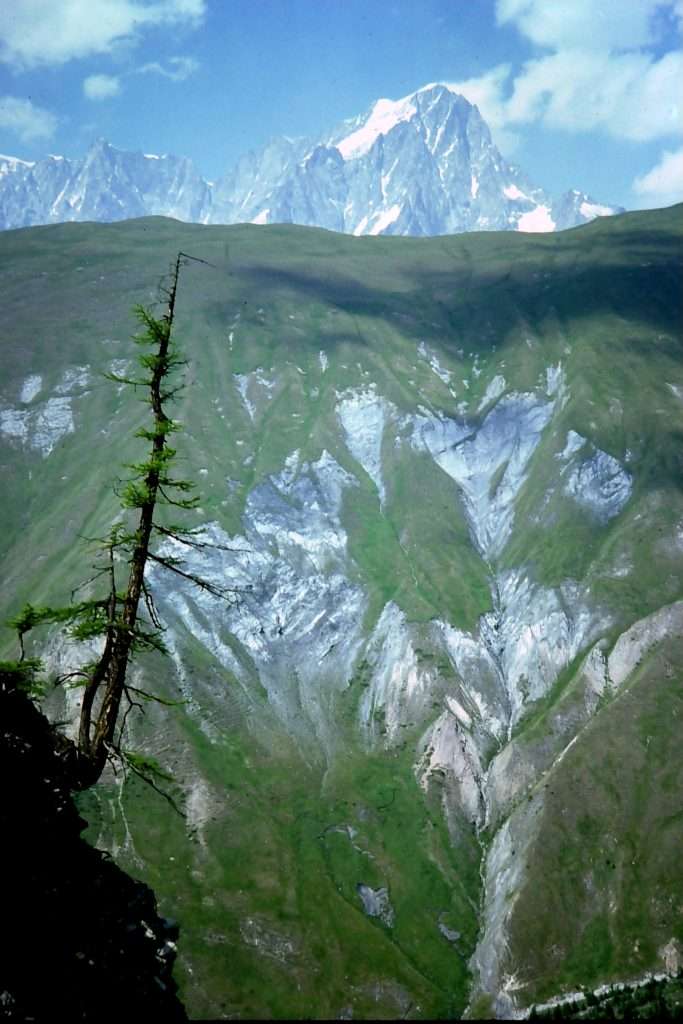
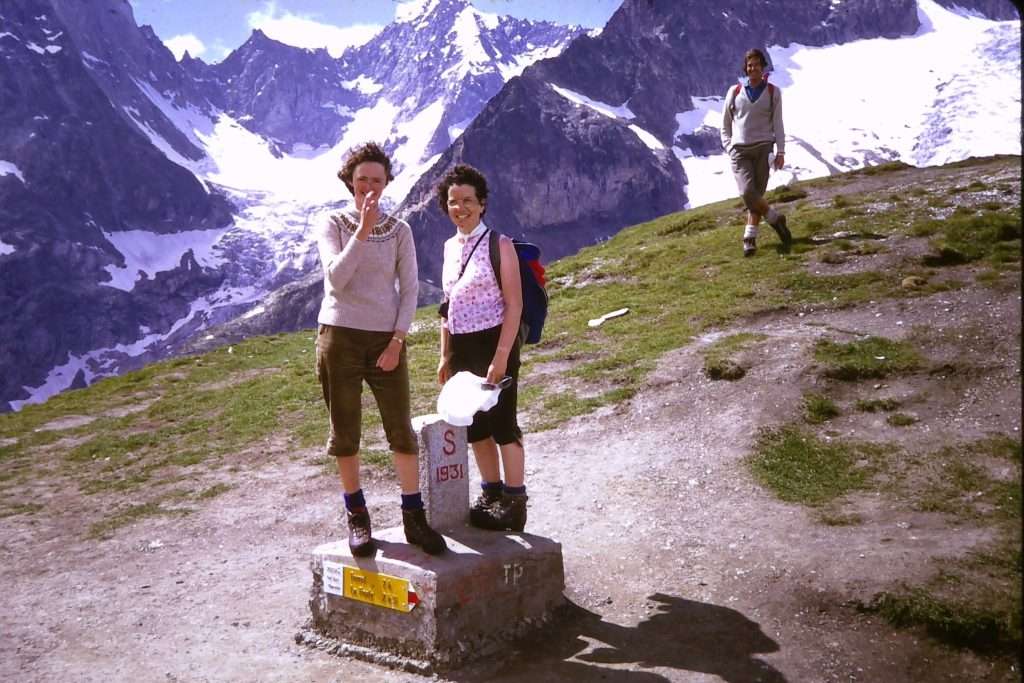
Instead of slogging the 10 kilometres up the valley in broiling heat we travelled from Courmayeur to La Vachey by bus before resuming the TMB and climbing up to Grand Col Ferret on the border between Italy and Switzerland.
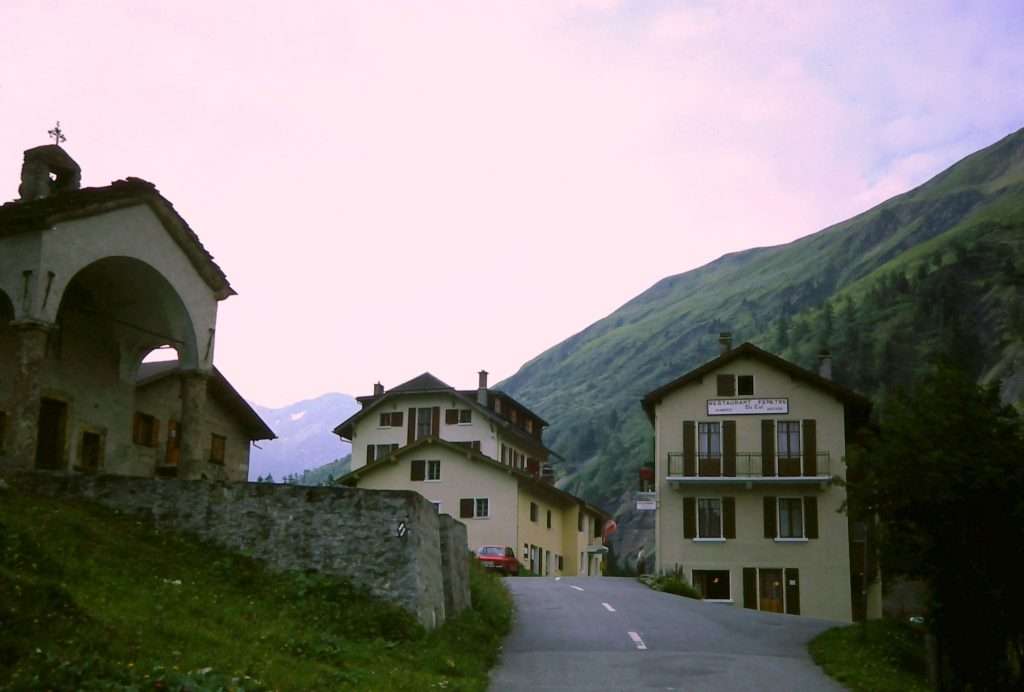
I had been to the Col the year before while on holiday in Orsières and it was nice to be there again. We descended to Ferret village in a thunderstorm and were glad to find that we all got places in the dormitory of the Pension du Col de Fenêtre.
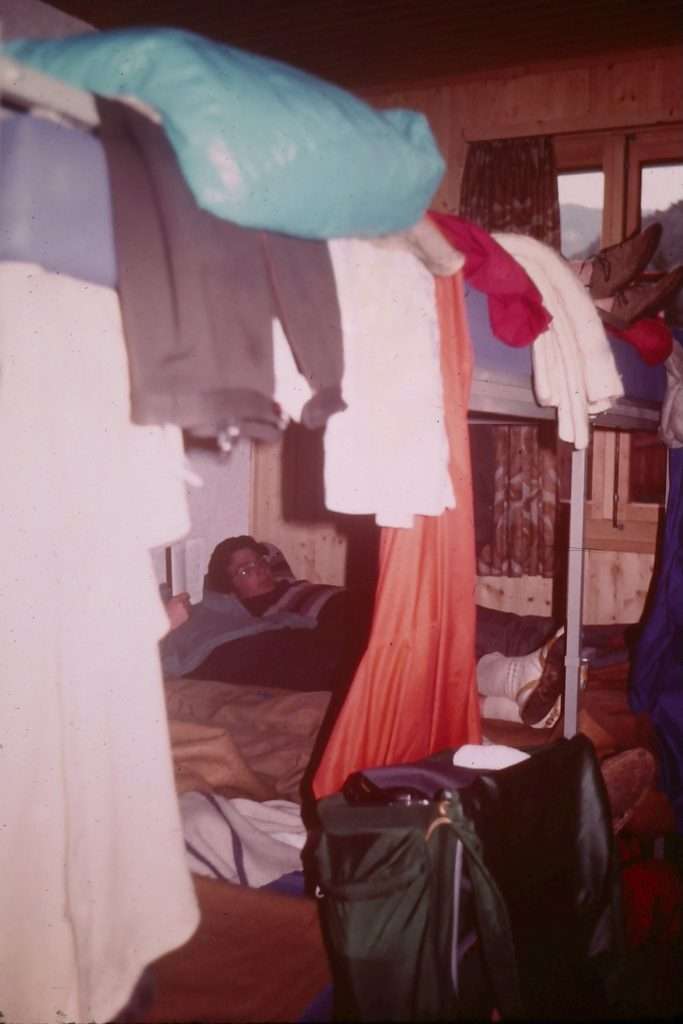
The dormitory was small and after all the rain it soon resembled a sauna with so many steaming clothes and bodies!
Day 7: Ferret to Champex & Relais d’Arpette
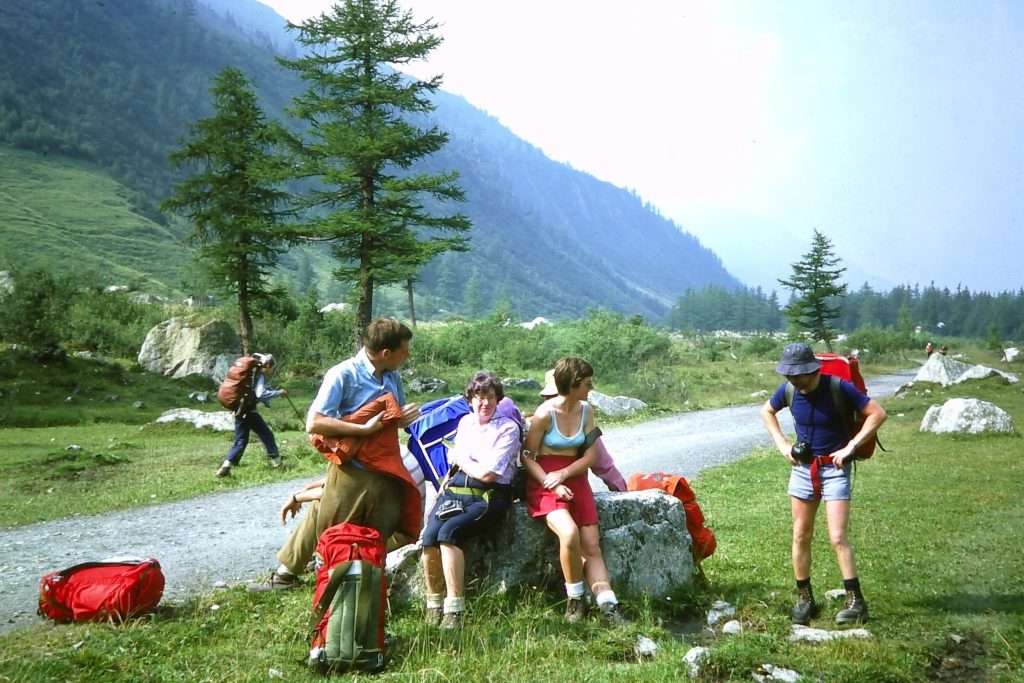
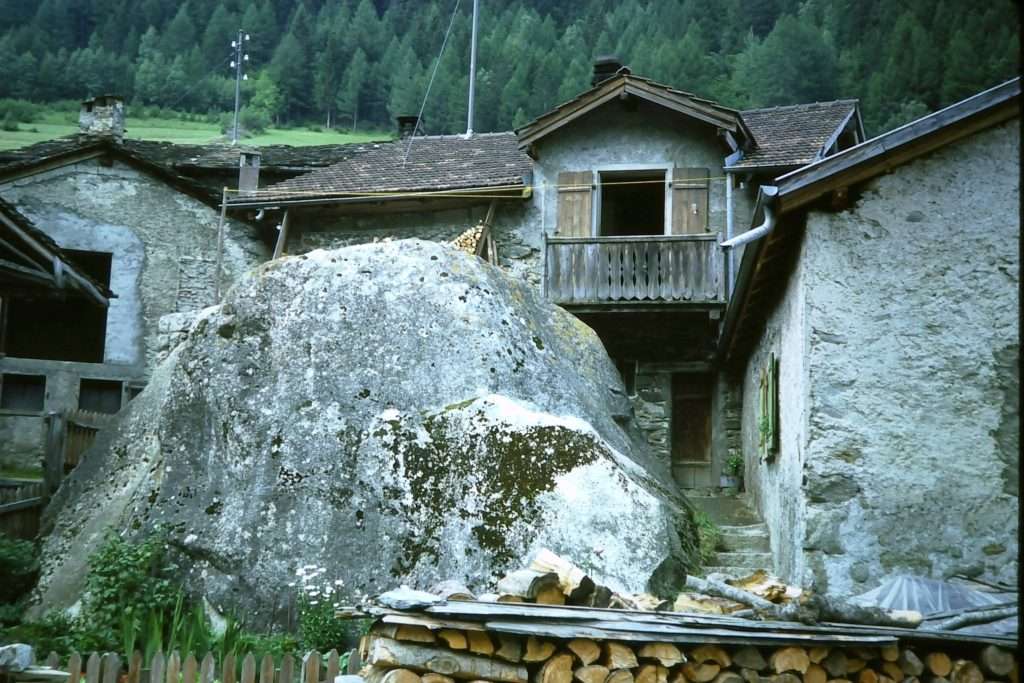
A sunny day and a downhill path for the morning as we descended Val Ferret, stopping for a break and a brew at Issert, where we passed a tiny cottage built behind an enormous boulder.
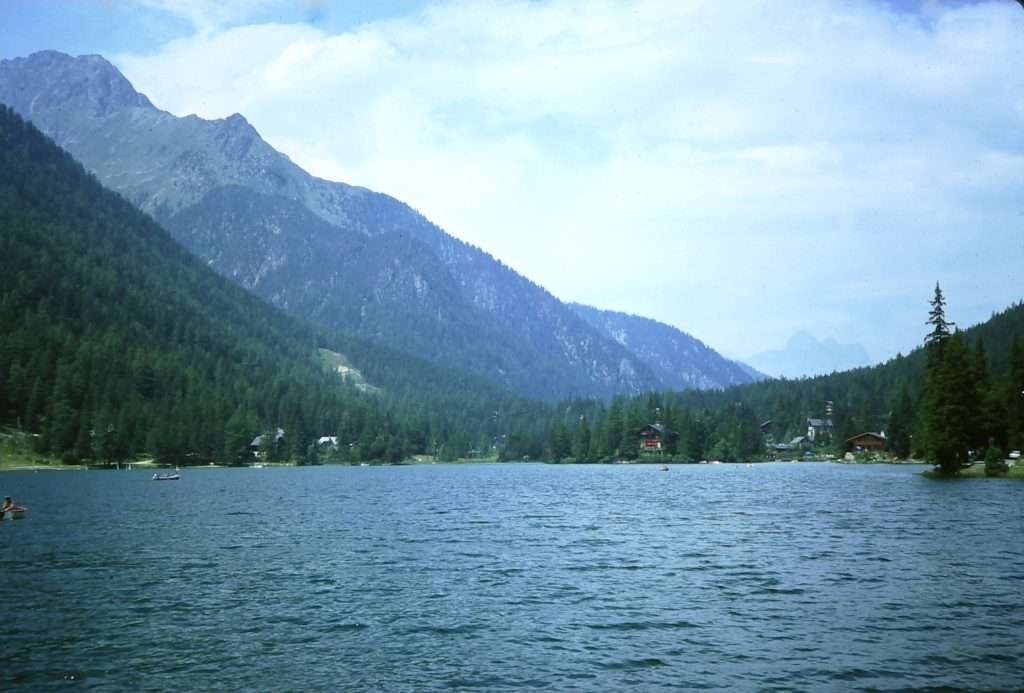
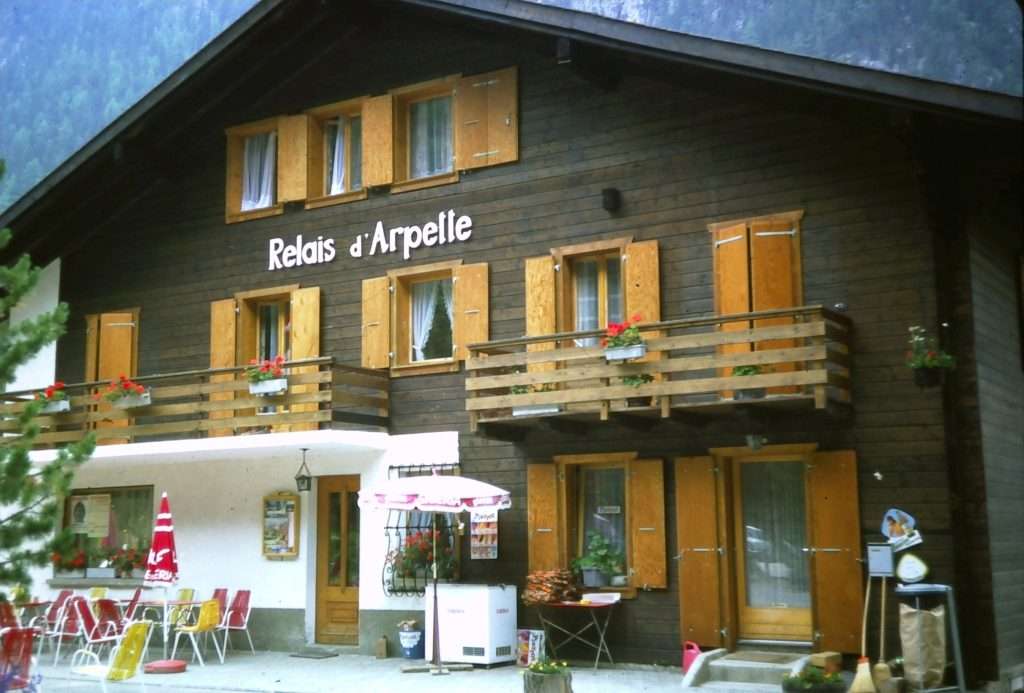
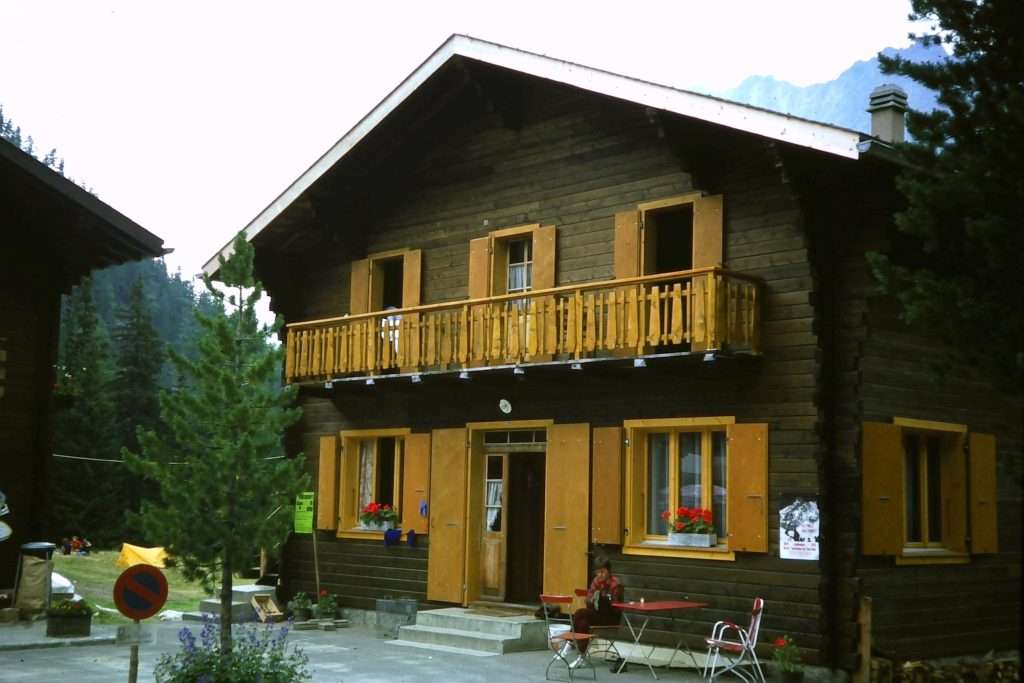
From Issert the path climbed to Champex, prettily situated on its lake. We stopped in Champex for lunch then continued to the Relais d’Arpette where we slept in the dormitory alongside the main building.
Day 8: Relais d’Arpette to Col de Balme & Argentière
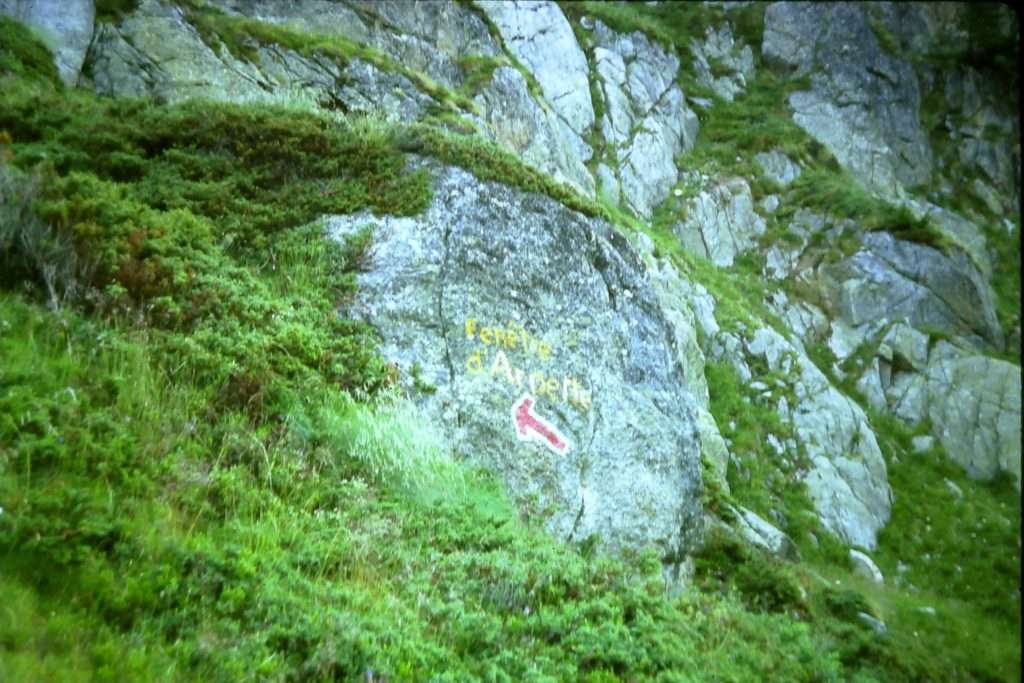
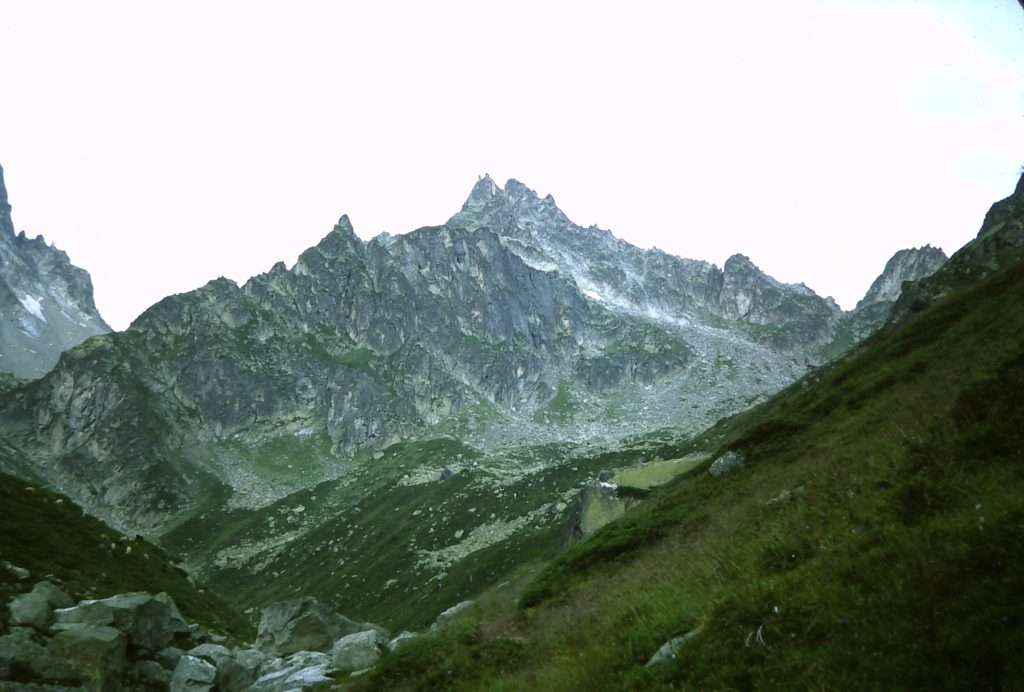
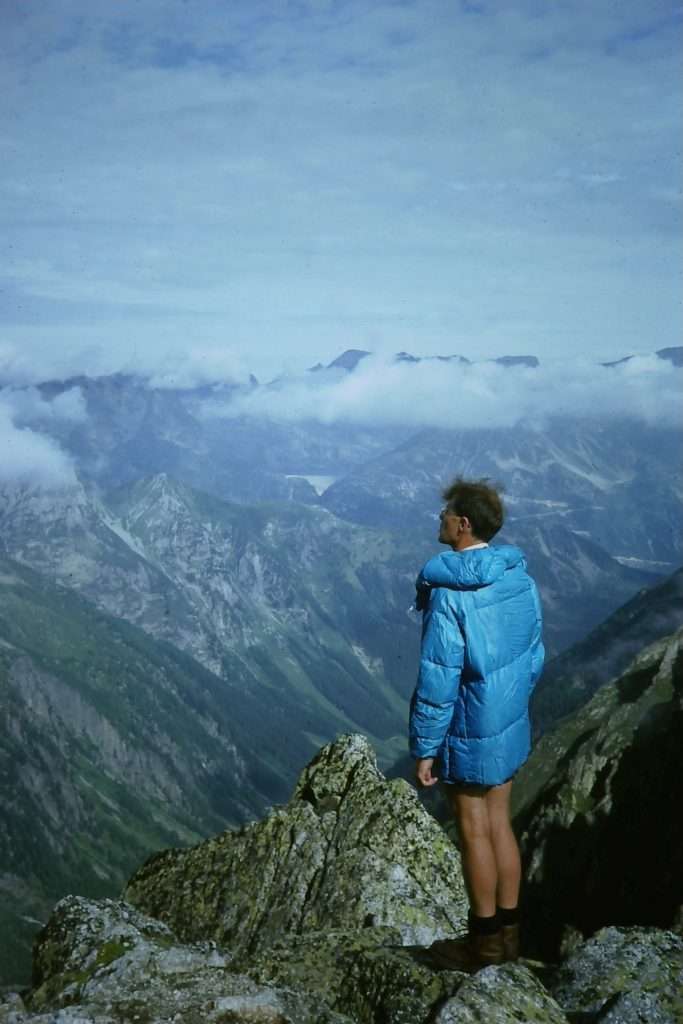
We were up and away soon after 4 am for the longest day’s walk of the whole trip. We climbed up the Val d’Arpette to the Fenêtre d’Arpette overlooking the icefall of the Trient glacier. Steeply down beside the glacier to the Chalet du Glacier at Trient, where we had lunch and a rest!
Our next night’s lodging was intended to be the refuge on the Col de Balme, so after lunch we pressed on in torrential rain to the refuge, but when we arrived, tired and wet, we found that there were only five spaces available in the dormitory!
Our group being ten, we quicker walkers reserved the five spaces for the five slower members, and we pressed on down into the Chamonix valley to look for overnight accommodation. We eventually found somewhere to stay in Argentière and after dinner we collapsed exhausted into our bunks after a 15 hour day!
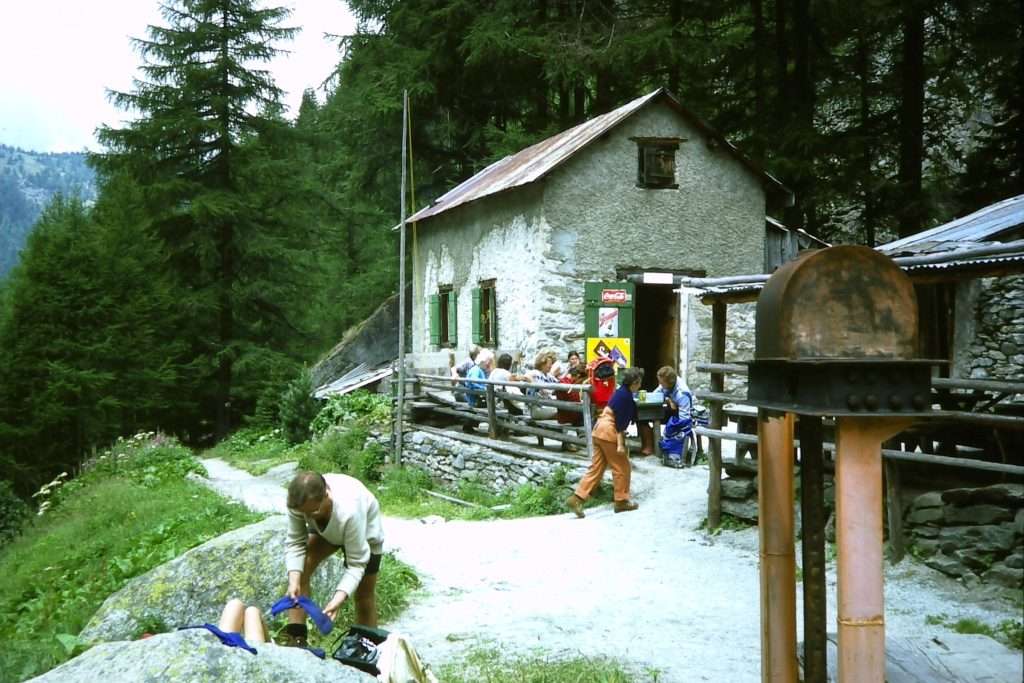
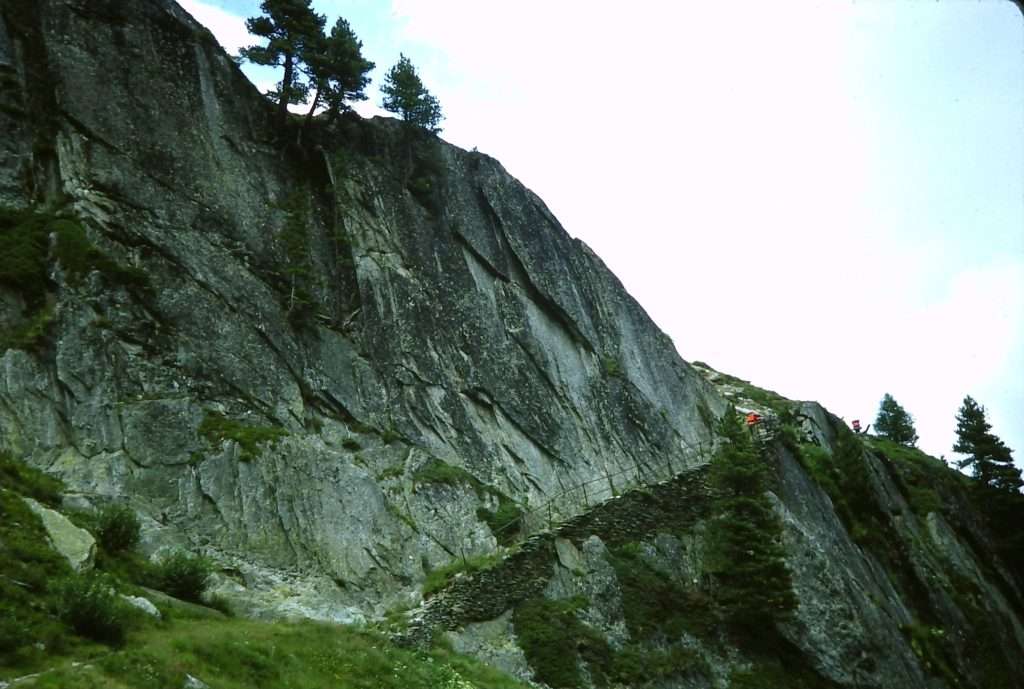
Day 9: Argentière to la Flégère
The rain persisted and the cloud was very low, so our leader decided that we would not attempt the section then marked as “passage dangereux” up to Chéserys and Lac Blanc because it would be too risky in the wet conditions – there being no ladders in place then – and instead we walked up the footpath from Argentière to the refuge at la Flégère.
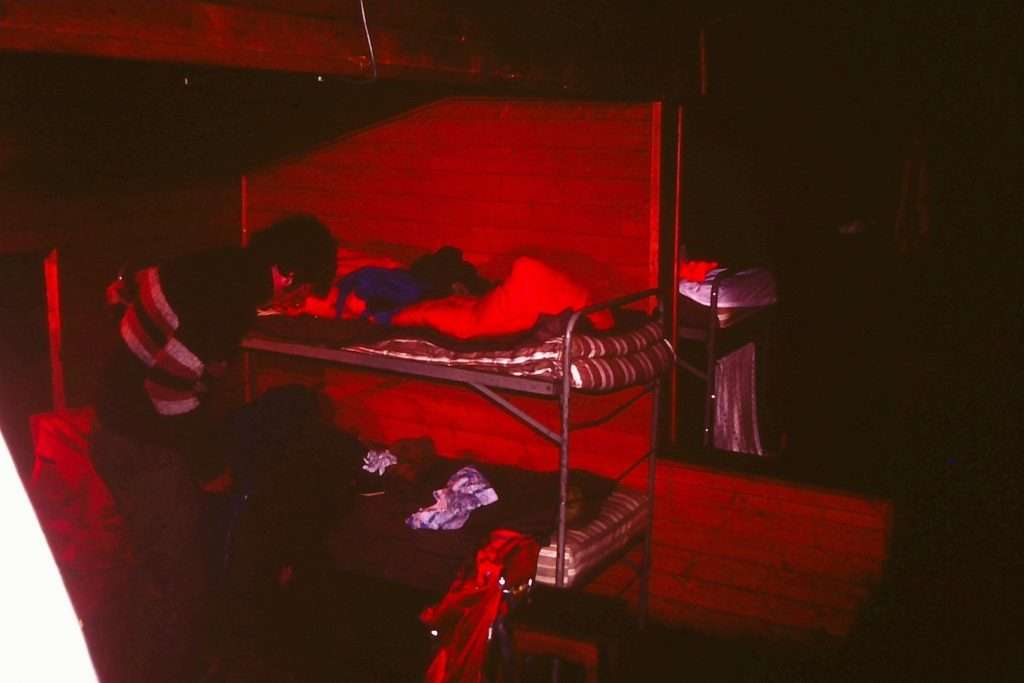
By late afternoon the rain had stopped, and we were treated to a glorious sunset which turned the snows of Mont Blanc pink. The wood-panelled dormitory at la Flégère was our “home” for two nights.
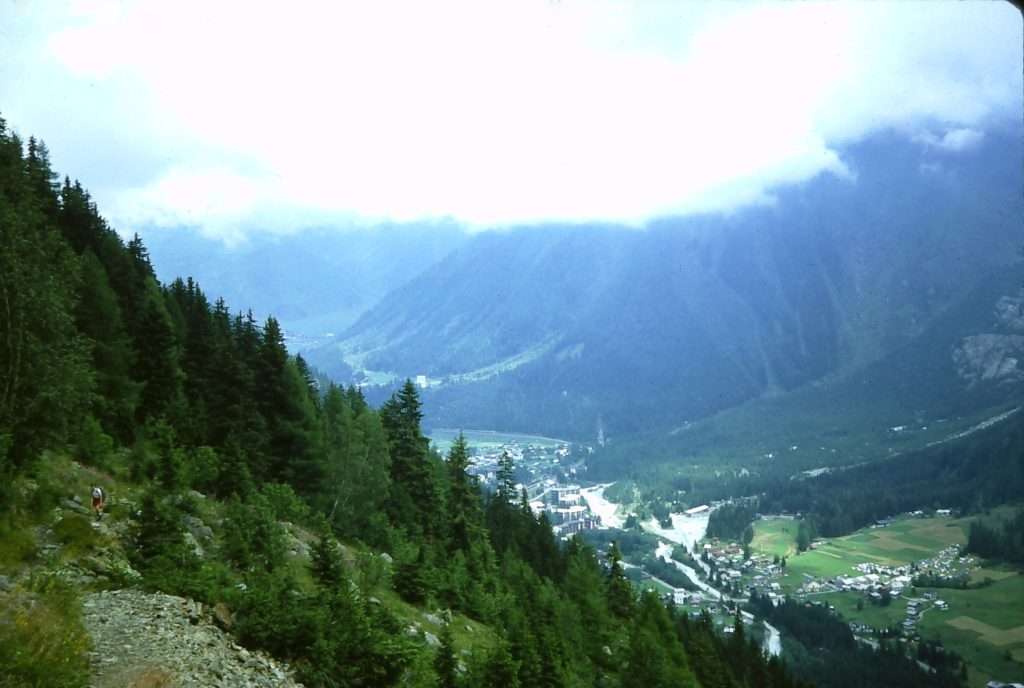
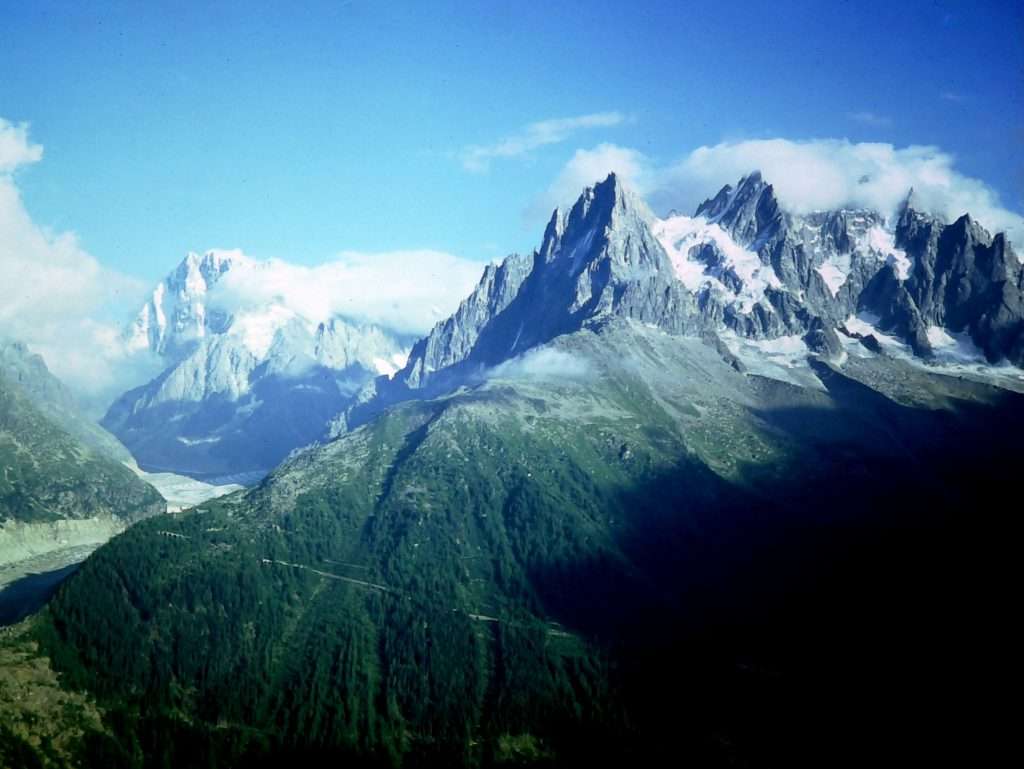
Day 10: Rest day at la Flégère
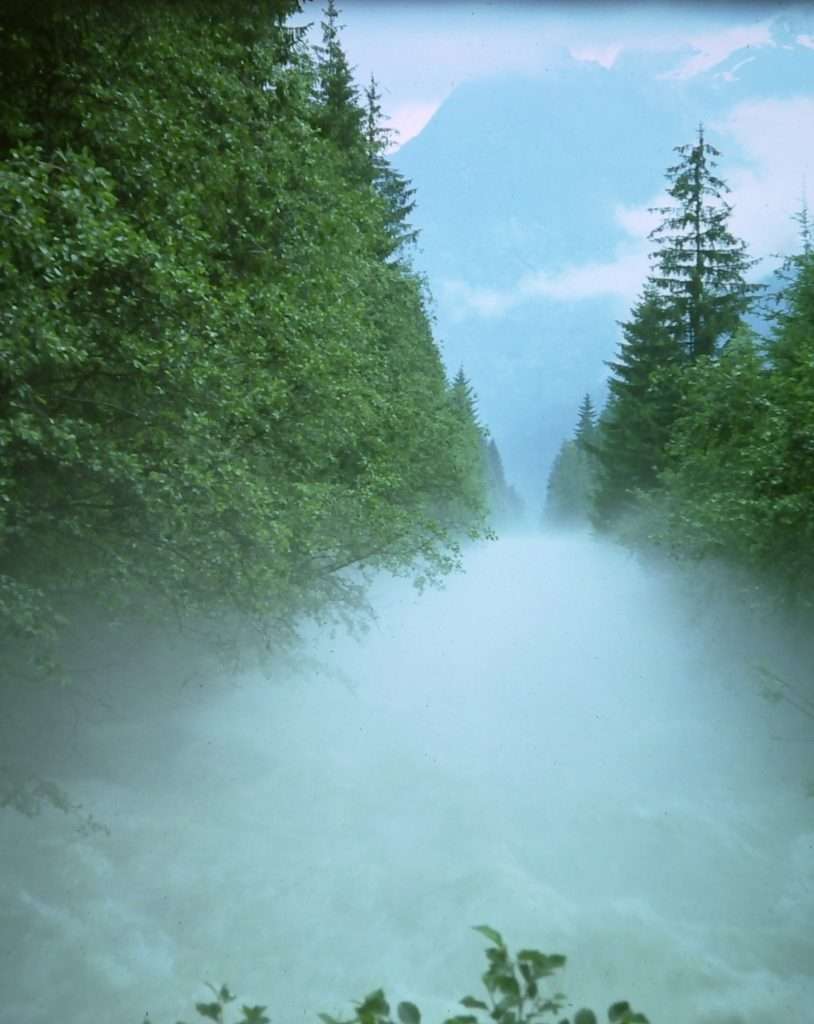
Another rest day and another day of low cloud and torrential rain. We walked down into Chamonix where the rain had swollen the River Arve to such an extent that it was only just getting under the town’s bridges! After plodding back up the mountainside, we spent our second night at la Flégère.
Day 11: la Flégère to Hotel Bellevue
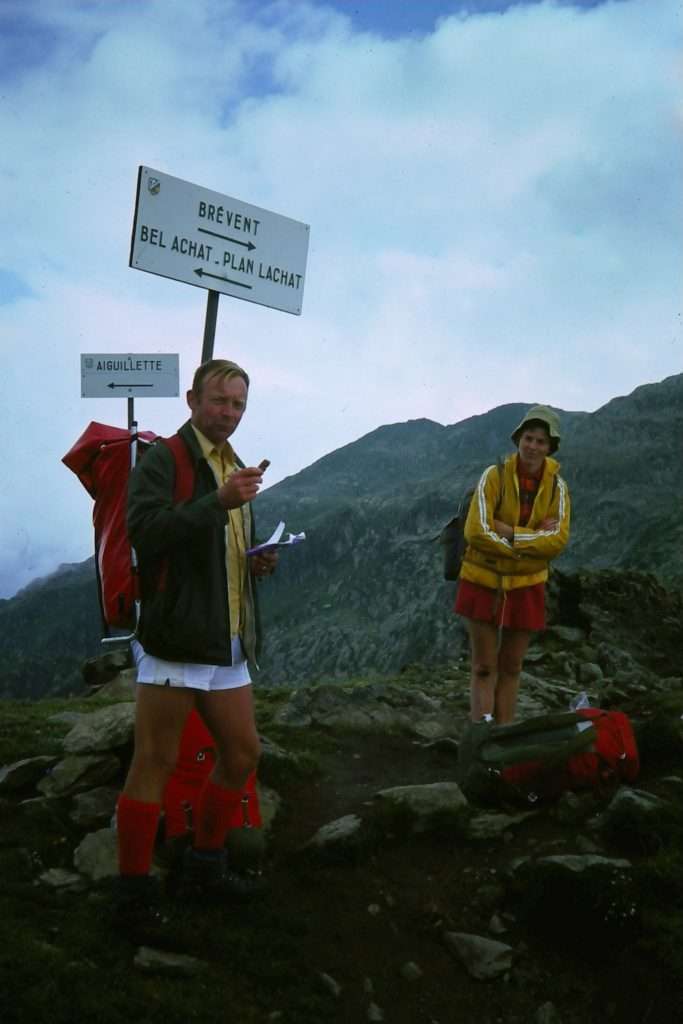
A dry but cloudy morning as we left la Flégère. Four of us walked over le Brévent while the remaining six took the Petit Balcon path down to les Houches, where we regrouped for lunch.
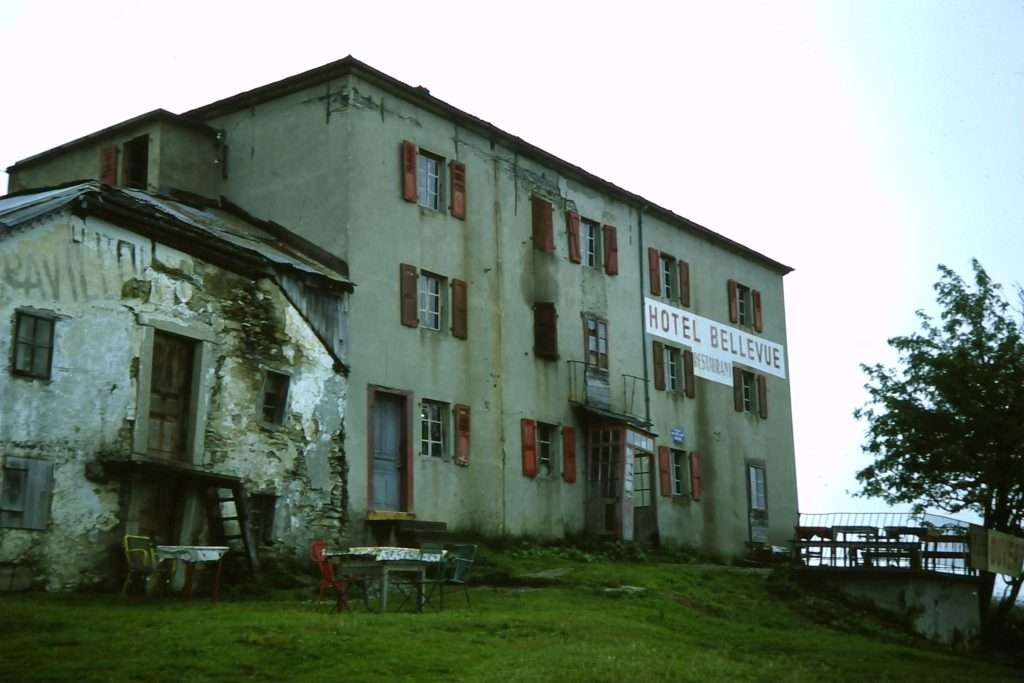
More rain in the afternoon as we climbed up to the Col de Voza and the Hotel Bellevue, where we were to spend two nights. I was looking forward to staying in another hotel, but to say that Hotel Bellevue was a disappointment would be a massive understatement!
It was in a dreadful state of dilapidation, but it made for a memorable two nights! Our group leader had stayed there several times and the two elderly ladies who ran the hotel remembered him and promptly brought out some of their home-made plum liqueur!
On the plus side the beds had feather mattresses, but on the minus side the lavatory was over a big deep hole in a room at one end of the building. Where the waste went was anybody’s guess, but the smell was awful and one to hold one’s breath when venturing in.
Day 12: Bionnassay Village
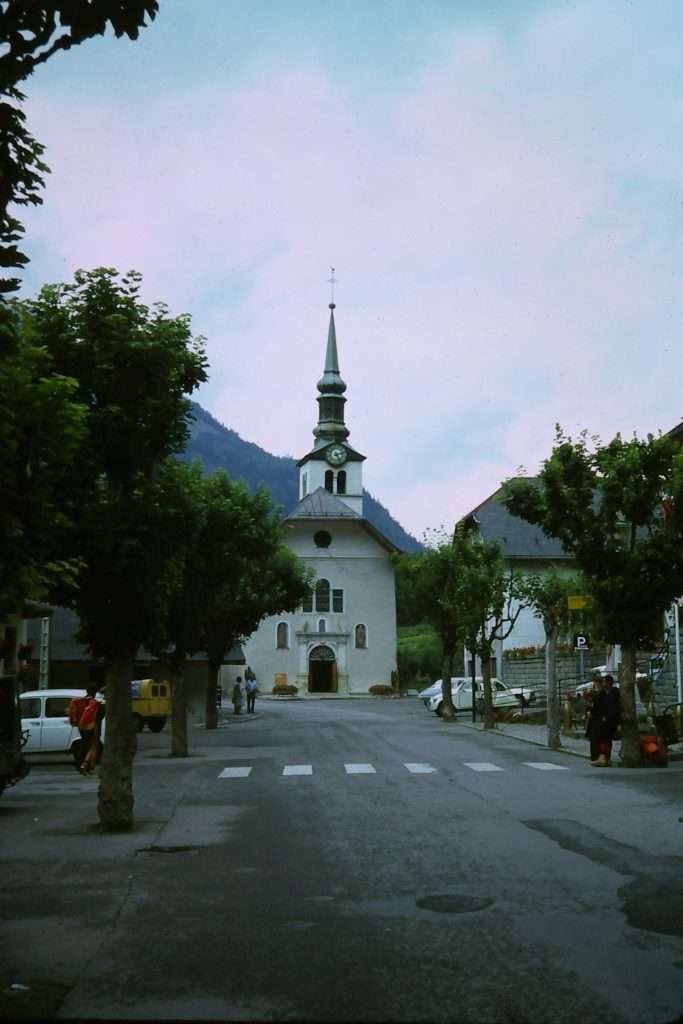
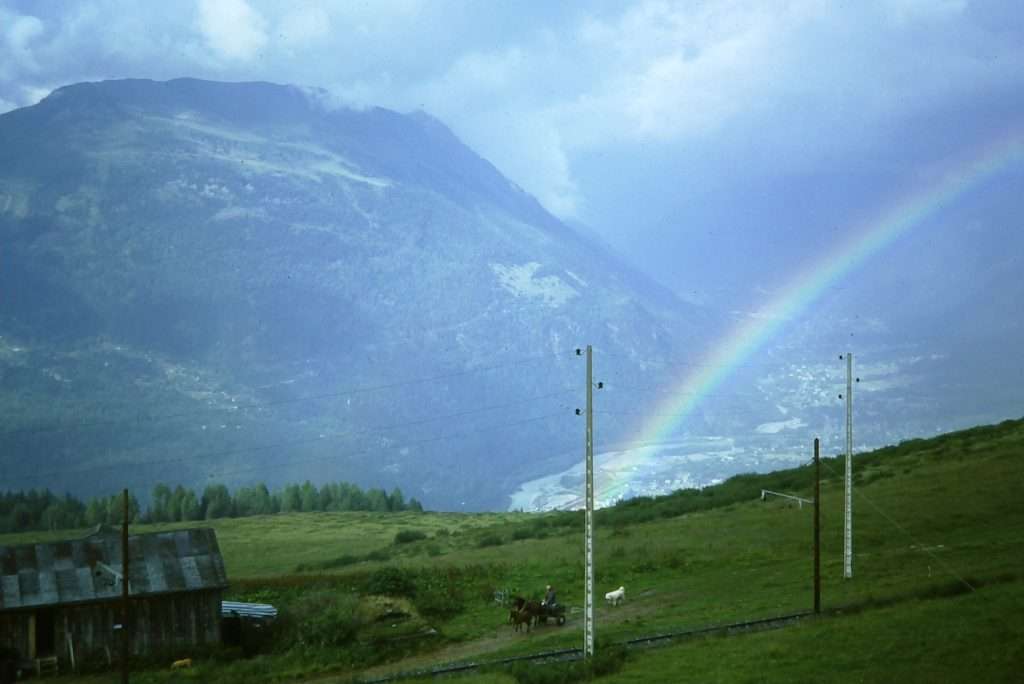
Day 12 – A free day with mist and low cloud, so I walked down to Bionnassay village. When the mist lifted for a few minutes, I got a brief view of the snowy Aiguille de Bionnassay. Two of the men in our group refused to stay the second night at Bellevue and walked down to les Houches where they found somewhere else to stay for the night. The rest of us stuck it out, putting it down to experience!
Day 13: Hotel Bellevue to Les Contamines
At breakfast on the second morning at Bellevue some of the group asked for tea instead of coffee and it was duly brought to the table in a vast brown crockery teapot. One of the men decided to drain the pot rather than waste the tea, but out with the last dregs came a large dead fly! That rather summed up the place!
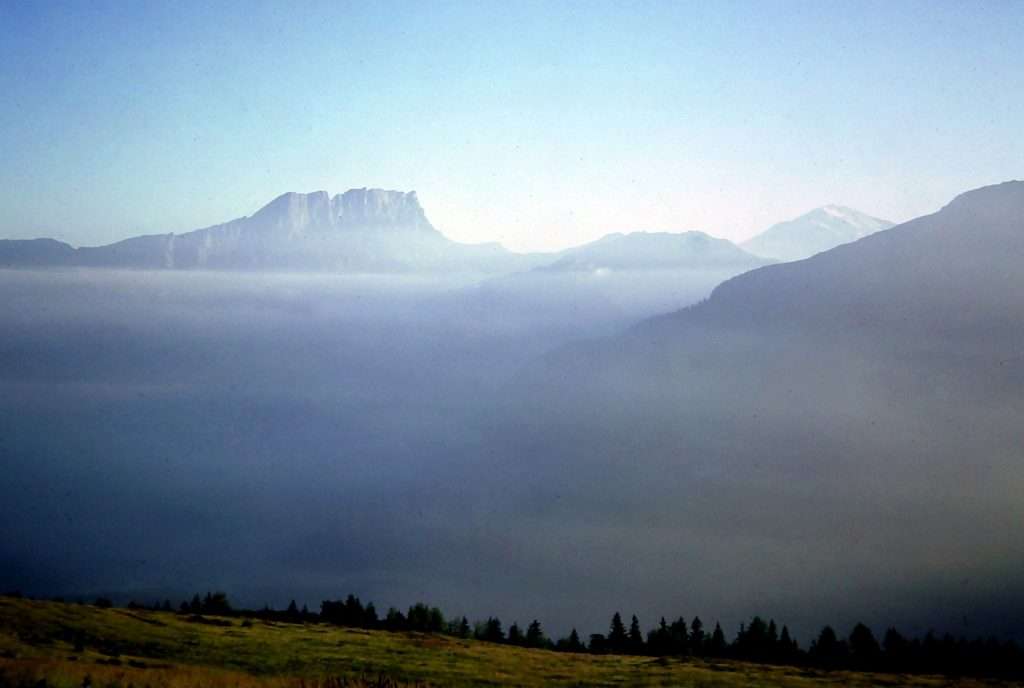
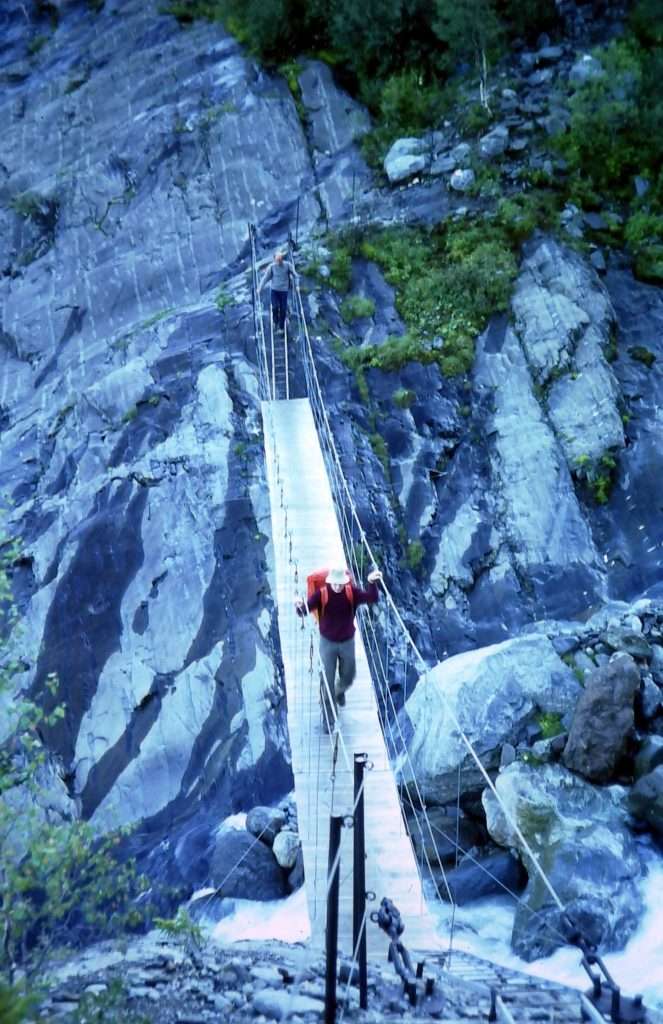
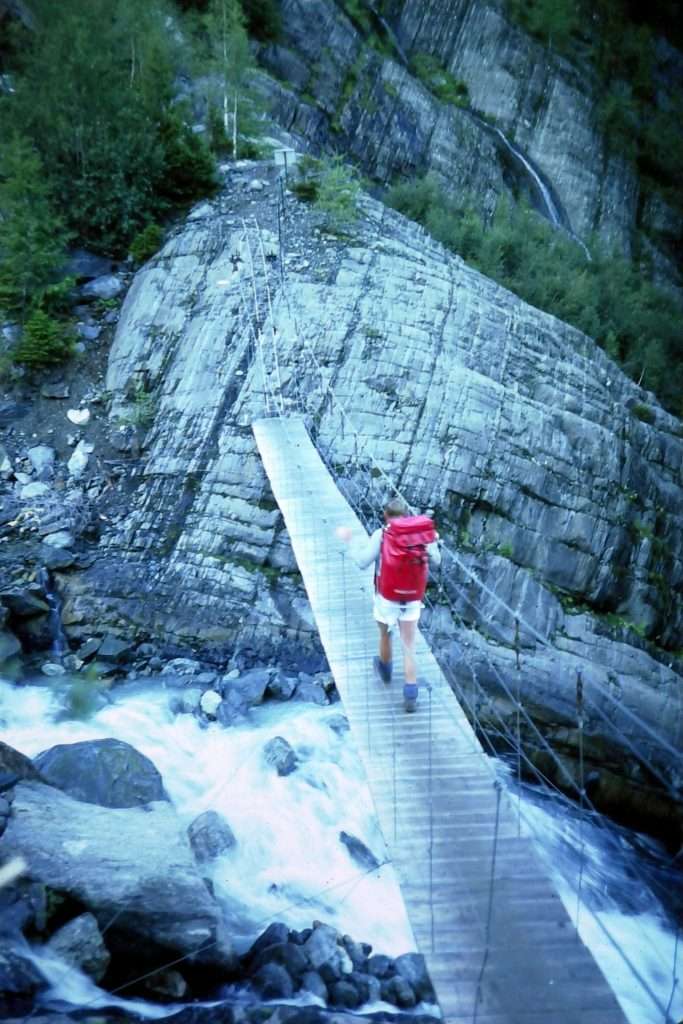
We left Bellevue in bright sunshine and Dan was delighted to find that a footbridge had been strung over the Bionnassay torrent. In previous years he and his parties had had to pick their way across the river by clambering over boulders as best they could. Not easy when carrying a heavy rucksack!
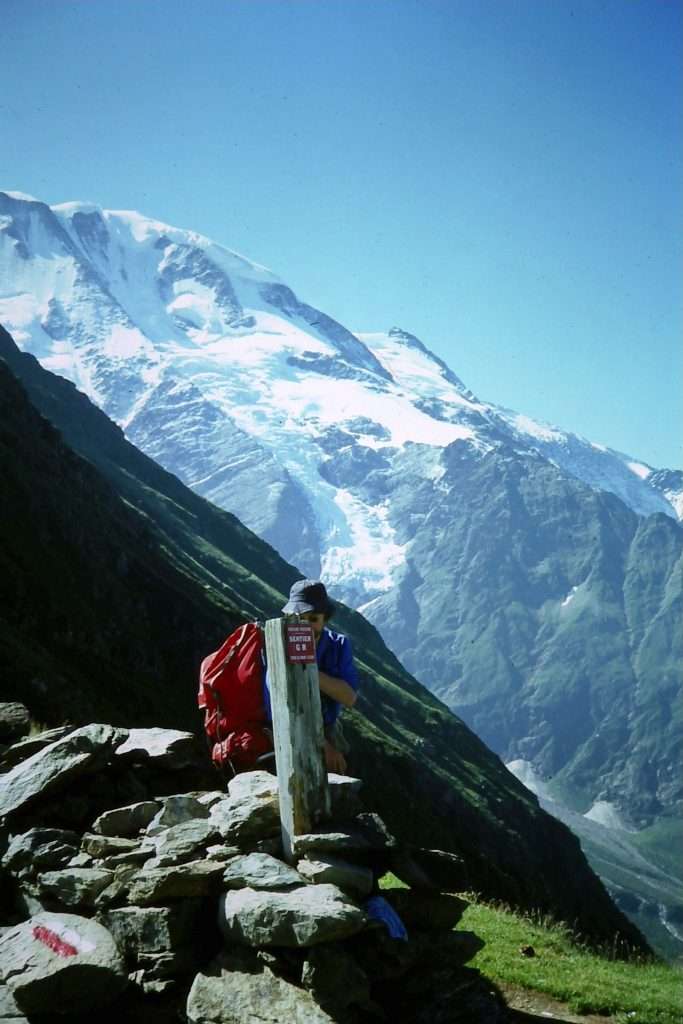
Walking poles were unheard of then so good balance was important – I often found on steep slopes that I had an unfounded faith in the strength of blades of grass! We climbed up to and across our final col – the Col de Tricot – dropping down to Miage and then into les Contamines where we had an excellent lunch to celebrate the end of the walk before returning to the hotel in le Fayet for the night.
Day 14: Return to the UK
We spent the morning in St Gervais-les-Bains, then after lunch, a coach took us Geneva Airport for the flight back to London Heathrow.
Looking Back, and Looking Ahead
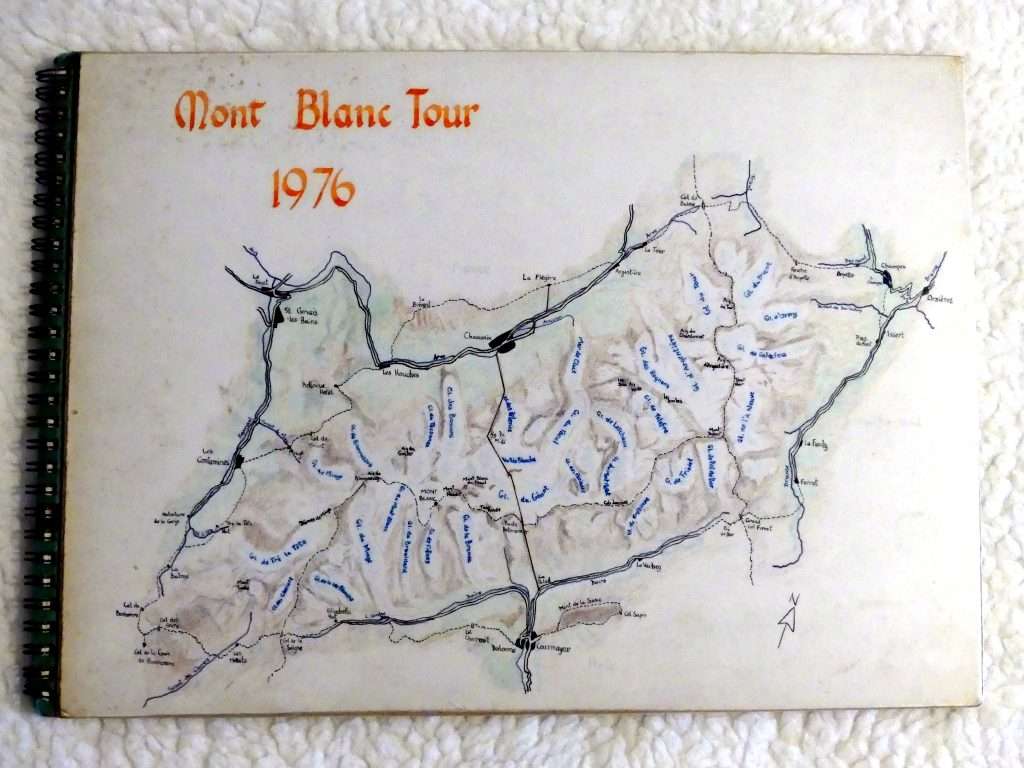
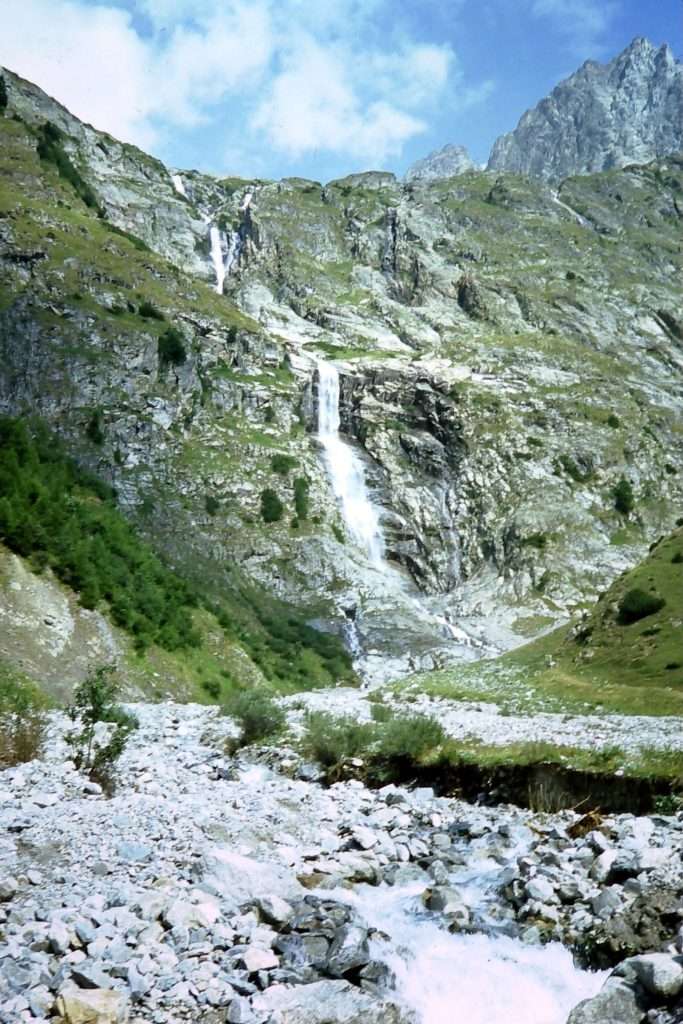
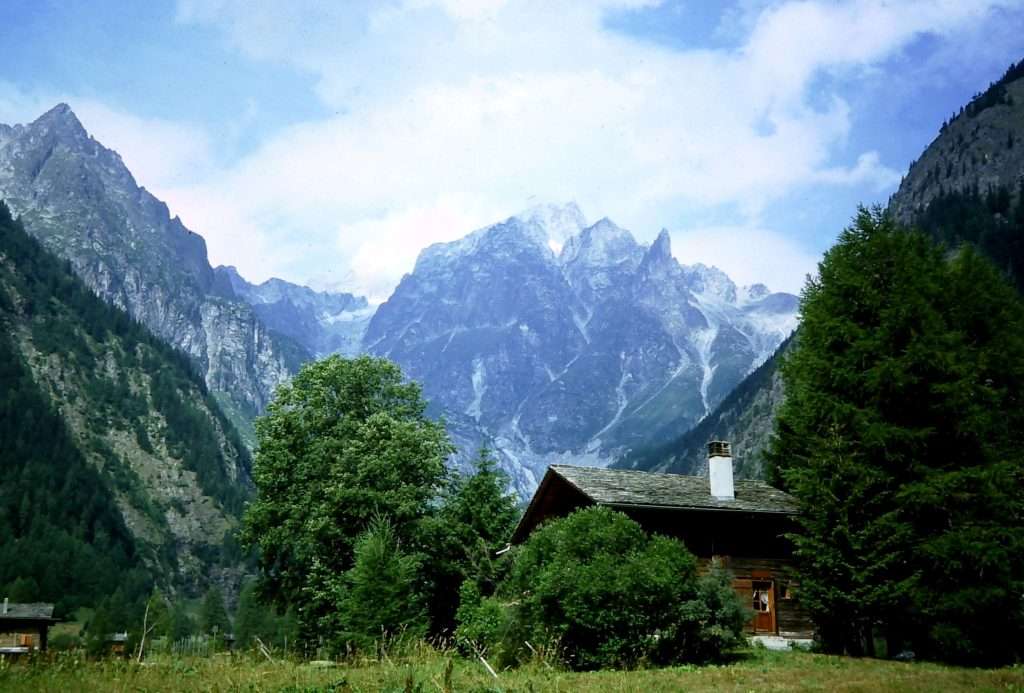
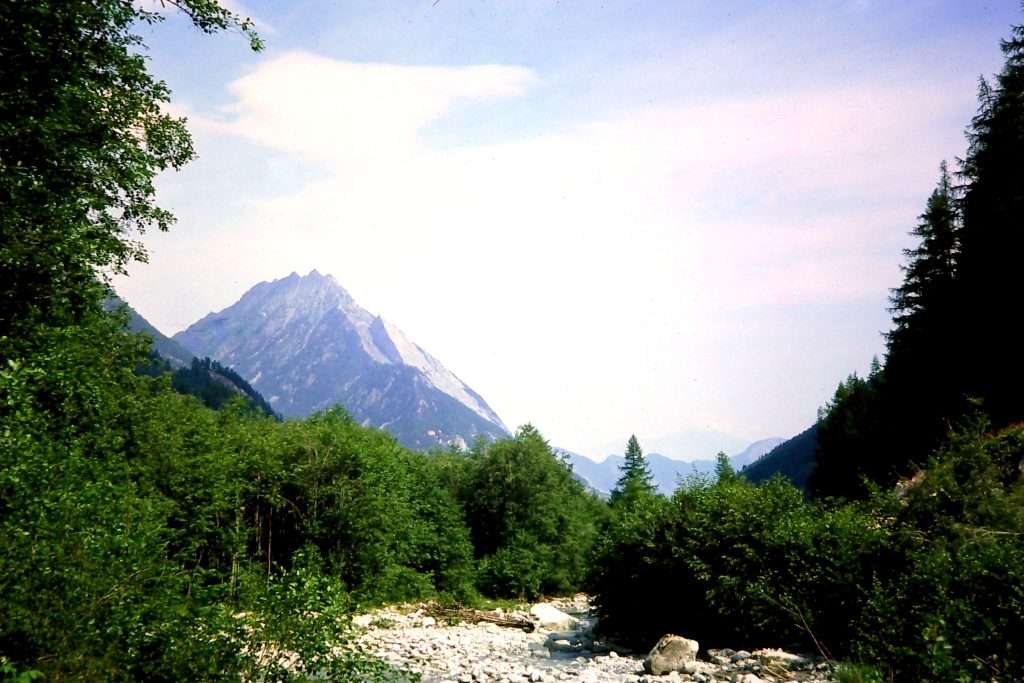
Despite the fifty years that have now passed since I completed the TMB, by looking at my photographs – digitalised from slides – and the album I made when I got home, my memories of the trek are regularly rekindled.
I had really enjoyed the experience, so I decided to do another long-distance walk the following year, when I undertook the GR20 across the island of Corsica. It was a far tougher walk, and we had to carry all our food for the whole trip as well as personal belongings.
There were no manned refuges – only small huts where one could sleep. In the event we slept in the open air almost every night. I had made sure I was very fit before going and it was an exciting and challenging trip.
Life After the Trail
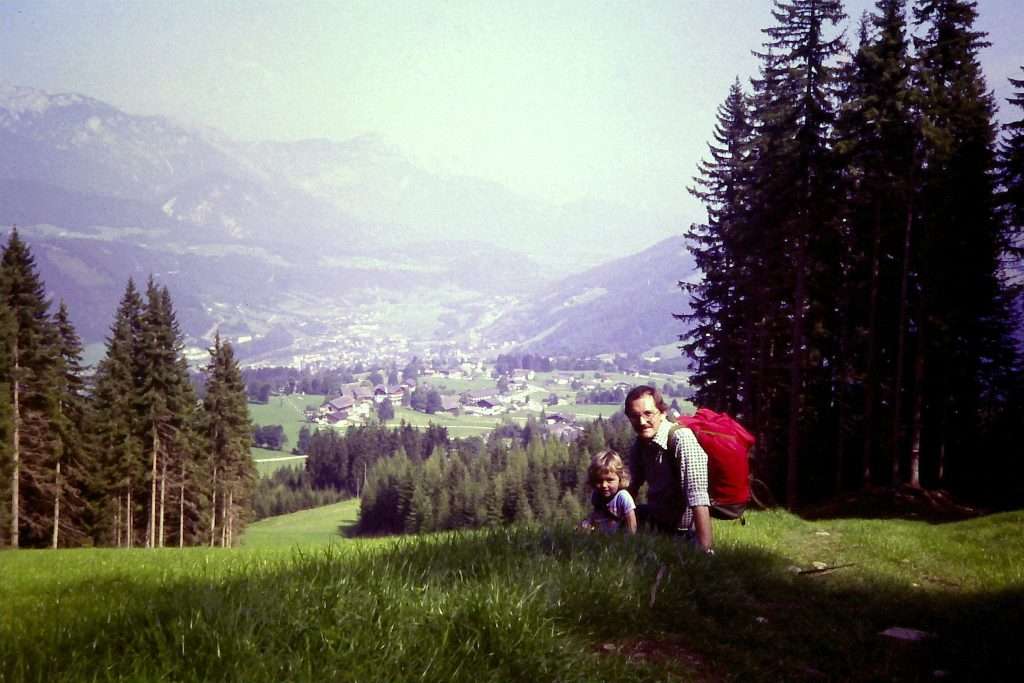
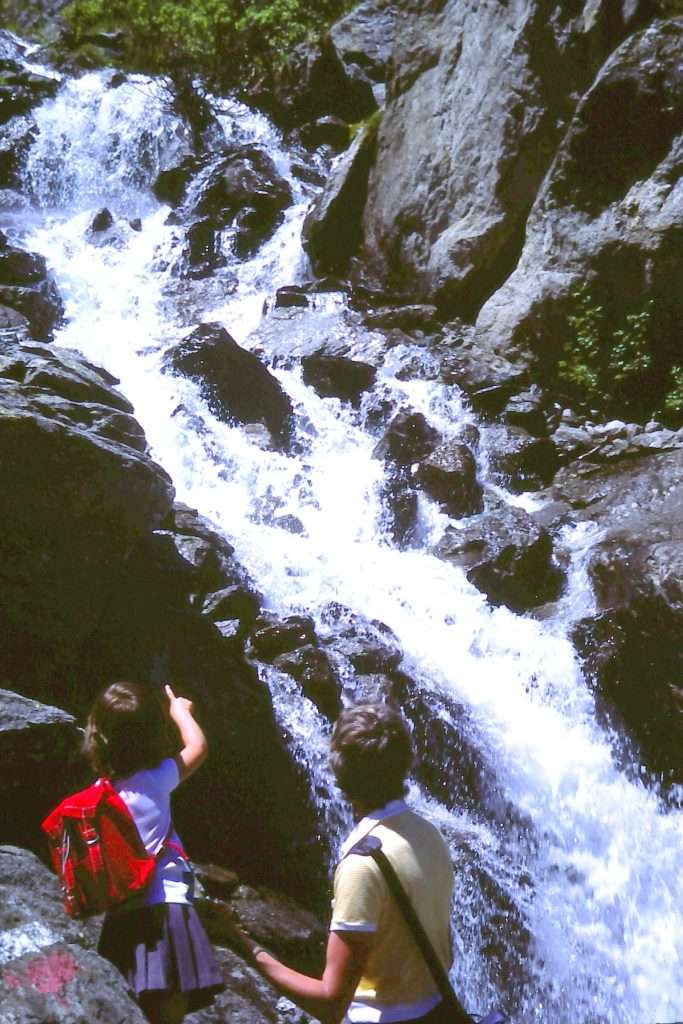
Marriage to Paul in 1978 and motherhood in 1980 put paid to my mountain holidays for some years, but we introduced our daughter Bethan to the Alps when she was just two years old with a holiday in Schladming, Austria and two years later, while staying in a gîte near St Gervais-les-Bains, she walked with us from la Flégère to Argentière along a short section of the TMB. I’m happy to say that like her mother, she has kept her love of high places – she now runs mountain marathons!
To all of you who read this before embarking on the TMB yourselves, may I wish you “Bon Voyage!” I just wish I was coming with you……….