

Ah, the Tour du Mont Blanc. This spectacular trail is the top of many hikers’ bucket lists, and for good reason. The TMB circumnavigates the Mont Blanc massif, giving walkers the opportunity to visit quaint villages, overnight at remote mountain refuges, and experience the majesty of the Alps on foot.
This 170-km trail is top on our list of the best hikes in Europe, and even the world! Here at TMB Trail Guide we want to equip you with everything you need to hike the Tour du Mont Blanc, from refuge guides and gear lists to custom itineraries and in-depth trail reports.
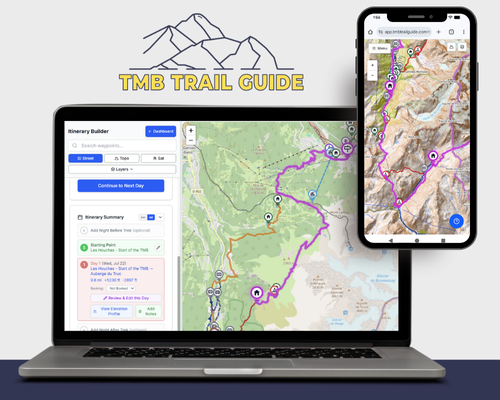
We created the TMB Trek Planner to simplify the planning process for independent hikers. Use this custom software to easily and intuitively create your perfect itinerary, view live accommodation availability, compare routes, incorporate transit, export custom GPS files, and access detailed resources for planning your trek. We’d love for you to check it out!
However, if you’re not ready to start planning just yet, we’ve put together this helpful guide to provide an overview of the trail, what to expect, and how to plan for your trek.
Let’s jump in.

The TMB Trek Planner brings your route, accommodation availability, and itinerary together in one place so you can plan with confidence.
Build & plan a route that works for you!
See accommodation availability in one place
Adjust your itinerary as plans change
Designed around real TMB hut booking and itinerary challenges
Why You Should Hike the Tour du Mont Blanc
Hiking the Tour du Mont Blanc allows you to see some of the world’s most beautiful places while tackling a rewarding physical pursuit. The trail traverses 11 mountain passes, meanders through secluded valleys, and visits stunning mountain refuges. An experience like this will leave you in awe of Western Europe’s tallest peak and have a new appreciation for the culture and landscapes of the Alps.
Emily and I first hiked the trail back in 2017 and have been back to this spectacular trail many, many times since!
Hikers on the TMB will visit three countries (France, Italy and Switzerland) each with its own unique landscape and culinary delights. Climbing to a high mountain pass to cross from one country to another is a unique and unforgettable experience that you’ll enjoy three different times on the TMB.
Get Your FREE Tour du Mont Blanc Essentials Guide

Sign-up to get your FREE TMB Essentials guide below. Find intel on when to hike, basics about the trail, and a printable packing list
What’s more, the Tour du Mont Blanc serves up plenty of creature comforts in the form of cozy mountain refuges and regional culinary delights. After a long day of rugged walking, hikers can enjoy a multi-course meal and a soft bed in a remote and stunning location. It’s truly the best of both worlds!
All of this is packed into a 170-kilometer trail that is within reach of most moderately fit hikers. To summarize, you’d be crazy to not want to hike the Tour du Mont Blanc!
Tour du Mont Blanc Highlights
Hiking through three unique countries and cultures
Getting close-up views of the region’s many glaciers
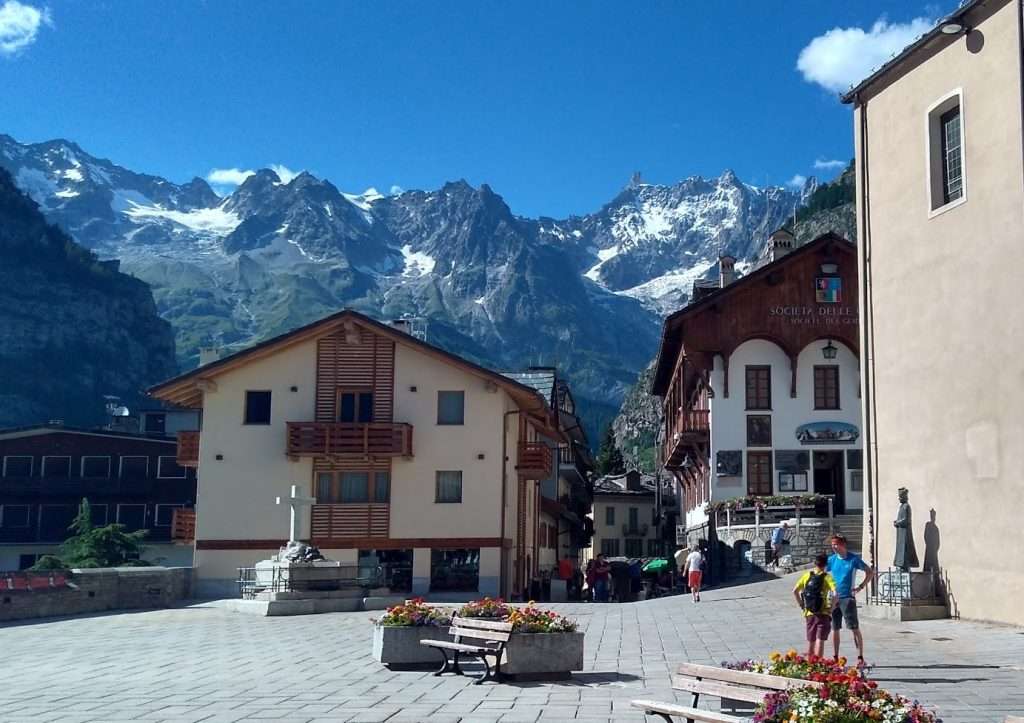
Visiting the iconic mountaineering towns of Courmayeur and Chamonix
Sleeping in remote mountain refuges
Enjoying local food and drink
Soaking in incredible views of Mont Blanc from the famous Grand Balcon Sud trail
Experiencing traditional Alpine villages

Planning Your TMB Hike
Planning a TMB trek on your own tends to be a fairly involved process, although the resources here at TMB Trail Guide will make it much easier, and even pretty fun!
Accommodation tends to be the most difficult part of the planning process, as refuges and mountain huts start booking up in the fall prior to the upcoming summer hiking season. Creating a thoughtful itinerary well in advance is the best way to ensure success, but it is almost always possible to make a TMB hike happen-even with just a few weeks notice!
To help independent hikers confidently plan their TMB, we created the TMB Trek Planner. This all-in-one planning tool gives you everything you need to create your itinerary, find accommodation, and plan your trek!
The main feature is an interactive map that shows the main route, variant routes, public transit, and accommodation availability. You then build your itinerary by selecting your start point and end point for a stage, with unlimited customization along the way. Check out our demo video below:
Plan Your TMB the Easy Way!
“I used the TMB Trek Planner and found it incredibly helpful for planning my hike! Before, I had been planning with a combo of AllTrails and guidebooks, but given all the options for doing the TMB, I found it hard to visualize all of them together.
The trek planner was super intuitive and allowed me to make a route with a mix of different routes (main trail, variants, public transit) that I could export to whatever routing app I wanted to use.” – Anna
Use our interactive trip planner to create your perfect itinerary, compare routes, incorporate transit, export custom GPS files, and access detailed resources for planning your trek.
Building Your TMB Itinerary
Things to consider…
Hiking speed and desired daily distances
Accommodation preferences
Time of year
Budget
Options for public transit, shortcuts, and/or luggage transfer
Guided vs self-guided
Hiking direction and start/end point
How Long Does it Take to Hike the Tour du Mont Blanc?
11 days tends to be the standard time in which hikers complete the TMB, which averages out to a manageable 15.5 kilometers of hiking per day. This is also the typical itinerary you’ll find in most guidebooks, and it’s a good place to start when thinking about how long you’ll take to hike the trail. Generally speaking, 9-12 days is a reasonable timeframe for most hikers, depending on their pace and preferences.
For those who are fastpacking or even trail running the route, a trip length of 4-7 days is common. This will involve LONG days on the trail and little sleep, but it’s very achievable for fit hikers. On the other hand, spending 12-14 days on the route will leave you with time to explore the magnificent surroundings and savor your experience in the Alps.
When determining how many days to spend trekking, be sure to also consider building in a rest day if you have the time. We highly recommend spending an extra day in one of the charming towns along the route (such as Courmayeur or Champex) to recharge, explore the area, and soak in some local culture.
Ultimately, how long you take to hike the TMB will depend on your abilities and personal preferences. In our opinion, any amount of time on the Tour du Mont Blanc is time well spent!

How Difficult is the TMB?
In terms of long-distance, high-alpine hiking trails, the Tour du Mont Blanc is certainly one of the more approachable options. When hiked in the peak summer season, it does not require any technical mountaineering skills or special equipment. The highest points are relatively low, so most trekkers will not need to worry about altitude sickness. There are plenty of opportunities to use cable cars and buses to shorten challenging climbs and long days, and the refuges and villages along the route provide many resupply points meaning that you won’t have to carry a ton of food or water at any given time.
That being said, the TMB should NOT be underestimated! It is by no means “easy” and requires good fitness, thoughtful planning, and physical and mental endurance. In a typical 11-day itinerary, you’ll climb up and over a mountain pass on almost every stage, most of which average over 1,000 meters of elevation gain and 15 kilometers. Of course, if you want to complete it in fewer days you can expect even longer days and bigger climbs.
Challenging Aspects of the TMB
Steep climbs on nearly every stage
Snow-covered trails (early season)
Variable weather
One section with ladders to navigate

Let us help plan your TMB
We’re here to help! We offer comprehensive TMB planning support so you can plan your perfect trip!
In addition to our TMB Trek Planner, we also offer the following TMB planning services:
Why work with us?

As passionate hikers, we’ve made it our goal to empower you with all of the information you need to have your best TMB experience.
We’ve helped over 2,500 hikers prepare for their trips, navigate on the trail, and simplify the planning process.
The Route & Itineraries
The TMB trail makes a loop around Mont Blanc and it can be hiked in either the anti-clockwise or clockwise direction. Most hikers opt to walk in the traditional anti-clockwise direction beginning in the French village of Les Houches, which enjoys a beautiful location adjacent to Chamonix.
Those who choose to hike clockwise will often begin in the Swiss village of Champex-Lac. This is because the clockwise climb out of Les Houches is a big one and can be a daunting way to start a TMB trek. However, the trek can be started in any point along the route.
Using our TMB Trek Planner software, you can explore different itinerary options, starting points, and directions.
Regardless of which way you choose to hike the trail, you’ll find it is well-maintained in most places with frequent trail markers and clear directions. The trail lends itself well to independent hikers who want to go without a guide or trekking company, although there are plenty of guided treks available.
The map below provides an overview of the Tour du Mont Blanc route:

TMB Route Basics
Distance: 170 kilometers
Elevation Gain/Loss: 10,200 meters
Days to Hike: Typically 8-12 days
Where to Sleep: Mountain refuges, hotels, and camping
When to Hike: Mid-June through September
The Traditional 11-Day Tour du Mont Blanc Itinerary
The classic anti-clockwise Tour du Mont Blanc itinerary completes the circuit over 11 days, averaging about 15.5 kilometers and 900 meters of elevation gain each day. Of course, there are endless ways to customize your TMB experience, adjusting variables like hiking speed, accommodation type, start/end points, and more to suit your unique preferences. Regardless of your desired trip length, it’s helpful to use the classic 11-day itinerary as a starting point to familiarize yourself with the trail. We’ve outlined it below:
Stage 1: Les Houches to Les Contamines
17 km
1019 meters
900 meters
The Tour du Mont Blanc begins with a long climb out of the village of Les Houches, which is just down the valley from Chamonix. Col de Voza is the high point of this stage, and hikers can enjoy panoramic views before continuing on the main route or opting for the rugged Col de Tricot variant. The day finishes with a mellow river walk into the charming village of Les Contamines, which has plenty of accommodation, shops, and restaurants.
Stage 2: Les Contamines to Les Chapieux
19 km
1379 meters
983 meters
Stage 2 of the TMB brings hikers to new heights with the crossing of two challenging passes: the Col du Bonhomme and Col de la Croix du Bonhomme. Although this is a difficult day, hikers are rewarded with tremendous views. The trail passes a couple of refuges where it’s possible to refuel with delicious food and drink along the way. The descent into Les Chapieux is steep but straightforward. Alternatively, hikers can follow the rugged Col des Fours variant, which bypasses Les Chapieux and descends further along the trail near Refuge des Mottets.
Read the full Stage 2 Guide here.
Stage 3: Les Chapieux to Rifugio Elisabetta
14.5 km
1058 meters
411 meters
Stage 3 takes hikers across their first international border, crossing from France into Italy at the stunning Col de la Seigne. From the top of the Col, the trail winds its way along braided paths into the Val Veny before Rifugio Elisabetta comes into view. The refuge is perched high above the trail with a dramatic glacial backdrop. Hikers will either spend the night here or continue down further to reach Cabane du Combal or Courmayeur.
Read the full Stage 3 Guide here.
Stage 4: Rifugio Elisabetta to Courmayeur
17 km
558 meters
1548 meters
Stage 4 brings TMB hikers into the heart of the Italian section of the trail, finishing in the mountaineering town of Courmayeur. The day begins with a mellow walk along Lac Combal before climbing high above Val Veny and following a balcony trail with some of the best views of the entire trek. A long descent through the forest brings walkers down into Courmayeur.
Read the full Stage 4 Guide here.
Stage 5: Courmayeur to Rifugio Bonatti
12.5 km
1094 meters
293 meters
Stage 5 begins with a relentless climb out of Courmayeur, which eases up upon reaching Rifugio Bertone. From there, a gentle balcony trail leads to Rifugio Bonatti, with fantastic views of the Grandes Jorasses and the Italian Val Ferret along the way.
Stage 6: Rifugio Bonatti to La Fouly
20.4 km
959 meters
1373 meters
On Stage 6, the Tour du Mont Blanc crosses the Grand Col Ferret from Italy into Switzerland and continues to reward hikers with panoramic views throughout. The day begins by picking up the balcony trail from the previous day, before gently traversing downhill to the head of Val Ferret. After that, it’s a challenging climb to the Grand Col Ferret followed by a straightforward descent into the pretty village of La Fouly.
Stage 7: La Fouly to Champex-Lac
15.3 km
592 meters
794 meters
After several challenging days of climbing up and down high mountain passes, the gentler profile of Stage 7 comes as a welcome change of pace for many TMB hikers. Most of the day is spent in the valley, walking past charming hamlets and lovely pastoral scenery, although a short but steep climb awaits at the end of the day. Champex-Lac, the typical endpoint of this stage, enjoys a relaxing lakeside setting and has plenty of nice accommodations and restaurants.
Stage 8: Champex-Lac to Trient (Col de la Forclaz)
15.9 km
876 meters
1014 meters
The last full day in Switzerland presents two route options for TMB hikers to consider. The first is the standard TMB route (known as the Alp Bovine), which rounds the shoulder of massif with views down into the Swiss city of Martigny. The other (far more difficult) option, is to take the Fenêtre d’Arpette variant which heads high into the alpine with arguably some of the best views on the entire TMB. Hikers can either end the day at the Hotel du Col de la Forclaz or continue another 45 minutes downhill to find additional accommodation in the neighboring towns of Trient or Le Peuty.
Stage 9: Trient to Tré le Champ
12.9 km
1095 meters
1000 meters
Stage 9 climbs up and over the Col du Balme, crossing from Switzerland back into France and rewarding hikers with stunning views of Mont Blanc and the Chamonix Valley. From the Col, the trail ascends higher still, reaching a scenic ridge trail near the top of the Aiguillette des Posettes. A steep descent leads down to the small hamlet of Tré le Champ.
Stage 10: Tré le Champ to Refuge de la Flégère (or Lac Blanc)
7 km
783 meters
324 meters
Stage 10 begins by climbing out of Tré le Champ before emerging above treeline near the Aiguillette d’Argentiere and the famous TMB ladders, where hikers will need to navigate a series of ladders and catwalks bolted to the rock face. Although this section is relatively short and straightforward, it can be avoided by taking the Col des Montets variant if you choose. Once past the ladders, a series of steep switchbacks leads to a trail junction that provides the option to take either the variant trail to Lac Blanc or continue on the main path to Refuge de la Flégère.
Stage 11: Refuge de la Flégère to Les Houches
17.6 km
786 meters
1649 meters
The final stage of the Tour du Mont Blanc is one of the finest of the entire trek. You’ll enjoy nearly uninterrupted views of Mont Blanc and neighboring peaks as you make your way along the famed Grand Balcon Sud. The final descent is relentless, but it’s possible to take a cable car directly into Chamonix if your knees aren’t up to the challenge. Upon finishing your trek in Les Houches, be sure to grab a cold drink and cheers to your accomplishment!


Where to Stay: Hotels, Refuges and Camping on the TMB
There is a wide range of accommodation options along the Tour du Mont Blanc, from luxurious hotels to cozy mountain huts to wild camping and everything in between. Where you spend the night will depend on your budget, personal preferences, and accommodation availability. Keep reading for an overview of each type of accommodation you’ll find along the Tour du Mont Blanc:
Hotels, Gîtes, and Auberges
You’ll find a variety of hotels, gîtes, and auberges in the towns and villages along the Tour du Mont Blanc route. Hotels range from basic to high-end, and you’ll have the most options in larger towns like Chamonix, Courmayeur, and Champex. Hotels in the region tend to be independently-run and typically provide all of the standard amenities, such as linens, wifi, and private bathrooms.
Gîtes and auberges are more like refuges in the sense that they offer rustic accommodations with private rooms and shared dormitories. There’s typically an option to order half-pension (dinner and breakfast) which is served in a communal setting.
Refuges
A stay in a mountain refuge is a quintessential TMB experience. These huts (called rifugios on the Italian section of the trail) feature comfortable accommodations, delicious meals, and plenty of ambiance to go around. Most of the beds are in mixed-gender dormitories of varying sizes, but if you’re lucky you can snag a private room in some refuges. Hikers share communal bathrooms, and hot showers are available. Refuges typically provide dinner and breakfast, with the option to purchase drinks and a packed lunch for the following day.
Blankets and pillows are provided, but hikers need to bring their own sleeping sheets/liners and towels. Beds in refuges typically book up in in the fall prior to the next hiking season, so it’s important to plan ahead!
Camping
Camping is a flexible and budget-friendly way to experience the Tour du Mont Blanc. Camping options range from remote bivouac sites to large developed campgrounds and everything in between. It’s important to note that wild camping is not permitted on most sections of the route and there are a few stretches where you’ll need to detour from the trail in order to find a place to pitch your tent.


Let us help plan your TMB
We’re here to help! We offer comprehensive TMB planning support so you can plan your perfect trip!
In addition to our TMB Trek Planner, we also offer the following TMB planning services:
Why work with us?
As passionate hikers, we’ve made it our goal to empower you with all of the information you need to have your best TMB experience.
We’ve helped over 2,500 hikers prepare for their trips, navigate on the trail, and simplify the planning process.
Food & Drink on the TMB
With cozy refuges serving up multi-course dinners, towns featuring a variety of great restaurants, and places to pick up local cheeses along the trail, you certainly won’t go hungry while hiking the Tour du Mont Blanc! There are opportunities to purchase food and refill water at frequent intervals along the route, meaning that hikers don’t need to carry too many rations at any given time.
Depending on your preferences, it’s possible to purchase most of your meals in the refuges and towns along the route. Most refuges, auberges, and hotels will offer a half-pension option that includes a multi-course dinner and a light breakfast. Hikers can typically order a packed lunch for the next day for an additional fee. It’s important to note that there are a few segments along the route without any food or water, so be sure to look at the map and plan accordingly to ensure you stay properly fueled and hydrated!
If you’re on a budget, have strict dietary requirements, or simply prefer to do your own thing, it’s also very easy to self-cater on your TMB trek. There are shops in most of the villages along the route where you can stock up on an assortment of trail-friendly foods. Keep in mind that you’ll need to carry your own cookware, as you won’t be permitted to use the kitchens at the refuges.
You can find drinking water in all of the villages and most of the refuges along the route. Some hikers choose to filter water from these sources, although the majority don’t. It is strongly recommended that you filter water from any streams or other natural sources, however, given the how much livestock are present in the area.

Getting To & From the Trail
There are transit connections to major cities and airports from several points along the TMB route. The traditional start/end point of the trek is the village of Les Houches, in the Chamonix Valley of France. This is the most convenient option for most hikers who plan to complete the trek in the classic anti-clockwise direction. It’s also possible to start/end your trek in Courmayeur or Champex, although many hikers will still need to travel through Chamonix en route to these towns.
For those traveling by air to the TMB, Geneva is the closest and most convenient international airport. There are a variety of buses and shuttles that go straight from the Geneva Airport to Chamonix and the trip only takes a couple of hours. It’s also possible to fly into Zurich, Paris, Turin, or Milan, and there are buses and trains that will get you to the trail from any of these cities (although they require a much longer journey than from Geneva).
Costs & Budgeting for the TMB
Many hikers find budgeting for their TMB trek to be one of the more intimidating aspects of the planning process. After all, the trail passes through some famously expensive areas, and the fact that two different currencies are used along the way adds to the complexity. However, with a bit of thoughtful preparation, managing your money and sticking to a budget on the TMB can be easier than you might expect.
A few general tips for managing your money on the Tour du Mont Blanc:
- Keep track of which accommodations you paid for ahead of time and how much you’ll owe upon arrival.
- Make note of which accommodations do not accept credit cards and plan accordingly.
- Research where you’ll find ATMs along the route.
- Notify your bank and credit card company that you’ll be traveling abroad. Be aware of any extra fees you might incur for using your card internationally.
- You can use Euros throughout the trek, but you’ll get a better exchange rate if you use Swiss Francs while in Switzerland.
It’s also very possible to hike the TMB on a small budget. Here are a few ways to keep costs down on your trek:
- Consider camping instead of staying in refuges and hotels.
- Stock up on food items at shops along the route and cook your own meals.
- Utilize public transportation instead of taxis and private shuttles.
- Pack light to avoid paying for luggage storage or transfers.
- Hike independently as opposed to a guided trek.
For a full breakdown of the typical costs of various items on a TMB trek, check out the post below:

What Gear Do I Need?
Having the right gear can make all the difference on a tough long-distance hike like the Tour du Mont Blanc. It’s important to be prepared for all of the variable weather that the Alps can throw at you, as well as keep your body happy with a well-fitted pack and footwear.
When it comes to clothing, layers are your friends. This includes breathable base layers, a warm jacket for chilly mountain passes, and a waterproof outer layer for the rain or snow you are likely to encounter at some point along your trek.
Much of your other gear will depend on the time of year you’ll be hiking, whether you’re camping or staying indoors, and how minimal you like to travel. Those setting out in the early season will want to bring microspikes to safely navigate snowy trails. If you plan to overnight in refuges, you’ll need to bring a sleep sheet and a towel, and we recommend packing earplugs for the dormitories!
Finally, it is essential to bring some sort of navigation system. That could be a physical map or GPS app on your phone. Just be sure you’ve got a good way to navigate and know how to use it!
Wondering What Else to Pack?
In addition to the items described above, you’ll want to be sure the rest of your gear is up to the task of hiking the Tour du Mont Blanc.
We’ve got you covered with our comprehensive packing list, complete with trail-tested gear recommendations!
Summary & What’s Next?
This article provided a general overview of the Tour du Mont Blanc. Now that you’ve got a good sense of the basics, it’s time to start planning your trek!
Tour du Mont Blanc: Key Takeaways
The trail is typically hiked over 8-12 days.
Accommodation is available in mountain refuges, small hotels, and campgrounds.
The spectacular route visits three countries and some of the best scenery in the Alps.
As you continue to plan your TMB adventure, we recommend checking out these helpful resources:
Tour du Mont Blanc Refuge Guide↗
Familiarize yourself with the mountain huts along the TMB.
Learn when to make bookings, what to expect, and more!
Stages of the TMB↗
Read a detailed description of each of the traditional 11 stages of the TMB.
Get essential information so you know what to expect each day on the trail.
Tour du Mont Blanc Gear List↗
Make sure you have everything you need to be safe and comfortable on your trek!
Get insider tips about what’s important to pack and what to leave behind.
